The American Aviation World Cup moment | News

As football’s governing bodies prepare for the biggest FIFA World Cup in history, aviation executives gathering in Rio de Janeiro for the IATA’s annual general meeting are faced with a similar question.
America has been given the home field advantage. The United States, Mexico and Canada will host a tournament expected to draw millions of international visitors as airlines across the hemisphere add capacity, open routes and position themselves for a decade of growth. But as every football fan knows, organizing the tournament does not guarantee that the trophy will be lifted. Talent is important. Infrastructure is important. Execution is even more important.
The message to emerge from IATA’s State of Air Transport in the Americas briefing is that the region has all the ingredients needed to become one of the strongest aviation growth stories in the world. What remains uncertain is whether governments, regulators and industry leaders can play as a coordinated team rather than as a collection of talented individuals pulling in different directions.
The timing is significant. The last time IATA held its AGM in Rio de Janeiro was in 1999. Since then, Latin America has experienced political upheavals, a commodity boom, economic crises and dramatic shifts in tourist flows. Through all this, aviation has steadily become one of the most important economic drivers in the region.
Today, aviation supports 8.3 million jobs in Latin America and the Caribbean and contributes approximately $240 billion to regional GDP. In North America, the industry’s economic contribution rises to $1.4 trillion. These are not just transportation statistics. They are indicators of an industry that is increasingly serving as essential infrastructure for modern economies.
That distinction is important because aviation is still misunderstood by many policymakers. Peter Cerdá, IATA’s regional vice president for the Americas, repeatedly argued during the briefing that aviation should not be seen as a luxury sector. In a region defined by a vast geography, fragmented transportation networks and growing international trade, air transportation serves as the connective tissue that ties economies together.
Brazil provides perhaps the clearest example. Covering an area of 8.5 million square kilometers and the fifth largest country in the world, the country has few practical alternatives for connecting distant cities and integrating national markets. Aviation connectivity is not just a convenience. It is a requirement for economic cohesion.
Yet the most striking insight from the Rio briefing was not the scale of aviation’s current contribution, but the scale of the opportunities that still lie ahead.
Think about tourism. Mexico welcomed nearly 48 million international visitors, making it one of the most important destinations in the world. Despite its continental size, world-famous natural resources and record-breaking tourism achievements, Brazil attracted just over nine million international visitors. Across the region, destinations such as Colombia, Chile, Peru, Argentina and the Dominican Republic continue to grow, but the gap between potential and reality remains enormous.
The same pattern occurs in passenger demand. On average, people in Latin America make less than one plane trip per year. By comparison, travelers in North America make about 2.6 trips annually, while Spain makes more than five trips per capita. For aviation investors, airline executives and tourism leaders, these numbers represent something that is increasingly rare in a mature global industry: true untapped demand.
This partly explains why airlines from Europe, China and Canada are reallocating capacity to Latin America. It also explains why markets such as Argentina, El Salvador and Guyana are attracting increasing interest following the implementation of a more open aviation policy. The region remains underpenetrated in relation to its population, economic size and tourism assets. Investors see opportunities where others see complexity.

Perhaps the most encouraging development is taking place in the region itself.
For decades, discussions about Latin American aviation have focused heavily on long-haul connections to North America and Europe. The growth story is becoming increasingly intra-regional. Capacity in Latin America has been expanded from 177.5 million seats in the first half of 2016 to more than 211 million now. Airlines are launching services to secondary and tertiary cities that previously would not have been economically viable. New generation aircraft have changed the economics of regional flying, creating opportunities to connect markets that were once insufficient in demand.
On the football front, the region is starting to build depth across the squad, rather than relying on a handful of star players.
But as America prepares for a World Cup moment, they also bring some familiar weaknesses to the tournament.
The first challenge is cost. Fuel now represents between 30 and 40 percent of airline operating costs, while volatility in the global energy market continues to put pressure on margins and investment plans. Higher fuel costs inevitably translate into higher fares, reduced connectivity and slower growth.
The second challenge is taxation. Passenger taxes and fees account for about 29 percent of ticket prices in Latin America, compared to just 15 percent in North America. From an industry perspective, governments often undermine growth by treating aviation as a convenient source of revenue rather than an economic catalyst.
The examples cited during the briefing were numerous. Proposed VAT changes in Brazil could significantly increase international rates and reduce demand by around 30 percent. Peru’s new transfer fee at Lima airport has already contributed to route cancellations, lost capacity and reduced tourism spending. The liberalization of Argentina’s aviation market has been welcomed, but the increase in navigation and safety charges has raised concerns about competitiveness.
Not every story is negative. Barbados has reduced travel costs within the Caribbean, while Paraguay has abolished the six percent ticket tax. Both moves aim to stimulate demand rather than suppress it, and provide examples of policy choices that align with long-term growth goals.
Infrastructure is an equally big challenge. More than half of all flights in Latin America and the Caribbean now pass through congested or severely restricted airports. Major gateways including São Paulo, Mexico City, Bogotá, Lima and Cancun are facing capacity pressures that threaten future growth. The issue is especially relevant as America prepares to welcome unprecedented visitor volumes associated with major sporting events and growing tourism markets.
The World Cup provides a useful lens through which to view the challenge. A stadium that cannot accommodate spectators ultimately limits the success of the tournament. Airports serve a similar function for economies. Demand can only be converted into growth if the infrastructure exists to support it.
The longer-term opportunities may lie in areas beyond passenger traffic.
Air freight continues to expand across the region, thanks to exports ranging from flowers and seafood to pharmaceuticals and high-value industrial goods. Countries such as Brazil, Colombia, Ecuador, Chile, Peru and Mexico are increasingly integrating into global supply chains, creating new demand for air freight services.
Sustainable aviation fuel offers another opportunity. According to IATA, the Americas have the potential to produce almost half of the future global SAF supply. While current production remains limited, especially in Latin America, the region’s agricultural resources and renewable energy potential create significant competitive advantages if investments and policy support can be aligned.
The broader outlook remains encouraging. IATA forecasts annual passenger demand growth in Latin America and the Caribbean of approximately 3.7 percent through 2040, which is in line with the global average and well exceeds expected growth in North America.
This projection helps explain the sense of cautious optimism that emerged during the discussions in Rio. America has extraordinary tourism assets, a growing middle class, expanding trade corridors and a generation of increasingly competitive airlines. The ingredients for success are there.
The question is whether the region can avoid own goals.
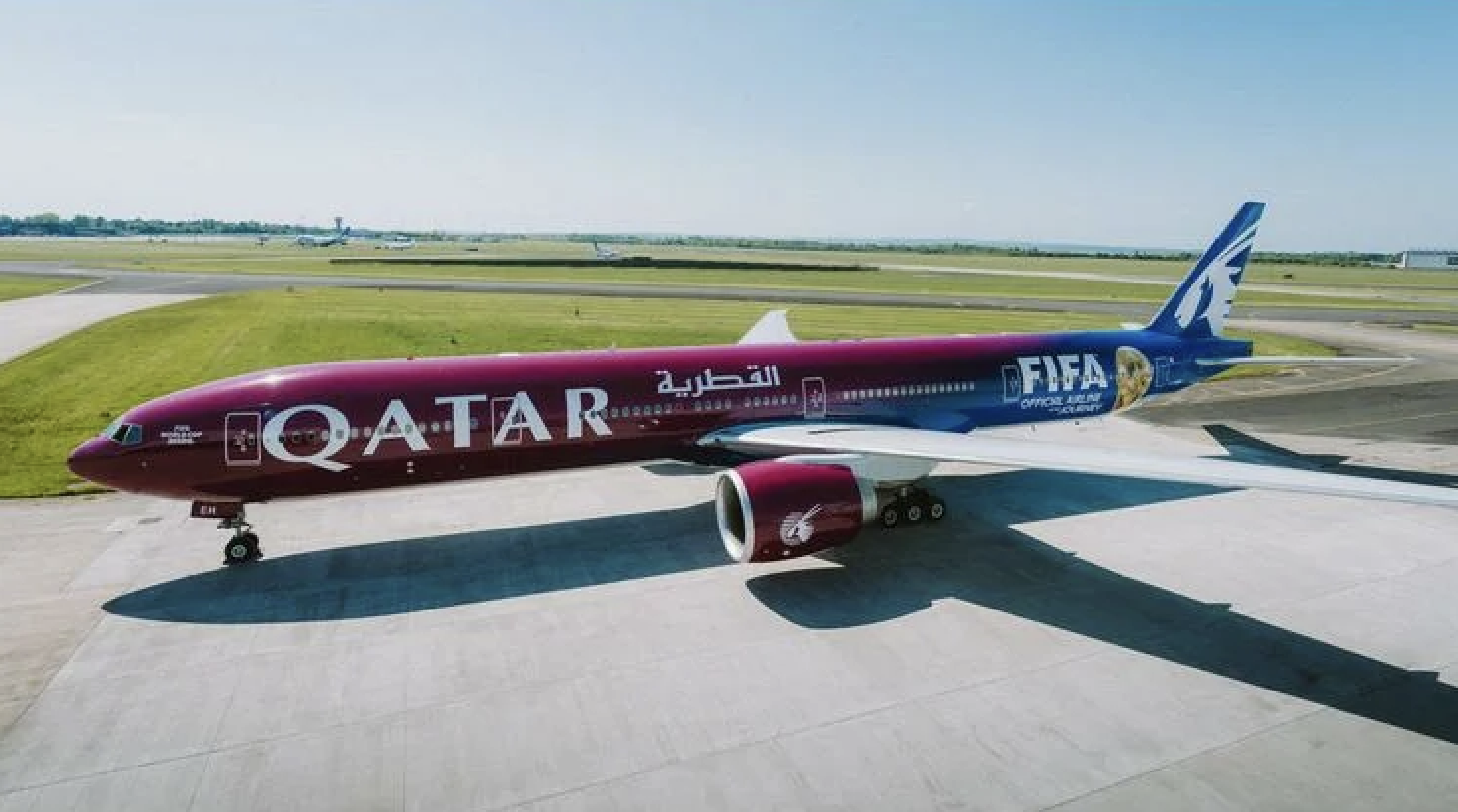
The FIFA World Cup will provide a highly visible demonstration of what coordinated planning, investment and implementation across borders can achieve. For aviation, the lesson goes far beyond football. America’s biggest opportunity isn’t just attracting visitors for a month-long tournament. It creates the connectivity, affordability and resilience needed to sustain growth for decades to come.
The tournament can last several weeks. The potential for aviation could last a generation.
By Breaking Travel News at the IATA Annual General Meeting in Rio de Janeiro