SaaS in, SaaS out: Here’s what’s driving the SaaSpocalypse
Not long ago, a founder texted his investor with an update: he was replacing his entire customer service team with Claude Code, an AI tool that can write and deploy software on its own. For Lex Zhao, an investor at One Way Ventures, the message hinted at something bigger: the moment when companies like Salesforce were no longer the automatic default.
“The barriers to entry for creating software are now so low thanks to coding agents, that the build vs. buy decision is shifting to build in so many cases,” Zhao told TechCrunch.
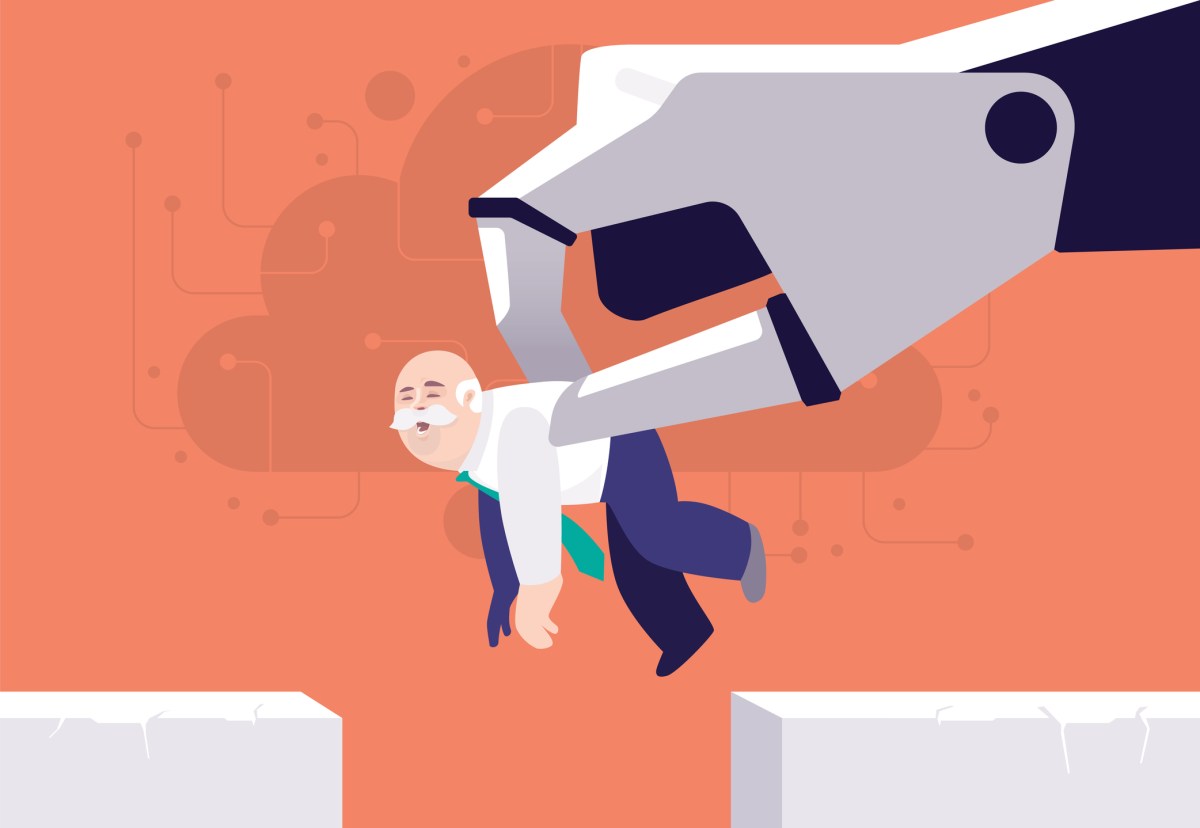
The shift between building and buying is only part of the problem. The very idea of using AI agents instead of humans to perform work calls into question the SaaS business model itself. SaaS companies currently price their software per seat, that is, based on the number of employees who log in to use it. “SaaS has long been considered one of the most attractive business models due to its highly predictable recurring revenue, massive scalability and gross margins of 70-90%,” Abdul Abdirahman, an investor at venture capital firm F-Prime, told TechCrunch.
When one or a handful of AI agents can do that work — when employees simply ask the AI of their choice to pull the data from the system — that per-seat model starts to fall apart.
The rapid pace of AI development also means that new tools, such as Claude Code or OpenAI’s Codex, can replicate not only the core functions of SaaS products, but also the add-on tools that a SaaS vendor would sell to increase revenue from existing customers.
What’s more, customers now have the ultimate contract negotiation tool in their pockets: if they don’t like a SaaS vendor’s pricing, they can build their own alternative more easily than ever before. “Even if they don’t go the build route, this creates downward pressure on contracts that SaaS vendors can secure during renewals,” Abdirahman continued.
We saw this back in late 2024, when Klarna announced it had ditched Salesforce’s flagship CRM product in favor of its own homegrown AI system. The realization that a growing number of other companies could do the same is spooking the public markets, where the stock prices of SaaS giants like Salesforce and Workday are falling. In early February, an investor sell-off nearly wiped out $1 trillion in market value from software and services stocks, followed by another billion later in the month.
WAN event
San Francisco, CA
|
October 13-15, 2026
Experts call it the SaaSpocalypse, while one analyst calls it FOBO investing – or the fear of becoming obsolete.
Still, the venture investors TechCrunch spoke to believe such fears are only temporary. “This is not the death of SaaS,” Aaron Holiday, managing partner at 645 Ventures, told TechCrunch. Rather, it’s the beginning of an ancient snake shedding its skin, he said.
Move fast, break SaaS
The pattern of the public market is best exemplified by Anthropic’s recent product launches. The company released Claude Code for cybersecurity and its related stocks fell. It released legal tools in Claude Cowork AI, and the share price of the iShares Expanded Tech-Software Sector ETF – a basket of publicly traded software companies that includes the likes of LegalZoom and RELX – also fell.
In some ways, this was expected because SaaS companies have long been overvalued, investors said. It doesn’t help that these companies achieved most of their growth in the zero interest rate era, which is now over. The cost of doing business rises when the cost of borrowing money rises.
Public market investors typically price SaaS companies by estimating future revenues. But there’s no telling whether in one year or five years someone will be using SaaS products to the extent they once did. That’s why SaaS stocks tremble every time a new cutting-edge AI tool is launched.
“This may be the first time in history that the ultimate value of software is fundamentally questioned, materially reshaping how SaaS companies are supported in the future,” said Abdirahman.
That’s because putting AI features on top of existing SaaS products may not be enough. A horde of AI-native startups is growing at a record pace and has completely redefined what it means to be a software company.
Software is now easier and cheaper to build, which means it’s easier to replicate, Yoni Rechtman, a partner at Slow Ventures, told TechCrunch.
That’s good news for the next generation of startups, but bad news for the established companies that have spent years building their tech stacks.
On the other hand, the market also lacks sufficient time and evidence to demonstrate that whatever new business model emerges from SaaS will be worthwhile. AI companies sometimes price their models on a consumption basis, meaning customers pay based on the amount of AI they use, measured in tokens (which each model provider defines slightly differently).
Others are working on “outcome-based pricing,” where fees are charged based on how well the AI actually works. Ironically, this is the current approach of Sierra, the AI startup of former Salesforce CEO Bret Taylor quasi-Salesforce competitor that provides customer service agents.
The approach seems to be working so far. In November, Sierra reached $100 million in annual recurring revenue in less than two years.
There was also once the idea that cloud-based software such as SaaS that is sold would never depreciate in value and could last for decades. In some ways, this is still true compared to what happened before: on-premises software, which companies had to install and maintain on their own servers.
But working in the cloud does not protect SaaS suppliers from a completely new technology that will enter the competition: AI.
Investors are right to be nervous as AI-native companies emerge, adapt, adopt and build much faster than a traditional SaaS company can move. After all, SaaS companies are the incumbents themselves and have replaced old-fashioned local suppliers in the latest era of disruption.
This SaaSpocalypse is reminiscent of Taylor Swift’s lyrics about what happens when “someone else lights up the room” because “people love an ingénue.”
“The most important thing to understand about the SaaS decline is that it is simultaneously a real structural shift and possibly a market overreaction,” Abdirahman said, adding that investors typically “sell first and ask questions later.”
SaaS IPOs are on hold
Public market SaaS companies aren’t the only ones feeling the shivers from investors.
However, a Crunchbase report released on Wednesday showed that for some sectors the IPO market appears to be thawingthere are no VC-backed SaaS filings on the horizon (nor are they expected to be).
Holiday said this may be because there is a lot of pressure on large, private, late-stage SaaS companies like Canva and Ripple, given the tough IPO window, high expectations driven by AI advances, and the volatile stock price of already public SaaS companies.
Some of these companies, including mid-market SaaS companies, have even struggled to launch expansion rounds in the private market, Holiday said, because of the same fears that public investors have.
“Nobody wants to be subjected to the volatility of the public markets when sentiment can send companies into a tailspin,” Rechtman said, adding that he expects companies like these to remain private for much longer.
Meanwhile, the public market is waiting for a good picture of the finances of the first AI-native companies hoping for an IPO. The scuttlebutt says that both OpenAI and Anthropic are considering IPOs, perhaps even later this year.
The most likely outcome is something that weaves together the old and the new, as technological disruptions have always done.
Holiday said most of the new features companies are toying with today “aren’t going to stick around” and that companies will always need software that meets compliance rules, supports audits, manages workflow and provides sustainability.
“Sustainable shareholder value is not based on hype,” he continued. “It is built on fundamentals, retention, margins, real budgets and resilience.”