Panini World Cup sticker demand surges ahead of 2026 World Cup
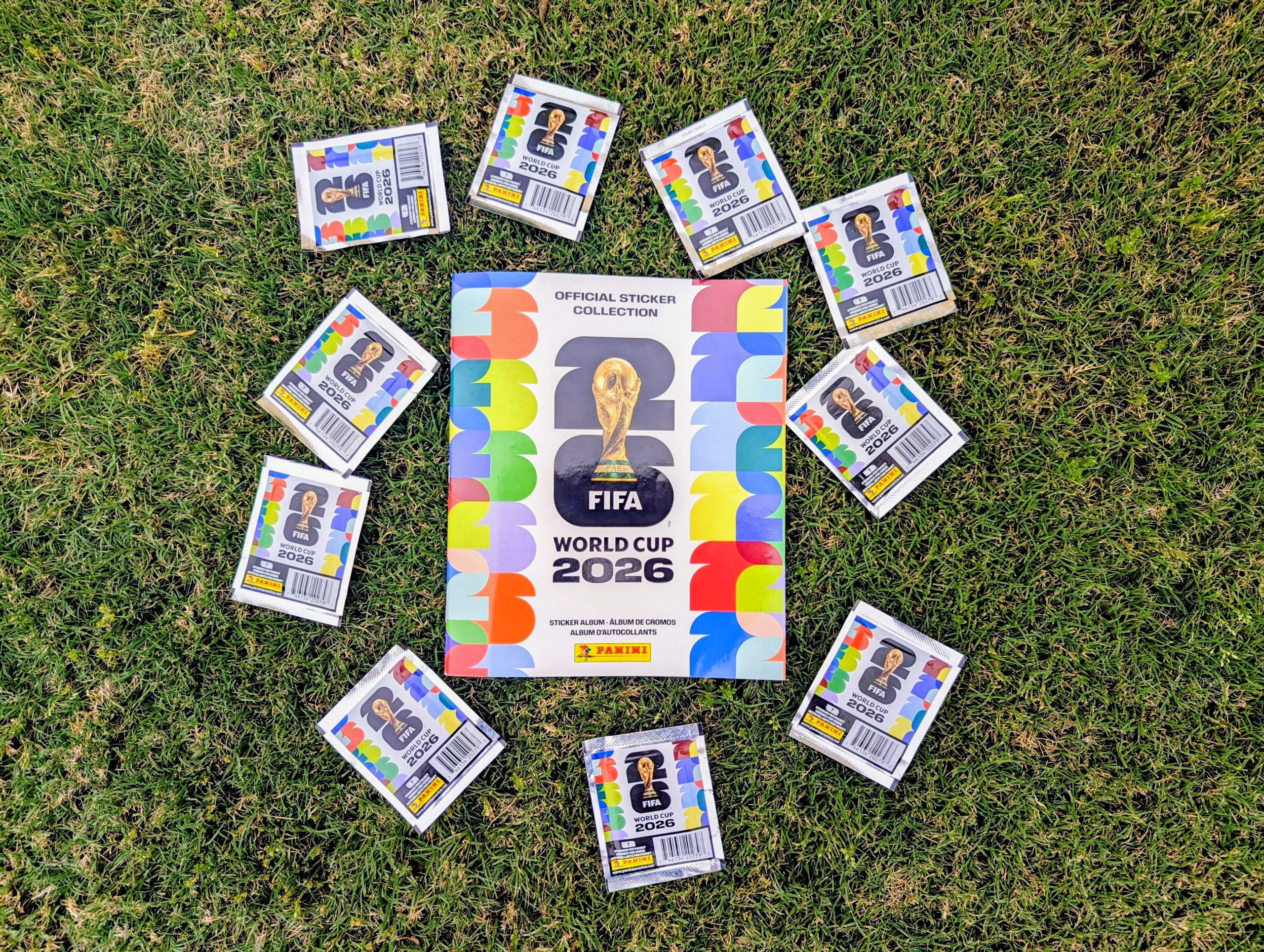
PHOENIX – The first Panini sticker Andres Martinez ever saw wasn’t his own. He was 12, living in Chihuahua, Mexico, when a friend brought home an album from Mexico City. They had only a few stickers, but they pored over every page.
Now a professor at Arizona State University and author of “The Great Game,” Martinez remembers his first encounter vividly.
“We were all so into the World Cup,” he said. “(Stickers) were harder to get where we lived then … so we would just stare in awe at every page. He only had a few packets of cards, but it was my first taste of Panini craze.”
Before the internet, before fantasy leagues and before the World Cup became a billion‑viewer spectacle, there were stickers. In 1970, as Mexico prepared to host the first globally televised World Cup, an Italian publishing company called Panini released a small, unassuming album filled with blank rectangles.
Each space was numbered, waiting to be matched with a sticker of a player’s portrait. Children across Italy bought their first packets for a few lire, tore them open and began a tradition of finding the stars, trading the duplicates and completing the book that would unknowingly transcend generations.
The origins of the tradition resonate with Martinez.
“That is kind of cool for me, being from Mexico,” he said. “And it feels appropriate because in so many ways Mexico ’70 was such a landmark World Cup. It was the first one televised globally in color, and it was the final chapter in that astonishing Brazil team of Pelé that won their third Cup that summer. So it’s nice that it’s the one that launched Panini albums, too.”
The idea spread quickly. By the late 1970s, Panini albums were a fixture in children’s lives every four years, from Milan to Montevideo. By the 1980s, they were a global phenomenon and a full-blown mainstay in the World Cup festivities.
More than 50 years later, the ritual hasn’t changed, but the world around it has.
Panini now prints millions of sticker packets per day in the months leading up to each World Cup, according to company statements. With the expansion of the tournament, the albums have grown larger and more ambitious. The 2022 Qatar edition featured 670 stickers, and the 2026 album, tied to the first World Cup hosted in North America since 1994, will expand to 980 stickers, which will be the biggest collection in Panini’s history.
As D.J. Kazmierczak, Panini America’s senior vice president of sales and product development, put it, “We’re going from 32 to 48 teams … the album itself is going to increase by 50% just because of that.”
What began as a local Italian hobby for children is now distributed in more than 150 countries, and the audience has changed, too.
Panini estimates that roughly 40 percent of its collectors are now adults, which is a drastic shift from the early decades when the albums were marketed almost exclusively to a younger demographic. The rise of social media has accelerated the trend as TikTok unboxing videos routinely reach millions of views, and online trading groups have grown into global communities.
Kazmierczak has watched the shift firsthand.
“The difference is night and day from even back in 2014,” he said. “The number of events, the number of retailers that are now involved and interested, all of that has increased so much it’s hard to quantify.”
The U.S. business began accelerating sharply in 2014, laying the groundwork for the surge the hobby is seeing today.
Retailers feel that shift, too. At Showtime Sports Cards and Gaming in Tempe, owner Peter Liu has watched the cycle repeat for 35 years.
“It’s a different world,” he said. “And it’s a different set of collectors and they’re diehard soccer.”
With the 2026 World Cup taking place in the United States, Mexico and Canada, he expects demand to spike.
“We’re expecting sales to be better than in the past.”
As for collectors, the culture surrounding the hobby has also grown.
“A lot of people who collect and do the Panini sticker books, they go to trade nights, especially the kids,” said Jacob Schneider, a newsletter writer for Men in Blazers and a longtime collector. “Those trade nights, they’re hosted all around the country.
“You’ll bring all your excess stickers. Say you have like two Tyler Adams and you only need one. You’ll trade your Tyler Adams for a Willian Pacho to fill out your Ecuador section. If you go to those, it’s a great opportunity for you to experience what the hobby is about and experience what these sticker books mean to people.”
Exclusive color variations of stickers featuring legends such as Lionel Messi and Cristiano Ronaldo, who will be playing in their last tournament, or current-generation stars like Kylian Mbappé and Erling Haaland, can sell for hundreds of dollars on resale platforms. Furthermore, retailers in the United States reported sellouts during the 2022 cycle as a result of the growing chase, and with the hobby reaching new heights in popularity, especially in the United States, many expect even higher demand as the 2026 tournament approaches.
Despite the broadening reach of the sticker books, the appeal remains something timeless and tactile. In an era dominated by digital fandom fueled by streaming highlights, dopamine-inducing feeds and virtual trading cards, Panini albums offer something physical, slow and community-driven. Collectors can hold the stickers, flip through the pages and trade with a family member, friend or stranger.
The tradition connects generations. Parents who collected in the 1990s now collect with their children and fans who have never been to a World Cup can still feel close to it months before the first match kicks off.
Schneider sees the same generational pull.
“A lot of the time, it’s a family project,” he said. “Maybe a dad did it with his grandpa, now he’s doing it with his kid. It’s that concept of tradition.”
Liu experiences it every cycle.
“We have parents coming in because their son or daughter is looking for World Cup stickers,” he said. “The kid comes in with $20 and he wants 20 packs. The dad and the kid will do it together with the book, and they’re like, ‘Oh, we needed this sticker! We got it!’”
He has even seen mothers and sons collecting together, “which is rare,” he said, “but really cool to see.”
Martinez sees the same thing in his own home.
“I have pretty much done them every World Cup since 1982,” he said. “In recent tournaments, it’s been a great tradition to share with my son and stepson. I have even gotten my in-laws into it!”
As Kazmierczak portrays it, “It’s comforting. It’s the same thing it’s been before … a reminder that this thing happens every four years and it’s a great thing.”
For more than half a century, the albums have survived cultural shifts, economic crises, technological revolutions and the globalization of the sport itself. And now, as the World Cup prepares for its largest edition ever, the Panini tradition is not only surviving, it’s thriving.
Panini’s connection to soccer predates the World Cup album itself.
“Panini has been making soccer stickers since literally the year I was born, 1961,” Kazmierczak said. “That’s how old the company is.”
Overall, Panini’s World Cup sticker business is more than 100 times larger than it was in 1970, a drastic representation of the hobby’s sustained growth.
However, with the 2026 World Cup set to be the largest in history, that expansion alone forced Panini to rethink the physical limits of the album.
“We had to consider the size of the album, the binding … whether they would hold that many pages,” Kazmierczak said. “It’s been the same for decades, and now it’s changing.”
Martinez said the expanded format even affected the production timeline.
“Their final publication had to be delayed a bit this time around because with the expanded tournament, we didn’t know all World Cup participants until the March playoffs,” he said. “Whereas in the past Panini would have been able to finalize albums by the time of the World Cup draw, a full half-year before the tournament.”
The business has grown just as dramatically. The Qatar 2022 album was Panini’s biggest seller ever … until now.
“We have projected to sell four times as much product this time as that one,” he said. “It’s a multiple‑million‑dollar business, and now it’s going to be four times what it was.”
But the expansion comes with a cost, literally. Schneider, who has attempted to complete multiple albums, said the financial barrier is becoming impossible to ignore.
“It’s going to cost around $2,500 to complete the sticker book this year,” he said. “That’s a steep number, and honestly, it’s a bit of a turn-off for some people, especially for anybody who doesn’t have that extra money to be spending on it.”
However, local retailers like Liu said his shop sells individual packs for “$1.25 to $1.50,” but offers a discount for bulk buyers, alleviating some of the burden.
“If you buy them by the box, it’s a dollar (per pack),” he said. “Then we throw in a book with it.”
Despite the opportunity, Panini made a deliberate choice not to raise sticker prices.
“We made sure the sticker-per-sticker cost is the same in this one as it was four years ago,” Kazmierczak said. “It was already going to cost someone 50% more just to fill the album because of the number of teams.”
Still, Schneider worries about sustainability.
“I don’t know if it’s sustainable, to be honest,” he said. “If we see further expansion, you’d hope Panini and FIFA find a way to make it easier for the collector.”
For now, he’s already thinking about alternatives.
“Maybe I’ll gather some friends, and we can all do one together,” he said. “Maybe make it a group project sort of thing.”
Retailers have their own hopes for the future. Liu said he wishes Panini would experiment with rarity the way they do with trading cards.
“We always wish they would put short prints in there,” he said. “Maybe one in a thousand boxes. Give people a chase.”
However, for many collectors, the appeal is emotional, not financial.
“As a kid … my grandfather and uncle would send me boxes of old baseball cards,” Schneider said. “I never liked baseball, but it was always the concept of collecting.”
That sense of progress, filling a page, completing a team and finishing the album is part of what makes the tradition so enduring.
“It’s a little easier with a physical item to actually see the progress you’re making,” Kazmierczak said.
Schneider sees the sticker book as a symbolic journey through the tournament.
“By collecting all the teams, completing the books, you are sort of making your journey through each team,” he said. “You are understanding. You’re gaining knowledge.”
The World Cup itself amplifies that meaning.
“The World Cup only comes every four years,” Schneider said. “These books are symbolic of what the tournament represents … a mixing of cultures, a mixing of tradition across the world.”
The United States has become one of Panini’s fastest‑growing markets, and much of the early growth in the U.S. came from immigrant communities.
“A lot of people have come from Latam … and they bring that tradition with them,” Kazmierczak said. “They’ve passed that down through generations.”
With such a boost in popularity, collectors feel that shift on the ground.
“You used to be able to walk into Target and find whatever you wanted,” Schneider said. “Now it’s a race to even find if there’s something available.”
He has seen lines outside stores on restock days, a phenomenon once reserved for sneaker drops or gaming consoles.
“People wait hours in lines outside Target and Walmart,” he said. “It’s a symbol of how rapidly the hobby is progressing.”
Celebrity visibility has also accelerated the trend.
“You’re seeing Kim Kardashian take her kids to soccer games … opening MLS packs,” Schneider said. “If you’re seeing it everywhere you go, that only adds to it.”
As a result of the growth, Panini has leaned into the momentum with swap meets, promotional albums and educational marketing.
“We hand out a ton of promotional albums,” Kazmierczak said. “It’s the razor blade theory. If I give you an empty album and a couple packs, theoretically you’re going to keep going back.”
The company also launched a major collaboration with Coca‑Cola for 2026, placing stickers on more than 1 billion 20-ounce Coca-Cola and Coca-Cola Zero Sugar bottles across the globe.
“Underneath the wrapper of 20‑ounce bottles … there’s a sticker,” he said. “They’re exclusive stickers, and there will be a separate section in the album for those 12 stickers.”
Panini already holds the license for the 2030 World Cup and the company is preparing for even more expansion as FIFA considers future tournament formats. Competition is increasing, but Panini’s strategy remains rooted in accessibility and tradition.
“One of the things we’ve done in recent years is a better job of trying to educate people on where to find the product,” Kazmierczak said. “That’s half the battle.”
At the same time, Panini is adapting to a younger, more digital audience.
“I’m not naive enough to think the majority of our collectors are my demographic,” he said. “So we try to make sure our marketing considers that.”
Schneider hopes the future includes more accessibility.
“The stickers are purely collectible,” he said. “It would be awesome to make it more feasible.”
For all the growth, all the partnerships, all the exclusive colors and retail expansions, the heart of the World Cup album remains the same as it was in 1970, a book, a pack of stickers and the hope that the next one will be the one you need.
“We’re very aware of the tradition,” Kazmierczak said. “We want everybody to feel comfortable when they get back into it.”
Schneider feels the same pull.
“The sticker books … they’re part of tradition,” he said.
Every four years, millions of people around the world open their first pack and feel the same thing collectors felt half a century ago, a small, simple thrill that connects them to the biggest sporting event on Earth.
Related

Source link