Palma De Mallorca is at the heart of Mallorca’s new way of St. James | News
Palma de Mallorca is at the center of a new chapter in one of the world’s most iconic pilgrimages, the Way of St. James or El Camino de Santiago, which sees would-be pilgrims flock to Spain from all over the world. The island has now formalized the ancient route as a 67 kilometer route starting at the Shrine of Lluc and ending at the spiritual church of Sant Jaume in central Palma, giving travelers the chance to embark on an iconic journey to Santiago de Compostela, starting in the Balearic Islands. Palma de Mallorca serves as a valued bridge point between the Balearic Islands and the mainland and emerges as the symbolic and experiential culmination of the New Way of Saint James.
A journey of tradition, landscape and discovery
The new version of the pilgrimage, known as El Camino de Lana (The Wool Way), offers a mix of spiritual discoveries and a relaxing Mediterranean lifestyle. Along the route, pilgrims pass through ten municipalities and experience Mallorca’s varied landscapes, heritage sites and local culture before arriving at the final destination of Palma de Mallorca. One of the most symbolic elements of this project is the creation of a specific seal for each town or village, allowing pilgrims to stamp their passports according to Jacobean tradition.
A typical four-day itinerary might look like this:
Stage 1: Santuari de Lluc – Caimari (~18 km)
Stage 2: Caimari – Lloseta (~18 km)
Stage 3: Lloseta – Santa María del Camí (~15 km)
Stage 4: Santa María del Camí – Palma (~15 km)
A historic final in the heart of Palma
Only when travelers reach the capital of the Balearic Islands does the journey take on a new dimension. Bursting with cosmopolitan spirit, world-class gastronomy and spiritual sights such as the 13th-century Church of Sant Jaume, which pilgrims will have firmly marked on their maps before embarking on their journey, Palma is the perfect stopover before continuing to the mainland. After four days of walking through Mallorca, the capital offers well-deserved rest and reward, whether you visit one of the many art galleries, museums and noble houses or have a cocktail in one of the many squares. Ferry connections to the Valencian Community serve as both a destination and a gateway and are plentiful, allowing pilgrims to continue their route on the mainland on their journey onwards to Santiago de Compostela.
Spirituality in the heart of Palma
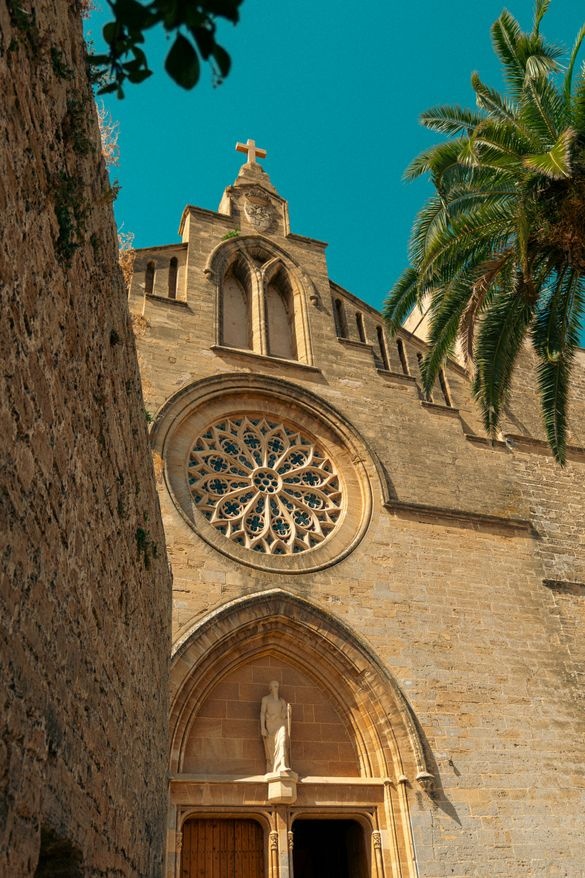
The Camino de Lana culminates at the Church of Sant Jaume, where visitors can pause to reflect and explore one of the capital’s oldest parishes. Sant Jaume remains to this day in its original structure a space of great simplicity and beauty. The building is a testament to Gothic architecture, with a single groin-vaulted nave and the iconic rose window. The building has undergone no further changes and its keystones still bear the coats of arms of the benefactors who promoted its construction. The church is dedicated to the same apostle, Saint James, as the Camino itself, making it the natural symbolic end point for pilgrims who only intend to undertake the journey through Mallorca ending in Palma.
A pilgrimage that is best experienced in peace
This expansion reflects growing interest in alternative Way of St James routes, giving travelers the opportunity to start their journey in an environment that combines natural beauty with cultural depth. Mallorca’s mild temperatures during the off and shoulder seasons provide ideal conditions for walking and exploring, and avoiding the crowds that follow the warmer weather. The route itself is particularly suitable for those looking for a quieter, more reflective experience. Traveling through the UNESCO Serra de Tramuntana to the Gothic Church of Sant Jaume, Mallorca’s Way of St. James is the new way to appreciate Palma de Mallorca in 2026.