Older Americans who vote live longer than those who don’t – new research
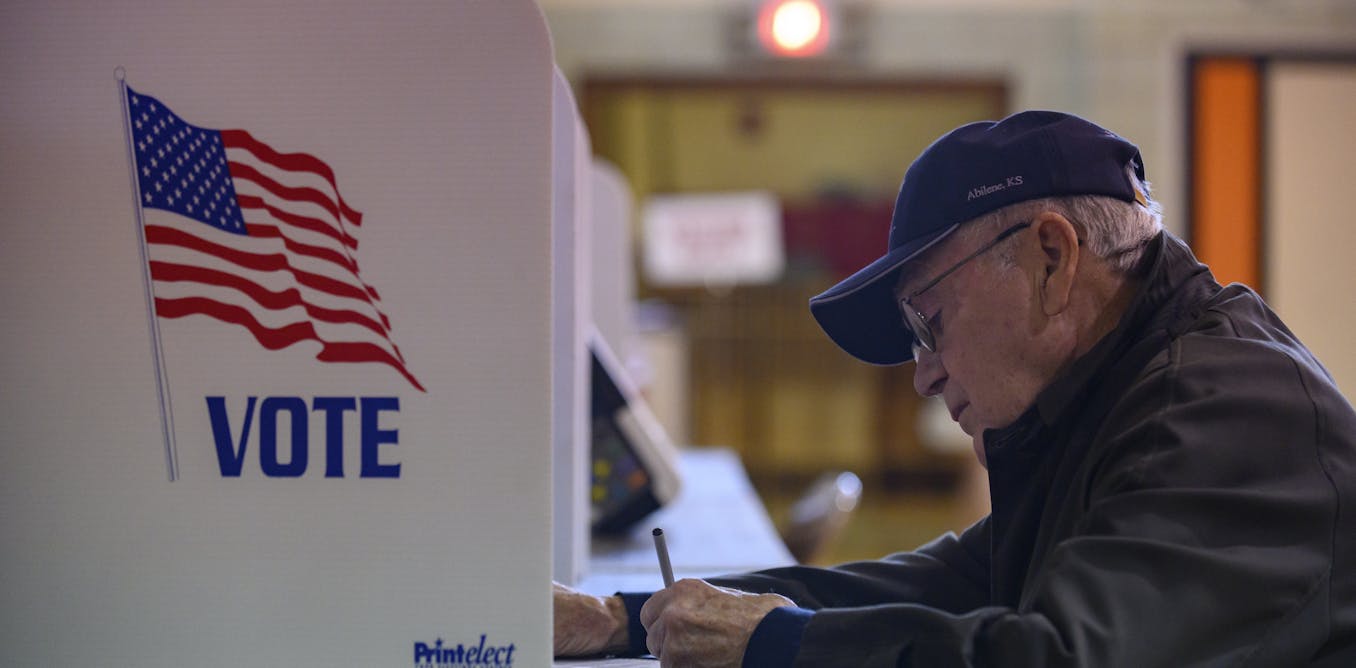
Most people know the basics of healthy living that become more important as you grow older: Eat plenty of vegetables, exercise regularly, sleep well, have a social life, limit your alcohol consumption and don’t smoke.
As an economist and social psychologist who study altruism and health, we wondered whether civic engagement might play a role as well.
In 2022, the American Medical Association, an organization representing doctors, noted that voting could potentially have health benefits. So we conducted a study that directly tested this idea: We examined whether older Americans – people who are 65 and up – who vote live longer than nonvoters.
Older adults vote at a higher rate than younger adults in the United States. In Wisconsin, the focus of our study, the voting rate of older adults is even higher.
We used data from the Wisconsin Longitudinal Study, a study which has followed a randomly selected sample of Wisconsin high school graduates since 1957. We compared the long-term health of older adults who voted in the 2008 presidential election to those who did not vote in that election. Using objectively verified voting records from Catalist, which tracks Americans’ voting behavior, along with official National Death Index records, we found that voters were 45% less likely to die within five years after the 2008 election, 37% less likely to die 10 years after the election, and 29% less likely to die 15 years later.
We also examined voting in the 2004 and 2012 presidential elections and found that the results were stronger for more recent elections – those held in 2008 and 2012 – compared to the earlier one held in 2004.
You may wonder whether this is just because healthier people are more likely to vote in the first place.
It’s easier to vote when you’re healthy than when you’re not, but this does not fully explain our results. Voters still had a lower risk of dying when we controlled for demographic factors such as gender, marital status and income, other forms of civic engagement such as volunteering, and a voter’s health status prior to voting.
We also found that those in poorer health to begin with benefited more from voting 15 years later than those who had been healthier before they voted.
Here’s another finding: How someone voted didn’t matter. When we compared what happened to older adults who cast their ballots in person to those who mailed their ballots, we found that both groups had about an equally lower risk of dying over the 15-year period.
It also did not matter whether a voter’s preferred candidate won. We found that although it can be stressful when the candidate you support loses, the people we studied experienced similar long-term health benefits of voting regardless of their political affiliation.

Paul Hennessy/Anadolu via Getty Images
Why it matters
Scientists have long known that people who volunteer for nonprofits experience many health benefits, including a longer lifespan.
Voting is, arguably, also an altruistically motivated act. That’s because individual voters are aware that their one vote will not change the outcome of a national election.
What still isn’t known
If you are wondering why voting predicts lower mortality risk, well, so did we.
One possibility is that as with other civic engagement activities, including volunteering, voting may trigger positive biological responses that support well-being. Other researchers have found ample evidence showing that volunteering can boost the brain’s reward system, reduce stress and even slow some aspects of aging.
Although we didn’t test for these in the Wisconsin Longitudinal Study, they may help explain why people who vote tend to have better health outcomes than those who don’t.
Voting might also improve health through a sense of self-efficacy, civic duty and social connection, since it is both an altruistic and shared activity.
Although the exact explanations aren’t known, studies consistently show a link between volunteering and a lower mortality risk, which suggests that participating in civic life – even something as simple as casting a ballot – may be good for your health, like going for a run or eating vegetables.
Source link