No NIL money for international college athletes? ASU’s Poa awaits legal decision
TEMPE – Expectations are high for collegiate athletes. Workouts. Competition. Academic rigor.
Some are rewarded with Name, Image and Likeness deals. Others, such as Arizona State women’s basketball player Last-Tear Poa, are not, because their student visa status prevents international athletes from earning NIL money.
The Australian is seeking to correct that and filed a lawsuit in late 2024. It is still working its way through the legal system.
International collegiate students such as Poa make up 7% of participants, more than 14,000 athletes, in NCAA Division I sports, according to the NCAA’s 2024-25 demographic database. At last year’s March Madness basketball tournament, the number was about 15%, with a 175% jump since 2010.
NIL was introduced in 2021, enabling college athletes to earn money through endorsements and brand deals.
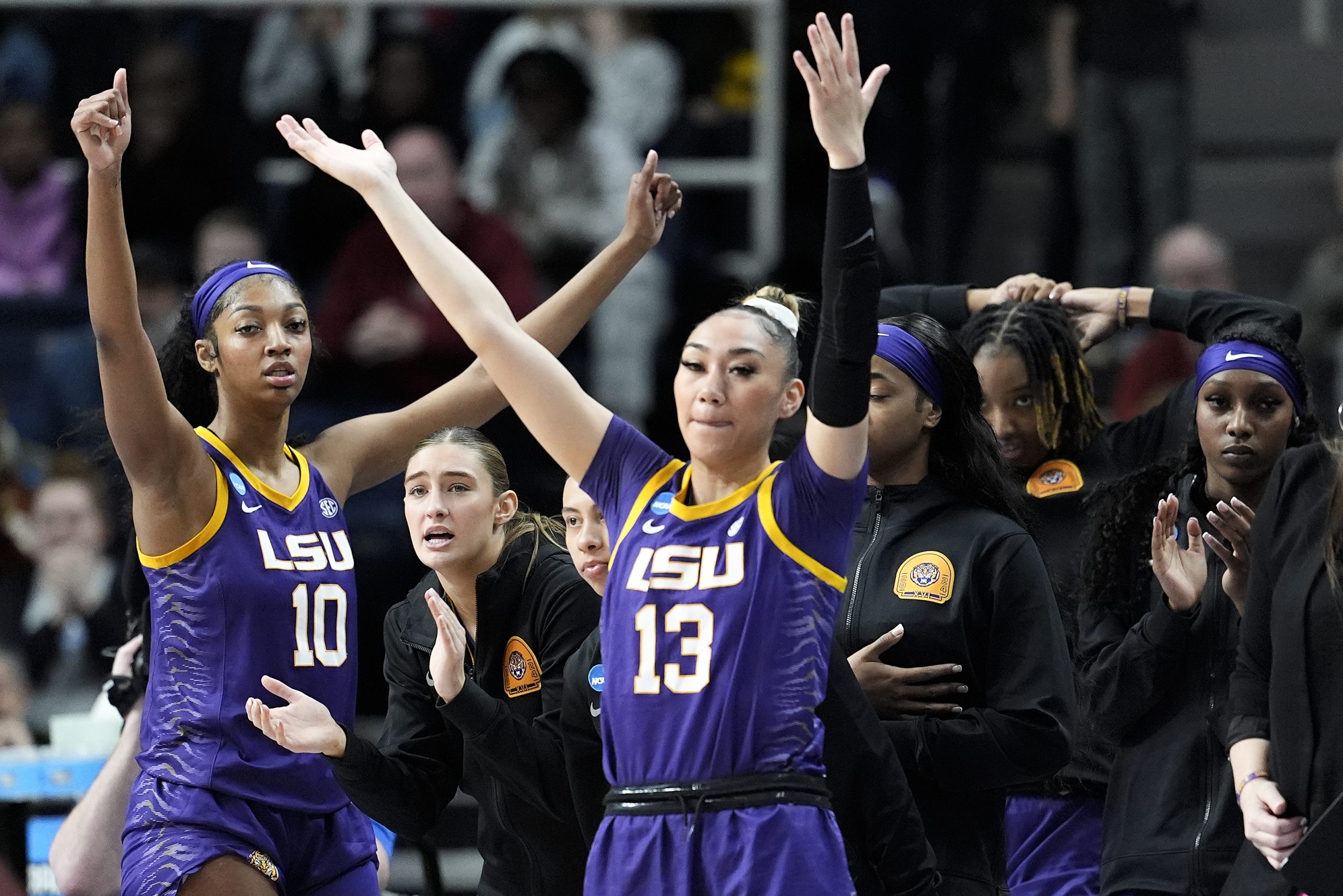
“I think just being able to change, not just for me, but for people behind me and up-and-coming,” said Poa, who is competing in her final postseason with ASU after transferring from LSU, where she played on the team that won the national title in 2023. “The Australians coming through, internationals coming through, I want them to have the opportunity because coming into college – it’s not fair, because I’ve been through it all.”
Poa, 24, filed a lawsuit in the U.S. Court for the Middle District of Louisiana in October 2024 after her petition for a P1-A visa was denied by the U.S. Citizenship and Immigration Services.
The P1-A visa would enable her to earn money as an athlete at an internationally recognized level of performance. The P1-A visa is “solely for the purpose of performing at a specific athletic competition,” according to the USCIS website.
In September, Louisiana-based Judge Brian Jackson denied the USCIS’ request to dismiss the lawsuit, leaving the door open for international athletes to apply for a type of visa that would make it easier for them to make money in the U.S. while playing college sports.
On the way to a national championship with LSU in 2023, Poa was surrounded by players such as Angel Reese and Flau’jae Monae Johnson, who were earning significant NIL money. It was frustrating for her to watch her teammates secure opportunities with brands, so she decided to use her platform at a powerful sports school to raise the issue.
“I’m the type of person, once I start it, I’m going to keep going until they say no,” Poa said.
Ksenia Maiorova, a sports immigration lawyer and partner at Florida-based law firm Green and Spiegel, is representing Poa pro bono in the case. Maiorova’s motivation is for college athletes from the U.S. and abroad to be treated equally.
Maiorova argues that the primary purpose for college athletes is not to study but to play basketball at an elite level, and benefit from NIL payments as much as possible.
“It tracks with the guidance by the Department of Homeland Security,” Maiorova said, “that says that P-1s can attend school full time as long as the academics are sort of ancillary to the primary purpose, and the primary purpose being athletic.”
In a country such as Australia, where academic alternatives to LSU and ASU are available, the “driving force” behind Poa’s move to the U.S. was athletic opportunity, her lawyer said.
Maiorova also argued that P-1A visas have been granted to college athletes before. Last year, South African golfer Kieron Van Wyk was granted a P-1A as a college golfer at the College of Charleston.
A victory for Maiorova – and her colleague on the case, Amy Maldonado – would be if Poa is approved for a P-1A visa. Maiorova is unsure if the case could result in precedent for other international college athletes; it would have to progress through the courts before it becomes “impact litigation.”
Maiorova and Maldonado are preparing for cross motions for summary judgement; they will argue the merits of the case against the government in federal court in Louisiana.
USCIS would not provide a comment on the case.
While her legal team focuses on the case, Poa’s focus remains on the court during ASU’s postseason stretch run.
The Sun Devils remain firmly entrenched in “bubble” mode, and will learn their NCAA Tournament postseason fate March 15.
Poa is closing out a season in which she started 29 games for ASU, averaging 4.7 points and 3.0 rebounds per game. She came to Tempe after three seasons at LSU, needing a change and needing to be loved, she said. ASU coach Molly Miller drew her from the swamp to the desert, and they connected immediately.
“It’s easier to say ‘woah’ than ‘giddyup’ and I have to sometimes say ‘woah’ to Poa,” Miller said. “She’s wired with that competitive nature, she never stops.”
Miller is in her first season at ASU, too, after five years as coach at Grand Canyon University. The pair have grown close, perhaps by dancing in TikToks together off the court.
Up close, one can see a small birth mark under Poa’s left eye. When her great-grandmother was dying, she shed a single tear. Poa was the next child born into the family, hence the name, Last-Tear.
At 9, Poa decided to play basketball after seeing how her older cousin brought the family together at games. Her mom, Natasha, told her that if she was going to play, she would have to fully commit – that competitiveness runs in the Poa family.
She lights up at the mention of her family, her brother, Kingston, and sister, Heavenly, in particular. She calls them her “Why?” Growing up in Australia, she remembers Kingston keeping her company in the gym while she practiced at 4 a.m. and 4 p.m.
“I think being on the other side of the world, to show them to be more independent,” Poa said. “It was hard for me at first, because, you know, being away from home and my siblings.”
In Australia, Poas’ high school coach was American and encouraged her to pursue basketball in the U.S. She played a year of junior college at Northwest Florida State College in Niceville after high school. That was where she met Kylee Gallavan, one of her best friends today.
At a Starbucks across the road from Weatherup Center, Gallavan is sporting a bedazzled over-the-shoulder bag. It reads, “Last-Tear Poa 13,” in beads. She has flown from Washington, D.C. to visit Poa for the weekend. She is carrying on the tradition from LSU where fans dress up for games, and the South takes their bedazzling a little more seriously, she explained.
Gallavan’s family invited players from Northwest to their home and acted as a host family for Poa. Gallavan has watched Poa’s progress from junior college to ASU with pride. She has witnessed the sacrifices Poa has made to reach this level.
“To see her make it to the top level,” Gallavan said, “after knowing how hard her family worked for it and how much of a sacrifice it is to be away from your family, it means so much to her.”
Off the court, the pair seek adrenaline rushes, from four-wheeling in Miami and ziplining in Louisiana. Because of such a rigorous basketball schedule – they mostly spend their time shopping in Tempe and eating out. Poa eats about five times a day, she said.
“It’s really preparing her for the next phase,” Gallavan said. “Because you have to be that multidimensional player to be able to play in the WNBA, and that’s where she’s going.”
Poa has the same attitude – her time at ASU is preparation for a professional career – but she is also hoping to effect change during her time in the desert … on the court and off.
Related