NASCAR & IndyCar face uphill battle to go global
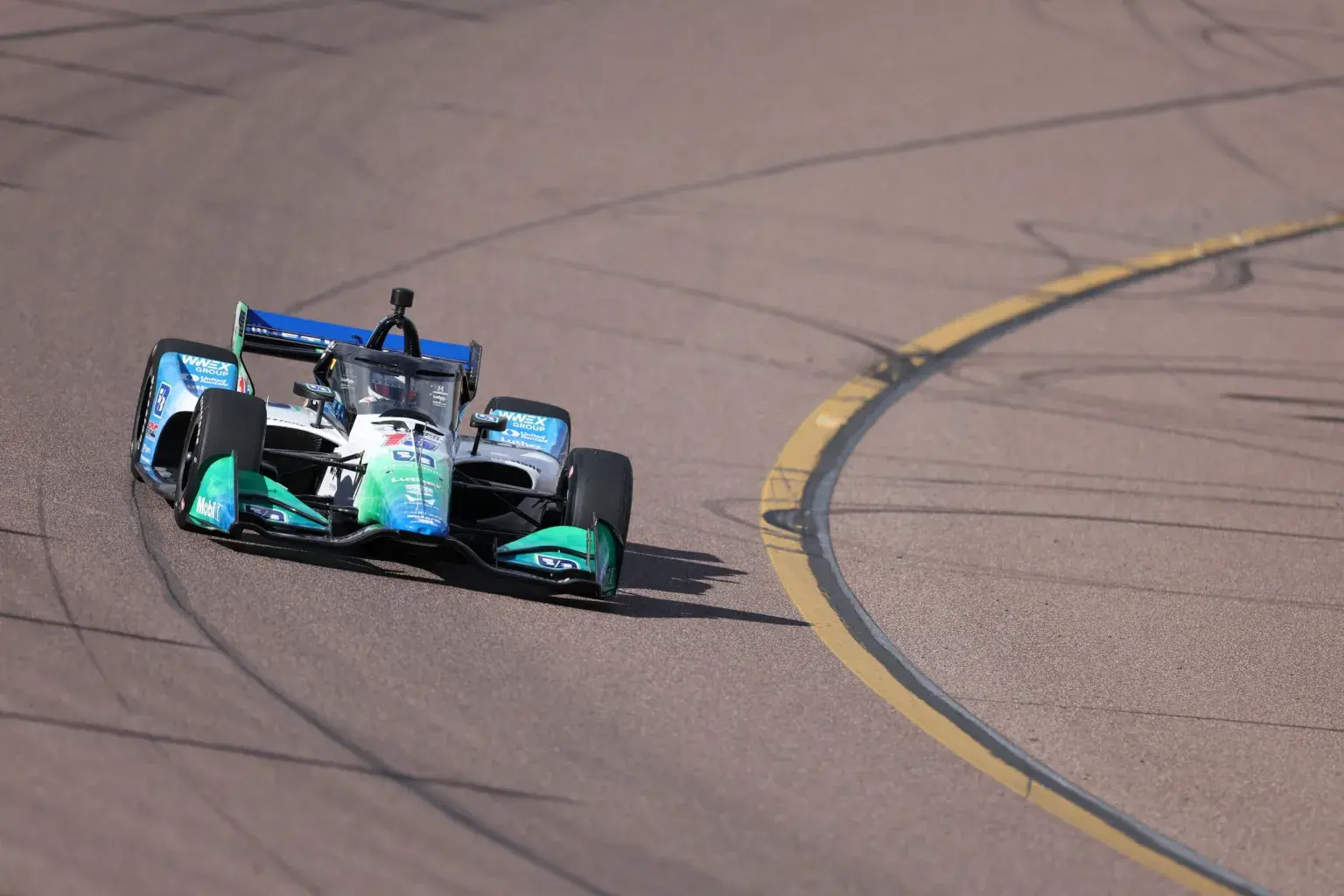
PHOENIX – American sports leagues are going global.
The NFL has nine games scheduled in seven countries in the upcoming season. MLB, the NHL and the NBA have a long history of staging international events.
For the American top racing series, however, the international stage has remained more elusive. NASCAR recently held a race in Mexico City, and IndyCar visits the Toronto area annually, but there is little more than that in recent history.
There are practical reasons for that decision.
IndyCar officials, primarily Penske Entertainment President and CEO Mark Miles, have cited economic and logistical factors, as well as a priority on strengthening the domestic North American market.
While each series is in season, there is racing almost every week. NASCAR, which runs from early February through early November, only has one off-week. IndyCar, which runs from early March through early September, has a little more flexibility.
The travel for both series would be significant in terms of time. NASCAR is based in Charlotte, and IndyCar is based in Indianapolis. That doesn’t stop other sports leagues with teams scattered across the U.S., but the transportation of cars adds a complication.
When NASCAR went to Mexico, the teams traveled from Michigan, where the previous weekend’s race was staged, to Mexico in one giant convoy. It was the same procedure when they returned to Pocono, Pennsylvania, the following week.
The 137-truck convoy was armed with police escorts for the trip, with no major hiccups reported.
In addition, the addition of international races would likely mean a loss of American races. Ten tracks have two dates on the NASCAR schedule, so it would likely be one of those tracks losing a race, with one of those potentially being Phoenix Raceway. The only track that has multiple dates for IndyCar is Milwaukee.
Despite those challenges, international growth is on racing series executives’ minds. With IndyCar broadcasts moving from NBC to FOX in 2025, the season was shortened to accommodate the NFL season, which is FOX’s biggest sporting property. That shorter schedule may provide an opportunity.
“I’ve been thinking about it for a long time,” Miles told racer.com. “You have to get a green flag to go see what you can do, but the concept we’re giving some time to is an international series, and it’s not about ‘go get one.’
“We don’t want to look like we just went to chase some bucks. But could you put three or four together, and connect them, because (a major company) is the title sponsor of the International Series, and there’s a bunch of money, not a little money, and it’s connected – there’s a points competition (for the offseason series) or a money competition between them, and that it would be international?”
NASCAR may also be eyeing more international events. The NASCAR Brasil Series, NASCAR México Series, NASCAR Canada Series and NASCAR Whelen Euro Series all appear to be thriving and growing.
“We kind of look at our international focus from three silos,” NASCAR Vice President and Chief International Officer Chad Seigler told NASCAR.com. “We have the individual series and our philosophy has always been, we know we can’t take the Cup Series and have it travel around like Formula One does, so if we can go into a market and create local stars, local heroes, local team owners, local track infrastructure, that’s good for us.”
Many drivers support the idea of their series going global. After the NASCAR race in Mexico City, New Zealander and Trackhouse Racing driver Shane van Gisbergen expressed a desire to bring the series to his home nation.
“I’m biased, but the reception here shows what it could be like,” he said.
Both series have some international history.
NASCAR has gone to Canada with the Cup series twice, but those races were in the 1950s. NASCAR’s second-tier series, the O’Reilly Auto Parts Series series, visited Mexico City five times in the 21st century and Montreal six times. Its third-tier series, the Craftsman Truck Series, visited Canadian Tire Motorsports Park in Bowmanville, Ontario, five times in the 2010s.
In the late 1990s, NASCAR held a pair of exhibitions at Twin Ring Motegi and Suzuka in Japan. NASCAR also travelled to Australia for an exhibition race in 1988.
For IndyCar, in addition to its Toronto trip, it visited Edmonton earlier this century. CART (an open-wheel series that raced before and when IndyCar started) made trips to Edmonton, Montréal, Mont-Tremblant, Vancouver and St. Pie.
CART went south of the border as well, traveling to Mexico City and Parque Fundidora in Monterrey in the early 2000s.
South America is no stranger to the American open-wheel series. IndyCar raced on the streets of São Paulo this century. Historically, CART visited Autodromo Nelson Piquet in Rio de Janeiro. The USAC Champ Car Series (the predecessor to CART) went to Autodromo Ingeniero Juan R. Bascolo in Rafaela, Argentina, for a pair of races in 1971.
The various American open-wheel series have visited Japan numerous times, with trips to Twin Ring Motegi over the years. Australia hosted CART for 17 races in the 1990s and 2000s at Surfer’s Paradise.
CART even ventured to Europe in the 2000s. It went to the Belgian Circuit Zolder once in 2007. The series went to EuroSpeedway Lausitz in Germany twice. It raced at the Dutch racetrack, TT Circuit Assen, once in 2007.
One of the main challenges for American racing series are the tracks. Ovals are a huge brand of both series, and there are not many ovals internationally. Additionally, they do not have the capacity needed for a top-tier series. But there are options.
As noted, NASCAR has international series in Mexico, Canada, Brazil and Europe already, and a combined race weekend with one of the international series is logical. Canada makes the most sense, as Montreal was rumored to return in 2026. Bowmanville is also race-ready.
Mexico also makes sense. NASCAR visited the Autodromo Hermanos Rodríguez in 2025, and one of IndyCar’s most popular drivers, if not the most popular, Pato O’Ward, hails from Mexico.
Argentina and Brazil both could be in consideration, especially for IndyCar, as it has a history in Brazil. IndyCar was in talks to head to Argentina as of late, but those stalled out. One of the IndyCar team owners, Ricardo Juncos, brought his IndyCar to the country to do some test runs in 2022.
Both series have a Japanese engine manufacturer that owns an iconic Japanese racetrack. IndyCar’s Honda owns Suzuka Circuit and NASCAR’s Toyota owns Fuji Speedway. Both series could also return to Motegi, on the road course, with the oval needing some repairs.
An Australian trip is logical, especially for NASCAR, with drivers like van Gisbergen and Marcos Ambrose moving over from the Australian V8 Supercars series.
A European trip is a bit more far-fetched with Formula 1 and Moto GP as the primary focus of the area. IndyCar seems more likely to go with a better history and more drivers from the continent. France and Germany make the most sense, as F1 does not visit those countries, and IndyCar could be the top racing series in those countries.
For the main series, the domestic status quo may remain in place for a while, but both series are thinking more broadly.
“I tell people about our international team and try to educate the fanbase that NASCAR is bigger than only the Cup Series,” Seigler said. “When I’m out giving presentations, I ask, ‘What are the four biggest cities NASCAR races in’ and they may say a city like Chicago or Dallas.
“I remind them we race in Mexico City, São Paulo, London and Toronto. We race in cities in some form or fashion that have 20-30 million people and that’s a big story for us.”
Related

Source link