Max Hodak’s Science Corp. is preparing to place its first sensor in a human brain
Science Corporation, the startup of former Neuralink president and co-founder Max Hodak, has tapped a top neurobiologist to lead the first U.S. human trials for its biohybrid brain-computer interface.
Dr. Murat Günel, chairman of the Department of Neurosurgery at Yale Medical School, has been appointed scientific advisor after two years of negotiations. His goal is to surgically place the first sensor for a future interface — one that will eventually combine lab-grown neurons with electronics — into a patient’s brain.
Founded in 2021, Science completed a $230 million Series C fundraising round last month, valuing the company at $1.5 billion. The most advanced product is PRIMA, a device for restoring vision to people with blindness caused by macular degeneration and similar conditions. Science acquired the technology in 2024 and further developed it through clinical trials, with plans to make it more widely available in Europe once regulatory approval is received, perhaps as soon as this year.
However, Hodak co-founded the company with a bigger vision in mind: creating reliable communication links between computers and the human brain – both to treat disease and to pave a path to human improvement, such as adding entirely new senses to the body. He has dedicated his career to that proposition, from working his way into a graduate neuroscience lab as an undergraduate, to founding his first biotech computing startup, to building Neuralink alongside Elon Musk.
Neuralink and other organizations have been successful in using electronic sensors to detect brain activity in patients suffering from ALS, spinal injuries and other conditions that break the brain’s communication with the body. Users with implanted devices can control computers or generate words on a screen simply by thinking about them. However, the way to a real market for these devices remains obscure given the regulatory challenges and the relatively small number of patients with applicable diagnoses.
For his part, Hodak concluded that the conventional method of influencing the brain with electricity using metal probes or electrodes is the wrong way to go. While the technology can produce remarkable results, Günel says these probes cause brain damage that will likely undermine the device’s performance over time. That limitation led the Science founding team to a more organic approach.
“The idea of using natural connections through neurons and creating a biological interface between the electronics and the human brain is genius,” Günel told TechCrunch.
WAN event
San Francisco, CA
|
October 13-15, 2026
Alan Mardinly, co-founder and Chief Science Officer of the company, led the development of Science’s biohybrid sensor with a team of 30 researchers. The final device will be embedded with lab-grown neurons. These neurons can be stimulated with light pulses and are designed to integrate naturally with the neurons in a patient’s brain, creating a bridge between biology and electronics. In 2024, the company released a working document which showed that the device could be safely implanted in mice and used to stimulate brain activity.
Within the company, the focus is now on developing prototypes of the device and figuring out how to grow neuron cells for various therapeutic applications that meet medical use standards.
Günel will advise the team in the preparation of clinical trials on humans and is already in discussions with the medical ethics committees that oversee experiments on human subjects. The first step will be to test the company’s advanced sensor, without the embedded neurons, in a living human brain.
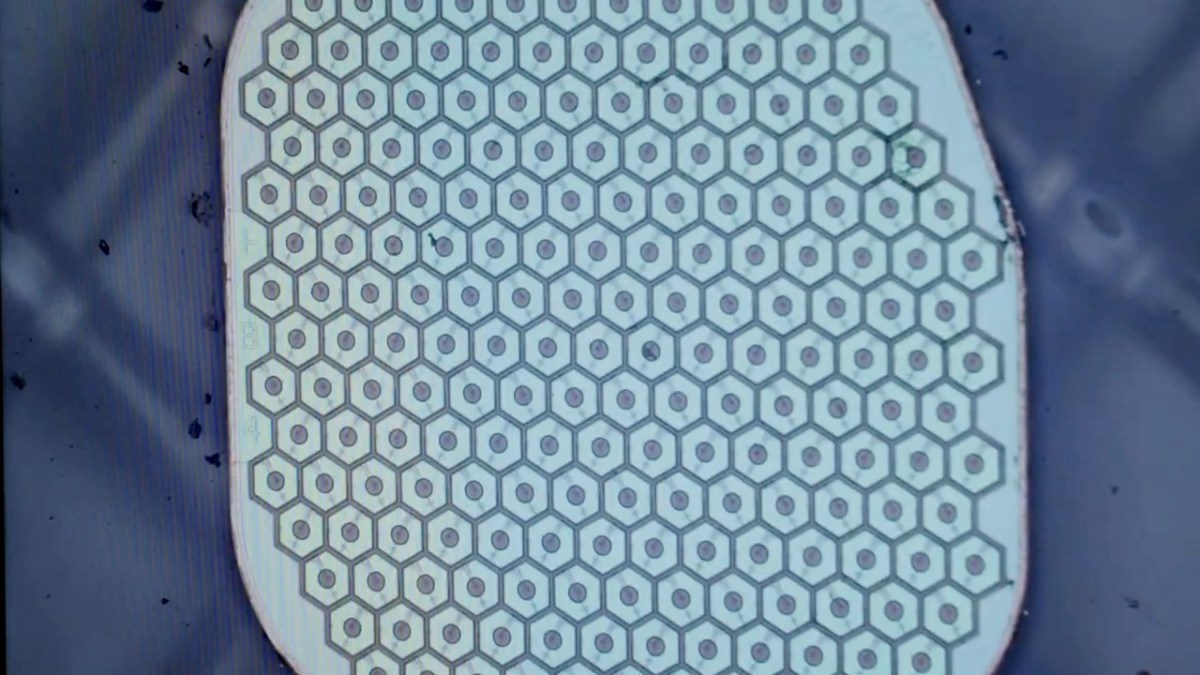
Unlike a Neuralink device, which is inserted directly into brain tissue, Science’s sensor will be implanted in the skull but rest on top of the brain. Possibly because of that distinction, the company says it does not plan to seek FDA approval for these studies, arguing that the small device — which contains 520 recording electrodes packed into a pea-sized area — does not pose a significant risk to patients.
The team’s plan is to find candidate patients who already require significant brain surgery, such as stroke victims who need to have a piece of their skull removed to reduce the impact of brain swelling. In such a case, Günel expects to place the sensor on top of their cortex and evaluate its safety and efficacy in measuring brain activity.
Günel believes the device could help tackle multiple neurological conditions if it proves successful. One of the first applications could be to provide gentle electrical stimulation to damaged brain or spinal cord cells to promote healing. A more complex application could involve monitoring neurological activity in patients with brain tumors and providing early warnings to healthcare providers about impending seizures.
However, if the full potential of these devices is realized, Günel wonders whether they could provide more effective treatments for conditions like Parkinson’s disease, a progressive condition that gradually robs patients of control over their bodies. Current treatment options include experimental brain cell transplants and deep brain stimulation with electricity, but neither has been proven to reliably halt the progression of the disease.
“I imagine this biohybrid system combines the two: you have the electronics and you have the biological system,” he told TechCrunch. “For example, in Parkinson’s we cannot stop the progression of the disease; in neurosurgery we just place an electrode to stop the tremors. Whereas if you can really stop the disease [transplanted] cells back in the brain, protect those circuits, there’s a chance, and I think it’s a good chance, that we can stop the progression of the disease.
However, much work remains to be done before then. Günel says it would be “optimistic” to expect the trials to begin in 2027.