Latest earthquake: Food becomes scarcer for thousands of Venezuelan families
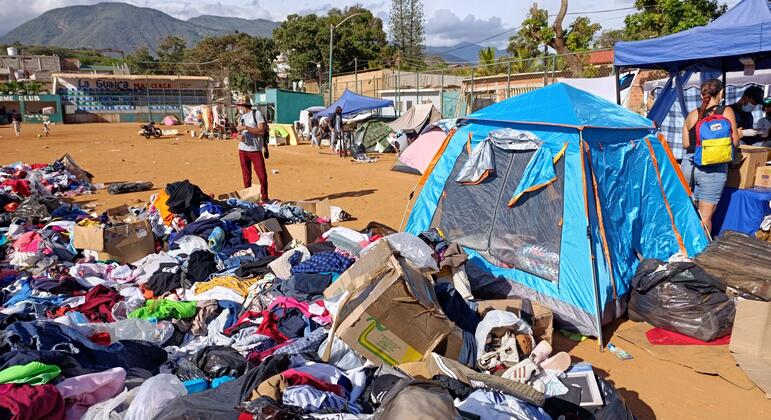
Before the disaster, the World Food Program (WFP) has already helped approximately 500,000 people with school meals and community support. Now the agency is shifting its work to emergency aid.
A stricken father held his three young children by the hand and told UN humanitarian teams he had no shelter, water or food left.
The children’s mother had been hospitalized in Caracas and the family had lost neighbors and relatives to the rubble.
Hungry and homeless
The scene, described from La Guaira by Stephanie Hochstetter, WFP director in Venezuela, reflects a new urgency after the earthquakes: for many families, surviving the disaster also means figuring out where the next meal will come from.
“It’s heartbreaking to see the desperation” she said, speaking at a virtual press conference for UN correspondents from one of the integrated service centers the UN has set up in the region.
WFP has already distributed emergency food parcels to 1,200 people in La Guaira, one of the hardest-hit areas, and is preparing to scale up assistance to reach half a million people in shelters over the next three months.
“The needs for food, safe water, shelter and essential services are immediate and critical,” Ms Hochstetter said from the coastal state.
Uncertainty reigns
In the centers set up after the earthquakes, some families can still cook. The problem is that many can no longer buy food regularly.
The destruction of homes and infrastructure, combined with loss of income and disrupted services, has left thousands of people in a state of extreme uncertainty.
The WFP distributes both ready-made products and food that families can prepare themselves.
The agency currently has more than 3,000 tons of food in Venezuela, enough to feed more than 10,000 families for two months. The country also purchases supplies locally and maintains reserves in Colombia that can be quickly redistributed if needs exceed the country’s available capacity.
First appeal
WFP has launched an initial $15 million appeal to provide emergency food, logistical support and emergency communications to up to half a million people over the next three months.
The figure is a first estimate. Needs may increase as humanitarian teams reach isolated communities and assess damage in the areas hardest hit by the earthquakes.
Ms Hochstetter warned that the emergency will not end once attention to the earthquakes disappears.
“What we’ve learned from other earthquakes of this magnitude is that when the spotlight fades, the needs don’t disappear,” she said.
Reserves ready to move
The ports of La Guaira and Puerto Cabello remain operational for humanitarian assistance and keep an important route open for food and other supplies.
Beyond the reserves in Venezuela and Colombia, more than 1,400 tons of relief supplies from various organizations are stored at the WFP Regional Logistics Hub in Panama, ready to be shipped.
The agency works with authorities and other humanitarian partners at integrated service points where food and other basic services are distributed. However, special actions are needed to reach more remote communities, as many families cannot travel to these centers.
The immediate priority is to prevent the loss of a home or a family member from turning into a long-term hunger crisis.