How the rise of multigenerational living in California is driving massive growth in the number of ADUs
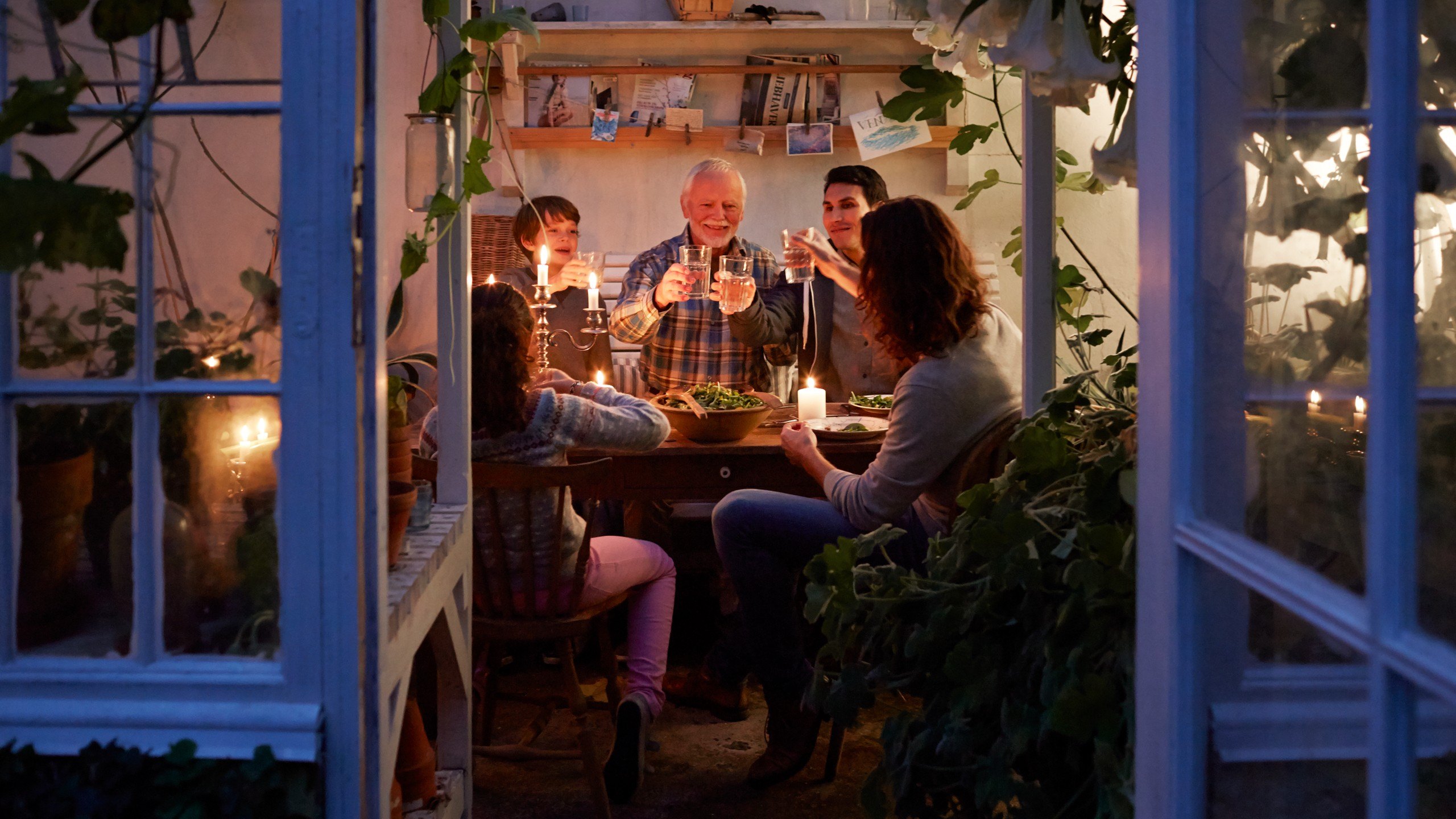
Driven by skyrocketing housing and childcare costs, more and more families are opting for multigenerational living, especially in expensive California, where “granny flats” and “in-law suites” have gone from niche additions to strategic amenities.
Co-living arrangements come in all shapes and sizes, but the typical multi-generational household consists of five family members sharing a four-bedroom home, with an average annual household income of $131,000.
Nationally, nearly 4 million owner-occupied households, or 4.5%, consist of three or more generations of the same family, up from 4.3% in 2019, according to a new Realtor.com® report based on the U.S. Census Bureau report. Data from an American community survey over one year from 2024.
Among the largest 100 U.S. metro areas, Honolulu leads the nation with 12% of local multi-generational households, followed closely by California markets such as Riverside (10.9%), Stockton (10.1%) and Bakersfield (8.8%).
A select number of East Coast markets also stand out for high shares of multigenerational households above 6%, including Lakeland, Florida, Miami and New York.
However, economist Jiayi Xu of Realtor.com says the Census Bureau data doesn’t tell the whole story. An analysis of Realtor.com listings sheds light on trends in supply and demand, and points to where extended families will live in the near future.
Demand changes inventory
In 2025, properties for sale targeted cohabiting parents, children and grandparents, with descriptions often including terms like “granny flat,” “in-law suite” or “accessory dwelling unit (ADU),” accounting for more than 6% of all active listings.
While these larger properties aimed at extended families typically carry a 65% price increase, with the typical multigenerational home costing $709,000, they attract roughly 13% more online views from potential buyers and sell as quickly as standard single-family homes, reflecting strong demand.
The epicenter of this inventory shift is California, home to the five metros that have the highest share of multi-generational homes for sale, with Los Angeles leading the charge with nearly 24% of listings, followed by San Diego (22.7%), San Jose (18%), San Francisco (17.4%) and Riverside (14.9%).
Xu says the popularity of co-living in the Golden State is no coincidence. She points to a “perfect storm” of factors: deep-rooted multigenerational traditions among Asian and Latinx communities, rising housing costs that make singles or nuclear families more expensive, and a large inventory of homes built or adapted specifically to house multiple family units under one roof.
“Notably, California metros also show relatively modest price gaps between multi-generational and standard housing, just 1.6% in LA and 8.4% in San Francisco, suggesting that multi-generational housing there is more normalized and widespread across price levels,” says Xu.
California’s luxury playbook
While rising housing costs and a shortage of affordable child care often push co-living out of necessity, wealthy families in California are approaching the trend differently, turning to multigenerational real estate as an advanced real estate strategy.
In California’s Bay Area, the global technology epicenter,Alexander KallaA real estate agent specializing in luxury homes, says multi-generational living spaces serve a clear purpose.
“For my clients, these ‘granny flats’ are rarely just a place for older family members,” Kalla tells Realtor.com. “They use it as a ‘Step-Down’ for their aging parents who are moving into a modern, detached ADU to maintain their independence.”
In San Jose, where the city has streamlined the ADU permitting process to meet rising demand, Kalla says these units are being built not only to house family members but also to rent, creating a secondary income stream to offset homeowners’ skyrocketing Silicon Valley mortgages.
Meanwhile, Kalla says multi-generational living in the South Bay section of Silicon Valley is often a high-level financial game.
“I have worked with several families who pooled their resources to enter the ‘top tier’ neighborhoods of Saratoga, Los Gatos and Cupertino, which they individually might not have considered,” the agent explains. “By pooling capital, these families can secure heritage properties in world-class school districts, allowing three generations to benefit from the appreciation and lifestyle of a premier zip code.”
Kalla adds that in ultra-premium markets on the Peninsula, such as Palo Alto, CA, and Woodside, CA, permitted multi-generational luxury homes are a key selling point.
“It appeals to international buyers and tech executives who often have family visiting for months at a time, making these homes much more liquid,” he adds.
Furthermore, the multigenerational setups coming to market in the Bay Area are a far cry from the “granny flats” of yesteryear. Instead, they are sophisticated living environments tailored to Silicon Valley’s high-tech lifestyle.
“Given the proximity to major technology campuses, we are seeing an increase in the number of ‘NextGen’ homes that have been specifically designed from the ground up with a ‘house within a house’,” Kalla explains. “These aren’t retrofitted garages; they are architecturally integrated suites with smart home automation and separate HVAC zones to ensure everyone’s comfort is independently managed.”
Low supply versus high demand
In the Midwest and the South, the multigenerational residential landscape is strikingly different. According to the Realtor.com report, many markets in these regions are experiencing a severe lack of inventory, coupled with intense demand, driving prices of the few available co-living properties to new heights.
Among the largest metros, Detroit has the smallest share of multi-generational homes at just 2%, yet these rare properties command a price premium of as much as 120% over standard listings.
Cleveland isn’t far behind, with only 3.1% of listings in the metro offering co-living setups at a 107% markup.
At the same time, homes with in-law suites and granny flats in Detroit and Cleveland attract roughly 80% more page views than typical homes, giving sellers the license to ask top dollar for these sought-after properties.
“This pattern suggests that multi-generational homes in lower-priced markets with limited inventory are a rare commodity that attracts strong buyer interest when they appear,” says Xu.