Global power struggles over the ocean’s finite resources call for creative diplomacy
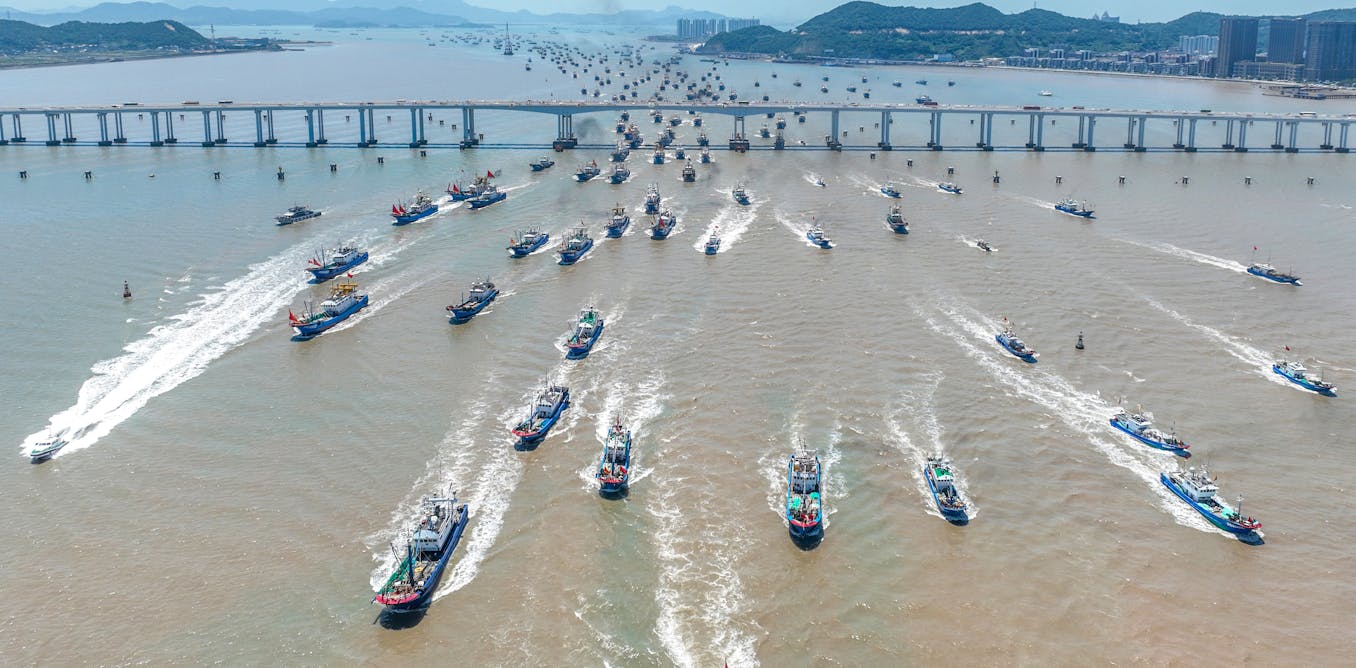
Oceans shape everyday life in powerful ways. They cover 70% of the planet, handle 90% of global trade and support millions of jobs and the nutrition of billions of people. As global competition intensifies and climate change accelerates, the world’s oceans are also becoming the front lines of 21st century geopolitics.
How policymakers respond to these challenges will affect food supplies, the price of goods and national security.
International cooperation is currently under pressure, but there are many ways to help keep the peace. The tools of diplomacy range from formal international agreements, such as the High Seas Convention for the Protection of Marine Life, which entered into force on January 17, 2026, to agreements between countries, to efforts led by businesses, scientists and problem-oriented organizations.
Examples of each can be found in the way the world is dealing with rising tensions over Arctic shipping, seabed mining and overfishing. As international trade and diplomacy researchers at Arizona State University in the Thunderbird School of Global Management’s Ocean Diplomacy Lab, we work with groups affected by such ocean pressures to identify diplomatic tools – both inside and outside government – that can help prevent conflict.
Arctic shipping: new shipping routes, new risks
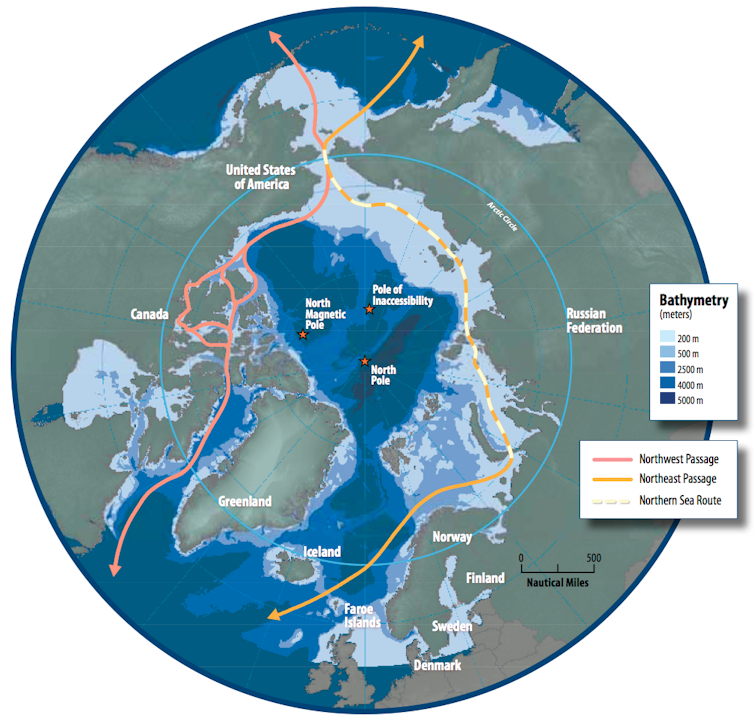
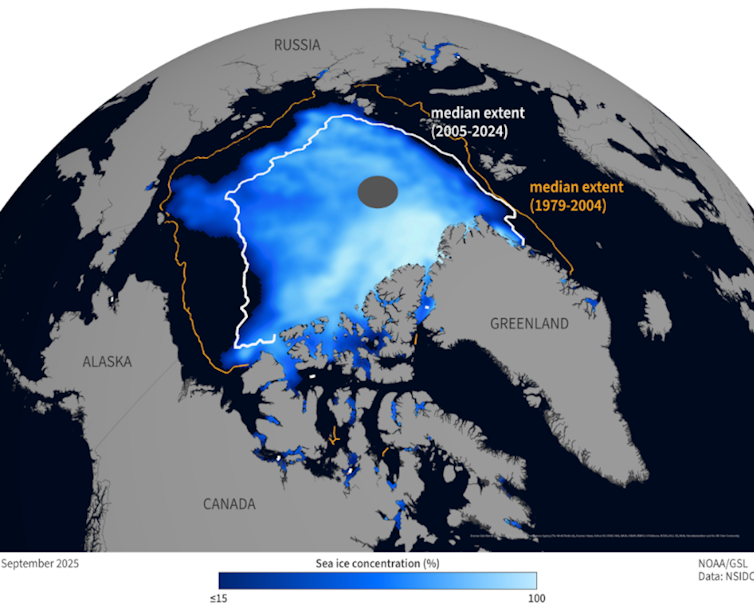
As the Arctic Ocean’s sea ice cover shrinks, shipping lanes that were once impassable for most of the year are opening up.
For businesses, these routes – such as the Northern Sea Route along the Russian coast and the Northwest Passage through the Canadian Arctic Archipelago – promise shorter transit times, lower fuel costs and fewer bottlenecks than traditional passages.
However, shipping in the Arctic also presents complex challenges.
Susie Harder/Arctic Council
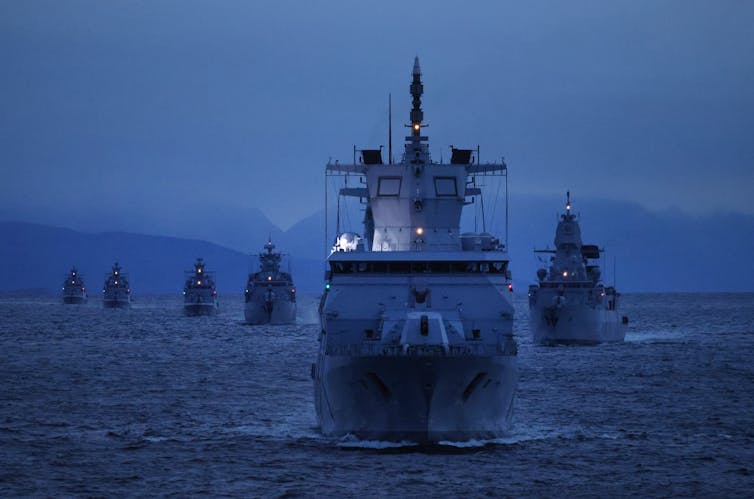
The US, Russia, China and several European countries have each taken steps to establish an economic and military presence in the Arctic Ocean, often with overlapping claims and competing strategic objectives. Russia, for example, cut off access to much of the Barents Sea while conducting missile tests near Norway in 2025. NATO also patrols the same sea.
Geopolitical tensions increase practical dangers in Arctic waters that are poorly mapped, where emergency response capacity is limited and where extreme weather is common.
As more commercial ships pass through these waters, a serious incident – whether caused by a political confrontation or weather – can be difficult to control and costly to marine ecosystems and global supply chains.
Sean Gallup/Getty Images
The Arctic Council is the region’s main official forum for Arctic countries to work together, but it is explicitly excluded from addressing military and security issues – the very pressures now reshaping shipping in the Arctic.
The council remained inactive for over a year as of 2022 after Russia, then chairman of the Arctic Council, invaded Ukraine. While meetings and projects involving the remaining countries have since resumed, the council’s influence has been undermined by unilateral moves by the Trump administration and Russia, and by bilateral agreements between countries including Russia and China, often involving access to oil, gas and critical mineral supplies.
In this context, Arctic countries can strengthen cooperation through other channels. An important one is science.
For decades, scientists from the U.S., Europe, Russia and other countries have collaborated on public safety and environmental research, but Russia’s invasion of Ukraine has disrupted these research networks.
In the future, countries could share more data on ice thaw, extreme weather and emergency response to help prevent accidents in a rapidly opening shipping corridor.
NOAA and CIRES/University of Colorado Boulder.
Critical Minerals: Control of the Seabed
The global transition to clean energy is driving demand for crucial minerals such as nickel, cobalt, manganese and rare earth elements, which are essential for everything from smartphones and batteries to fighter jets. Some of the world’s largest untapped deposits lie deep beneath the ocean’s surface, in places such as the Clarion-Clipperton Zone near Hawaii in the Pacific Ocean. This has led to interest from governments and companies in seabed mining.
Harvesting crucial minerals from the seabed could help meet demand at a time when China controls much of the global supply of crucial minerals. But deep-sea ecosystems are poorly understood, and disruptions from mining would have unknown consequences for ocean health. Forty countries now support a ban or pause on deep-sea mining until the risks are better understood.
These concerns are accompanied by geopolitical tensions: most deep-sea minerals lie in international waters, where competition for access and profits could become a new front in global rivalry.
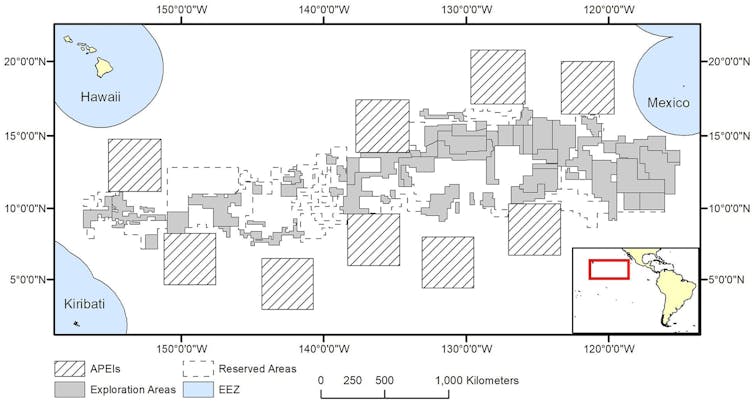
KA McQuaid, MJ Attrill, MR Clark, A Cobley, AG Glover, CR Smith and KL Howell, 2020, CC BY
The International Seabed Authority was established under the United Nations Convention on the Law of the Sea to manage seabed resources, but its efforts to establish binding mining rules have stalled. The US never ratified the treaty, and the Trump administration is now trying to expedite its own permits to bypass the international process and accelerate deep-sea mining in areas beyond national jurisdiction.
Against this backdrop, a loose coalition of issue-oriented groups and companies have joined national governments in calling for a pause in deep-sea mining. At the same time, some insurers have refused to insure deep-sea mining projects.
Pressure from external groups will not eliminate competition over seabed resources, but it can influence behavior by increasing the costs of acting too quickly without carefully evaluating the risks. Norway, for example, recently suspended deep-sea mining permits until 2029, while BMW, Volvo and Google have pledged not to buy metals produced from deep-sea mines until the environmental risks are better understood.
Overfishing: when competition exceeds cooperation
Fishing fleets have traveled greater distances and fished longer in recent decades, leading to overfishing in many areas. For coastal communities, the result could collapse fish stocks, threaten fishing and processing jobs and degrade marine ecosystems, making coastal areas less attractive for tourism and recreation. When supplies dwindle, seafood prices also rise.
Unlike deep-sea mining or Arctic shipping, overfishing leads to cooperation on many levels.
In 2025, a critical mass of countries ratified the High Seas Treaty, which provides a legal framework for creating marine protected areas in international waters that can give species a chance to recover. Meanwhile, several countries have arrangements with their neighbors to jointly manage fisheries.
For example, the European Union and Britain are finalizing an agreement to set quotas for fleets operating in waters where fish stocks are shared. Similarly, Norway and Russia have established annual quotas in the Barents Sea to limit overfishing. These government-led efforts are reinforced by other forms of diplomacy that operate outside the government.
Market-based initiatives such as Marine Stewardship Council certification establish common sustainability standards that fishing companies must meet. Many major retailers look for that certification when making purchases. Websites like Global Fishing Watch monitor fishing activity in near real time, providing governments and advocacy groups with data for action.
Collectively, these efforts make it harder for illegal fishing to hide.
How well countries can work together to update quotas, share data and enforce regulations as warming oceans shift to fish stocks and demand continues to grow will determine whether overfishing can be stopped.
Looking ahead
At a time when international cooperation is under pressure, agreements between countries and pressure from companies, insurers and problem-oriented groups are essential for ensuring a healthy ocean for the future.
This article has been updated with the entry into force of the High Seas Treaty on January 17, 2026.