‘Game of Thrones’ star Aidan Gillen on the Golden Age of British drama
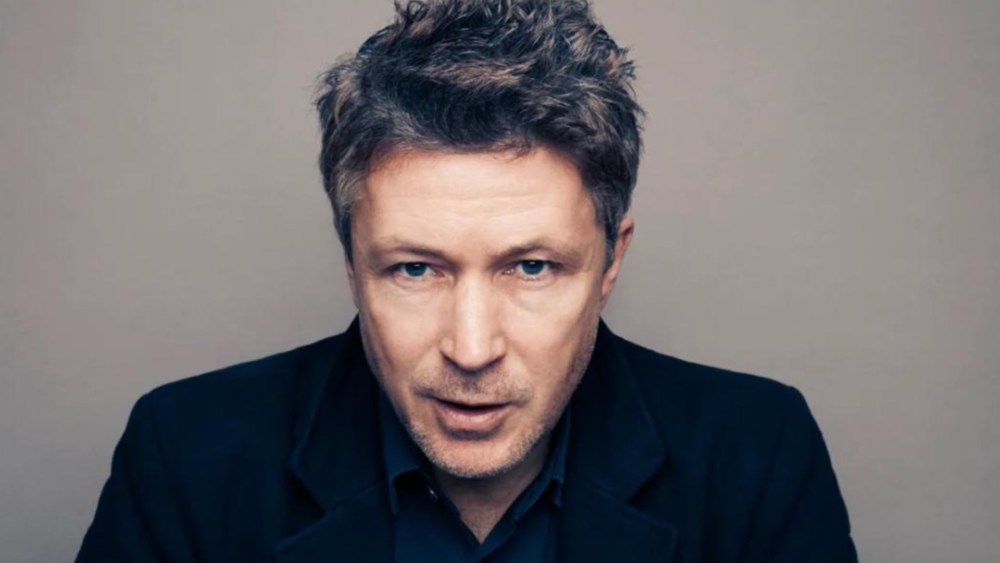
“Game of Thrones” and “Peaky Blinders” alum Aidan Gillen waxed nostalgic about the golden age of British drama at Transilvania Intl. Film Festival and argued that there is “too much” content disrupting the airwaves for today’s TV consumers.
“I just think there’s so many things. Even the TV stuff now is designed to give you this little thing [dopamine] Every now and then a hit is made,” he said. “Even the high-end, high-end TV stuff is also being toned down a little bit to try to keep people interested.”
He added: “There’s too much on TV.”
The Irish film star, who is part of the international competition jury this week in Transilvania, is also present to promote his latest films: the 2025 Tribeca premiere ‘Re-Creation’, an Irish-set drama from directors David Merriman and Jim Sheridan, based on the real-life murder case of French producer Sophie Toscan du Plantier, and ‘Gorky Resort’, the historical drama from director Łukasz Połkowski about a young Polish lieutenant in a Soviet Union. prisoner of war camp.
Speaking to a packed audience during an hour-long masterclass at the Transilvania festival, Gillen talked about his on-screen career, reminiscing about iconic roles in series such as ‘Game of Thrones’, ‘The Wire’ and ‘Peaky Blinders’ and describing how he broke into the British theater scene as a precocious teenager.
“I’m not a trained actor. I didn’t go to drama school. I really wanted to leave school as soon as I could,” Gillen said. “I found the classroom environment extremely stifling.”
The Irish actor said he instead pursued on-the-job training, joining a theater group at age 14 and devouring VHS tapes from a local rental store, “watching everything from the European arthouse stuff to horror films to Westerns and Merchant Ivory stuff.”
At the age of 18, he moved to London, where he soon found work at the Bush Theatre, a celebrated yet intimate venue that taught him the essence of his craft. His first big break came with a role in ‘Safe’, a gritty 1993 BBC drama from director Antonia Bird, in which he starred opposite Kate Hardie as a young homeless man scraping the streets of London. Looking back, he described that period as a golden age for British television.
“You could make these quite striking, daring dramas with no interference that would end up on television, and then about 10 million people would see it. It was pretty incredible,” he said. “They don’t really do that anymore. They stopped making that stuff and started making ‘Ballroom Dancing With the Stars.’ People used to watch that stuff. It wasn’t just, ‘Oh, this is intellectual art.’ It was like, ‘This is fucking brilliant drama.’
Following the success of “Safe,” which won a BAFTA for best single drama, Gillen starred in “Queer as Folk,” Russell T. Davies’ groundbreaking series about gay life in Britain in the 1990s, before crossing the pond to play corrupt Baltimore politician Tommy Carcetti in HBO’s “The Wire.” Perhaps his most iconic roles followed soon after, as power player Petyr ‘Littlefinger’ Baelish in ‘Game of Thrones’ and the assassin and bounty hunter Aberama Gold in ‘Peaky Blinders’.
While Gillen lamented a general decline since the height of prestige TV’s golden age, he said there are still “a lot of edgy things happening on television,” crediting shows like “Pluribus” for their “really sophisticated” storytelling.
While they long for the good old days before ‘you’ [had] to subscribe to all these streamers,” the actor admitted that “if I go on about this, it might be like the time the radio came in and your great-grandparents said, ‘This thing is like the devil’s work.’
“TV was like that when I was a teenager. ‘TV is going to kill our children.’ And I would often come home from school and go to bed… and watch TV for like 10 hours,” he said.
It may be that sense of awe and wonder from his childhood, he said, that still drives him as an actor.
“One of the reasons I wanted to be an actor is because… I’ve always seen the world as a really great playground – a work of art, a living dream. I wanted to be part of that and be part of painting that picture,” he said.
“It was the doing of the thing. Not the end product, not the hotel room, not going to a film festival and walking the red carpet or being famous or anything like that. I was never interested in that – and I’m still not,” he said. “It’s the actual work – going in and doing it on the day – that’s what excites me.”
The Transilvania Intl. Film festival runs from June 12 to 21.