Florida and Ohio are making plans for major property tax reforms
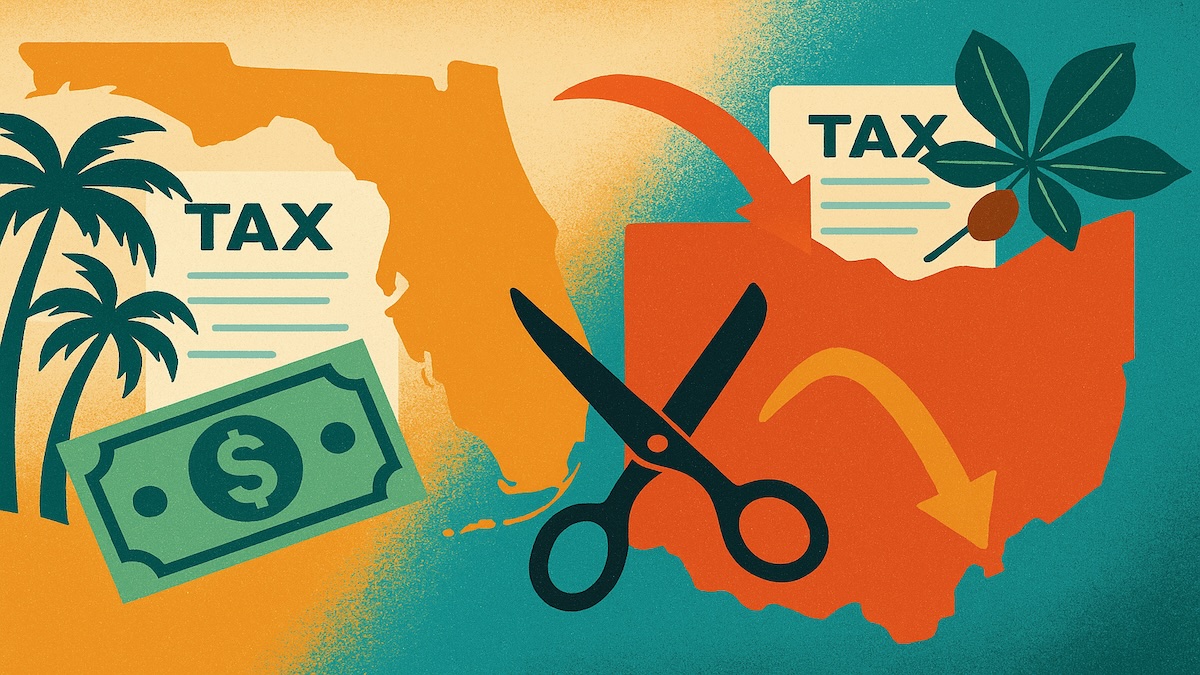
In Florida, House Republicans last week advanced through initial committees a series of non-school property tax cuts, including measures that would eliminate such taxes entirely or phase them out over a decade.
A separate bill would eliminate property taxes outside schools only for residents 65 and older.
“This is a targeted approach to help those who need it most,” Miami Republican Rep. Juan Porras told a local newspaper Spectrum News 13. “Our most vulnerable communities, the ones who built the cities and counties, the areas we all represent.”
Another proposal would fix law enforcement funding by stipulating that police budgets remain untouched.
If approved by the Legislature, the constitutional amendments would go to Florida voters in 2026, where they would need 60% support.
Democrats warned of major consequences for cities and counties that rely heavily on property taxes.
The Florida Policy Institute estimates that a $43 billion shortfall in funding is needed to maintain services under the House proposals.
“We should not put our local governments in a situation where we take away tools and then have them shift that burden in some other way,” said House Democratic Leader Fentrice Driskell. “That will actually have the most negative consequences for the people who need our help the most.”
The Florida Senate has not introduced any companion bills, and Governor Ron DeSantis has criticized placing multiple tax amendments on the 2026 ballot, calling it a flawed approach, according to Spectrum News 13.
Florida’s real estate tax burden has shifted significantly toward residential property owners over the past thirty years.
State data shows that residential lots now account for more than 70% of property taxes collected statewide — up from a much smaller share in previous decades.
Five bills head to the Ohio governor’s desk
Ohio Governor Mike DeWine is reviewing five sweeping property tax bills that the Republican Party-led Legislature passed in quick succession, following a long timeline of public feedback on the issue.
The proposals follow DeWine’s previous vetoes of tax changes in the state budget — vetoes that lawmakers initially promised to override before backing down after one override involving replacement and emergency taxes.
The measures would allow county officials to roll back previously voter-approved levies, limit the growth of tax bills to the rate of inflation, expand the options for reductions and shift the burden of proof in valuation disputes.
“Our taxpayers, who we represent, want property tax relief,” said Republican Senator Sandra O’Brien Ohio Capital Journal. “The bills we are going to vote on provide them with that relief.”
She also warned of a separate ballot measure to eliminate property taxes entirely — arguing that this scenario, if successful, would “push Ohio to the brink of collapse.”
DeWine said Friday he will evaluate the bills based on recommendations from a property tax working group he convened.
That group is reportedly weighing funding needs for schools and local services against rising homeowner costs and offering guidance on several measures — including millage caps and determining when voting taxes can be reduced.
“So I will review those bills based on what the committee has come up with,” DeWine said. “We’ll have some comments on that in a few days.”
Over the past three decades, changes in state policy have shifted more of the tax burden toward Ohio’s home owners and away from businesses.
According to state data, Ohio’s residential dollars rose from the mid-50% of the total property tax pool in 1999 to a range of high 60% to low 70% in the 2010s and into the 2020s.