Documents Offer a Look into Compass’ War on ‘Organized Real Estate’
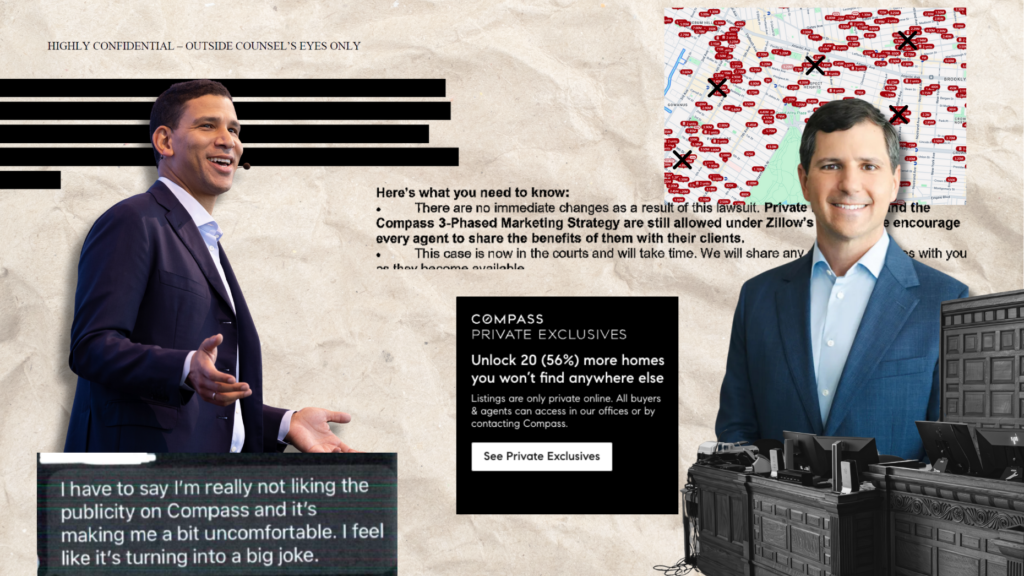
In the ongoing war to dominate the real estate industry, Compass has set its sights on what it considers “organized real estate.” A vast trove of recently released documents sheds light on how the country prepared for battle.
The internal messages, presentations and statements were filed in court as part of the ongoing antitrust lawsuit between Compass and Zillow. Both Compass and Zillow have archived more than 1,000 pages each. And Compass’ internal documents – which were included in Zillow’s files – offering an unprecedented look into the nation’s largest brokerage at a time when it has been at the forefront of some of the industry’s biggest debates.
The documents show, among other things, that Compass defined “organized real estate” as the National Association of Realtors, multiple listing services and Zillow. The three work to control how brokers run their businesses, Compass executives indicated, and the brokerage wanted to grow as part of its strategy to fight.
“If we had twice the market share in all our markets, you wouldn’t be able to bully us anymore,” CEO Robert Reffkin said on a May 13 call with Compass sales executives and renowned brokers. A transcript of the conversation is attached to the documents.
The documents also highlight the initial confusion over whether the broker’s advertising strategy violated a policy established and enforced by Zillow, which bans listings from the portal if they are not on the MLS and available to Zillow within 24 hours of the start of marketing.
The policy focused on what some at Compass called “the Compass Flywheel,” in which the brokerage recruits top agents, gives them access to its service and lead generation tools, and builds a stockpile of inventory that sets them apart from the competition.
The documents show that Compass executives were determined to move forward with how they wanted to market Compass listings.
Compass declined to comment for the story, citing active litigation.
Compass agents had their doubts
While Compass has presented a united public front, the documents reflect an internal debate among Compass agents over the company’s outspoken stance on listings that begin outside the MLS.
“We are going to have fair housing lawsuits,” one person wrote in a text thread, which was referenced in an April email attached to the documents.
“I’m curious about what exactly we can and cannot do with syncing with Zillow, and what they can monitor,” according to the documents that another agent wrote. “None of this is good for all the bad press. Yesterday a client told me he saw it in the news and Reffkin looks greedy.”
Others, particularly real estate agents, defended Reffkin as a vocal leader in the industry who wanted to effect change.
Additionally, several members of the Compass agent community noted that they did not plan to use the brokerage’s three-phase marketing strategy after May, shortly before Zillow would begin enforcing its ban on listings publicly marketed for more than a day without being added to the public MLS.
“The media portrays that the compass wants to reach a double ending,” one person wrote, “that is the problem.”
Double ending deals
The documents also suggest that Compass has actually benefited from its three-phase marketing strategy.
In an April slide, Compass addressed the supposition of some in the industry who believed the brokerage wanted to capture revenue from both sides of a transaction, a concept known as double-ending.
“Yes, pre-marketing has resulted in a consistently higher percentage over the past two years [transactions] where Compass is on both sides,” the slide said. “Pre-marketing appears to be resulting in an increasing percentage of double-sided [transactions]given the recent focus on Compass 3 Phased Marketing.”
The Compass slide showed that off-market sales are 72 percent more likely to be double-ended than on-market transactions.
Confusion, Talking Points and ChatGPT
In preparation for an April board meeting, Compass prepared to tell board members that Zillow’s policy had “no impact on Compass Private Exclusives.” The company continued to share that message internally, even when it sued Zillow in June.
“Private Exclusives and the Compass 3-Phased Marketing Strategy are still allowed under Zillow’s ban and we encourage every agent to share their benefits with their clients,” Rory Golod, president of growth and communications, said in an email to sales executives, high-profile brokers and others on June 23, the day Compass sued Zillow to prevent the company from enforcing its policies.
But Compass agents previously felt their listings would be banned from Zillow if they started as a Compass Private Exclusive, the documents show.
Zillow even says [Private Exclusives] will be banned,” a Philadelphia agent wrote to Compass executives on May 20, the day Zillow clarified what its standards said.
“We were confused at first about what that meant because we don’t market it publicly in private exclusives, so we asked, ‘Does this affect us?’ And Compass said no,” Kerry Carr, a Compass agent in Pennsylvania, said in a statement from Zillow’s legal team. The transcript of the witness statement is attached to the documents.
The documents also show that Compass uses an explanation strategy that there could be advantages to not being on the country’s largest real estate search portal.
“You don’t have to be on Zillow,” read a note from a Compass presentation attached to the documents.
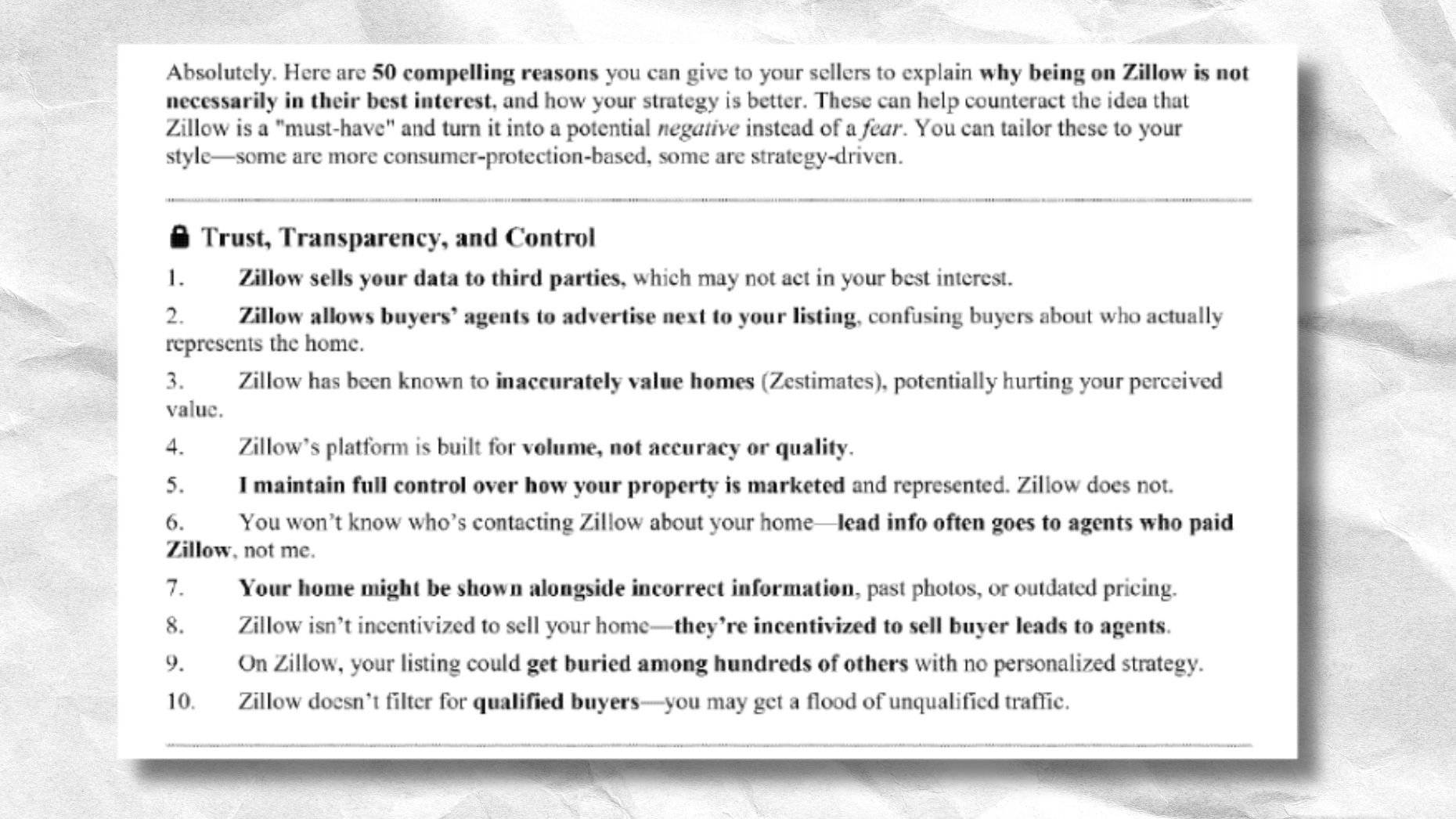
An email Reffkin sent to then-Compass chief of staff Will Hardy on April 12 also appears to show Reffkin using ChatGPT to generate a list of reasons “why using Zillow is not necessarily in their best interest.”
Recognition of Zillow’s power
In addition to downplaying Zillow’s power and effectiveness in selling homes, Reffkin struck a defiant tone toward the portal in internal statements and in his statement.
“I am not a slave to Zillow,” Reffkin said in his statement.
But several Compass executives privately acknowledged that very few sellers would choose to market their homes in a way that risked being banned from the portal.
“Our homeowners say they’re terrified, or agents say they’re absolutely terrified by the Zillow ban and the fear, they feel like they have a gun to their head saying, ‘If you don’t give me a listing within 24 hours.’ [and] If you market anywhere else I will ban you’ and that’s why they take it down? Yes, they are terrified,” Reffkin also said in his statement.
Golod said in his statement that most sellers would consider it “insanely harmful” to risk a Zillow ban.
“In theory they could, but no one would because it would be insanely damaging if your listing didn’t show up [Zillow] in the eyes of many — among the vast majority of sellers in the country,” Golod said. “So the number of sellers who might agree to a Coming Soon but not have their home listed on Zillow is probably close to zero.”
The ‘black box’
The documents confirm what was previously left open to interpretation: Zillow believes that Compass’ display of a box showing how many Private Exclusives it has in a given market is public advertising that violates its policies.
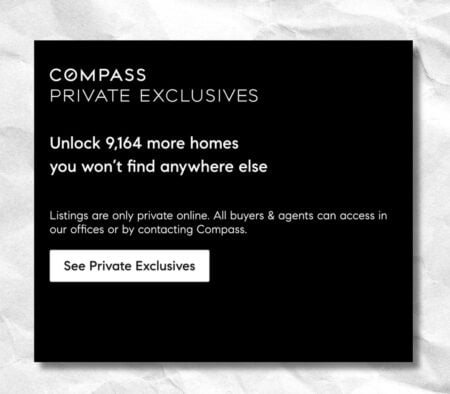
Compass, on the other hand, argues that it must include the so-called “black box” to prevent fair housing violations. By showing consumers that more deals were available at the brokerage, Reffkin wrote in an April email, he ensured there were no fair housing violations.
“Would it have made a difference to you if you knew that Zillow believes that all of Compass’ exclusive private listings violate listing access standards because of the black box?” Zillow’s lead attorney asked Carr.
“Yes,” Carr said, later adding, “I would be afraid to post that in private exclusives for fear it wouldn’t show up on Zillow.”
“What would your reaction be if you found out that Compass executives have known since May that Compass private exclusives are violating Zillow access standards because of the black box?” Tuttle asked.
Email Taylor Anderson