Dance for Parkinson’s Disease program highlighted at Ballet Arizona
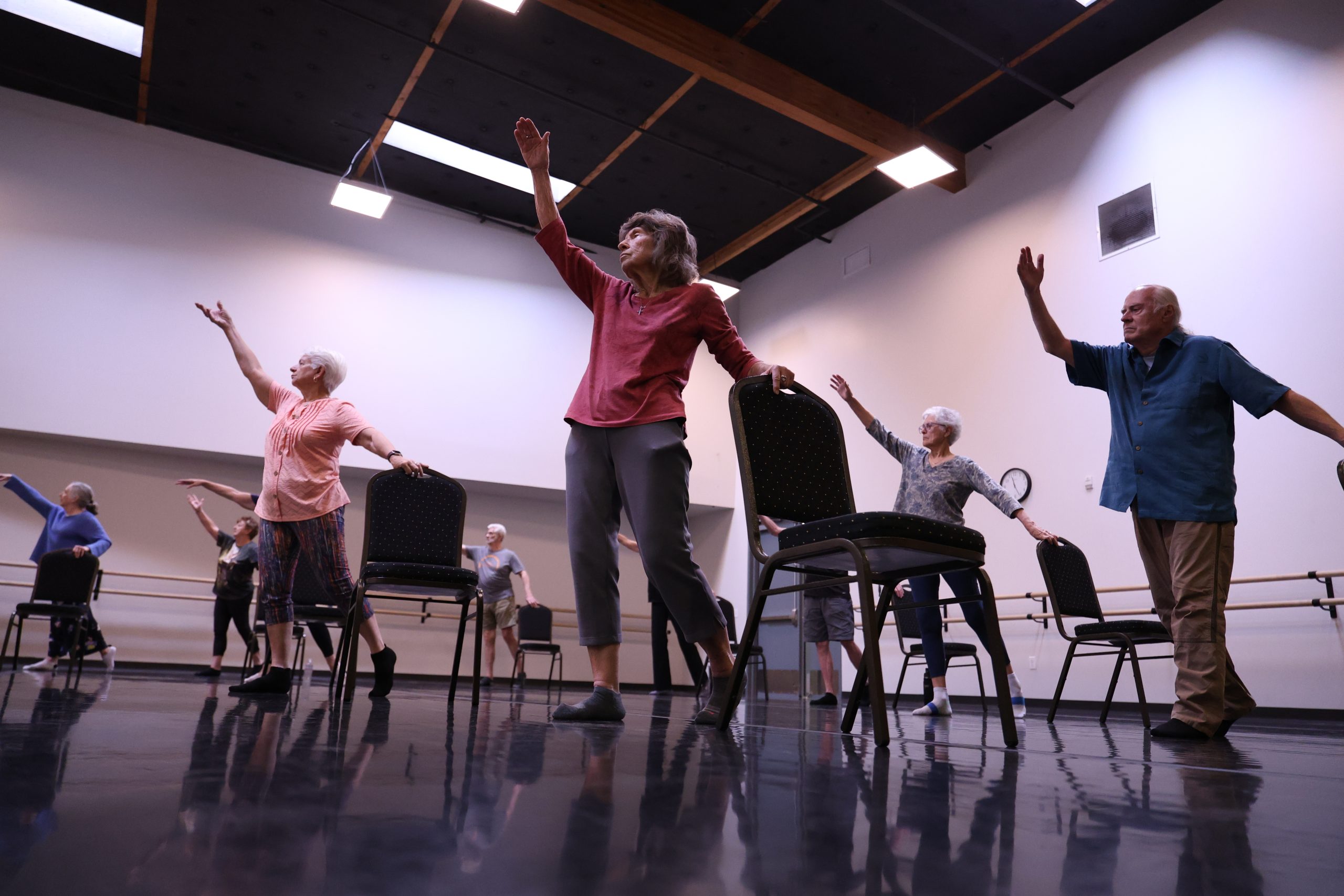
PHOENIX – Those who join Ballet Arizona’s Dance for Parkinson’s Disease program may be drawn in by the music and the physical benefits, but all leave with something beyond new moves: a community.
For over two months, Debbie Braganza and her dancers rehearsed for the Community Engagement Showcase on April 12. The performance highlighted multiple Ballet Arizona programs such as The Adaptive Dance Program and Native American Hoop Dance.
The Dance for Parkinson’s class is offered three days a week, twice at the Ballet Arizona studio in downtown Phoenix and once at the Center for Child and Family Wellness in Mesa. All are welcome to join the class and current participants range from those with Parkinson’s Disease to family and friends interested in just getting involved.

Braganza leads the class with decades of experience and training through the Mark Morris Dance Group Dance for PD program in New York. She ensures the class is safe and accessible for all, typically beginning with seated choreography, barre work and eventually working up to dancing in the open floor. Braganza emphasizes that each who takes her class are not defined by their disease or disability and are recognized for the dancers they are.
“They are not thinking about the Parkinson’s,” Braganza said. “They are more into learning steps, learning about music, learning about different styles of dance, and I think that kind of helps with not being so dialed into the Parkinson’s all the time. I think they need a break from it.”
In the weeks leading up to the showcase, Braganza trained the group as she would any other performance, rehearsing the choreography with rapt attention to detail and pushing the dancers to perform independently.
“I think Debbie does treat us as dancers in what she expects us to accomplish. She doesn’t cut corners or give us time to feel sorry for ourselves,” said Lynn McRainey, a participant in the class. “She is a positive energy, and I have great respect for what she’s done.”

Parkinson’s affects more than 10 million people worldwide and impacts physical and cognitive functions. Dance and music can help improve motor control such as balance and help challenge memory skills, according to a study by researchers at Scotland’s Abertay University.
For many of the participants at Ballet Arizona, the emotional benefits far outweigh the physical as the class offers an opportunity for community and deep friendships.


This is the case for Terri Yu, who participates at the Mesa location. Yu struggled to find connection with others and accessible programs she could participate in, often leaving her to turn to virtual options and feeling isolated.
To Yu, the class and dance as a whole represents “confidence building, friendships, strength and realizing I have a lot more potential than I realized.”

As the music faded out and the dancers took their bow concluding the performance, each could walk away being proud of putting their all on the stage surrounded by people who care. It did not just symbolize the end of their hard work for the showcase, but the beginning of the work they will put in for the next.
“It’s not about how many people are in the class,” Braganza said. “It’s about the people that keep coming back, and they are coming back for a reason, and it’s helping them.”
Related

Source link