AlUla unveils Manara, a landmark destination for astronomy, discovery and astrotourism | News
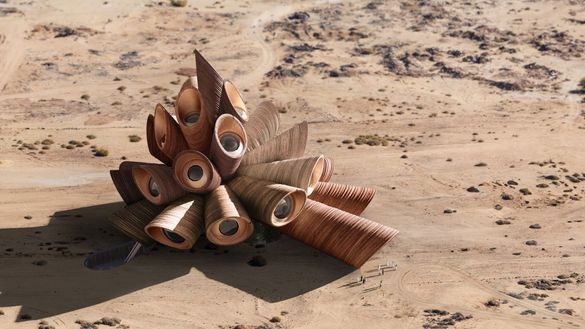
Located under some of the brightest and darkest skies on Earth, AlUla has unveiled the design of AlUla Manara, a historic destination for astronomy, scientific discovery and astrotourism that will transform the way visitors experience the cosmos.
Located within the third largest Dark Sky Park in the world and designed by Heatherwick Studio, the facility will connect AlUla’s rich celestial heritage with the future of scientific exploration, creating a world-class destination for discovery, learning and inspiration.
The design was recently approved by the Board of Directors of the Royal Commission for AlUla (RCU) as part of the Kingdom’s broader ambitions to strengthen its position in astronomy, scientific research, innovation and sustainable destination development under Saudi Vision 2030.
The facility represents one of AlUla’s most important tourism and scientific developments and supports Saudi Arabia’s ambition to become a world leader in astronomy and space sciences while creating a world-class destination for research, learning and inspiration.
Rooted in AlUla’s long-standing connection to the stars and traditions of celestial navigation, AlUla Manara contributes to the preservation of this intangible heritage while presenting it through a modern scientific lens. The project combines astronomy, research, education and visitor experiences, creating new opportunities for learning, innovation and cultural discovery while supporting the ambitions of Saudi Vision 2030.
The announcement also strengthens Saudi Arabia’s position as an emerging global hub for astronomy and space science while creating a distinctive new reason for travelers to visit AlUla.
More than a traditional observatory, AlUla Manara is designed as a destination where visitors, researchers and astronomy enthusiasts can experience the wonders of the universe directly through immersive experiences, scientific discovery and hands-on learning.
The main visitor structure will consist of immersive exhibitions and galleries, a planetarium, a restaurant and a rooftop observation deck, inviting guests to connect with AlUla’s rich celestial heritage and the future of astronomical exploration. In addition to interactive experiences, the facility will house real-time scientific research, giving visitors a rare opportunity to witness discoveries in action.
Located between the Gharameel Nature Reserve and the Harrat Uwayrid Reserve, AlUla Manara will be located under some of the clearest skies in the world, giving visitors a gateway to the first and third largest Dark Sky Parks in the world.
The project builds on AlUla’s growing reputation as a global astrotourism destination, supported by Dark Sky Park certifications, astrotourism policy, community astronomy initiatives and the wider AlUla Manara programme. Together, these efforts ensure AlUla becomes one of the world’s leading destinations for celestial explorations and night sky experiences.
Designed by Heatherwick Studio, the globally renowned architecture and design practice behind landmark projects such as Little Island in New York, Azabudai Hills in Tokyo and Coal Drops Yard in London. AlUla Manara’s distinctive shape is inspired by spiral geometries observed throughout the universe, from galaxies and planetary rings to collections of stars and gas, in addition to similar patterns found in plants, fossils and shells on Earth.
The partnership with Heatherwick Studio reflects AlUla’s ambition to create world-class cultural and visitor experiences, with AlUla Manara combining striking architectural design with scientific discoveries to create a new landmark for the destination.
Clad in textured stone, inspired by the dramatic sandstone landscape of AlUla, the architecture creates a dialogue between earth and sky, connecting the surrounding desert environment with the cosmos above.
Stuart Wood, Executive Partner and Group Leader at Heatherwick Studio, said:
“Space observatories are often remote, sterile places, technical outposts located far from the public. We saw an opportunity to break down those barriers and create a place where visitors can step into the wonder of the cosmos: an environment that is both immersive and inspiring, standing alongside the most advanced science of our time.
“Our design draws on the dramatic spiral geometries that shape both the solar system above us and the natural world around us. Three interlocking telescope-like formations reach toward the sky while remaining rooted in the desert landscape, embodying a dialogue between Earth and the universe.
“The AlUla Manara Visitor Center will put experiential learning at the heart of world-class science, sparking curiosity and inspiring future generations of stargazers and scientists.”
The project is part of AlUla’s wider strategy to develop world-class visitor experiences that combine heritage, culture, nature, science and innovation. Joining the growing network of protected landscapes and nature reserves of Hegra, Maraya and AlUla, Manara represents the next chapter in the destination’s evolution as a global center for exploration and discovery.
Phillip Jones, Chief Tourism Officer at the Royal Commission for AlUla, said:
“For millions of years, AlUla’s night sky has guided communities and traders, inspired stories and shaped history within and beyond the region.
“With AlUla Manara, visitors can connect with this extraordinary legacy while experiencing the future of astronomical discovery. By combining world-class architecture, scientific research and immersive visitor experiences, we are creating a destination unlike anywhere else in the world.
“Just as Maraya became an internationally recognized icon for architecture and culture, Manara has the potential to become a defining symbol of AlUla’s future as a destination for exploration, learning and inspiration.
“This investment expands AlUla’s tourism ecosystem beyond heritage, culture and archeology while strengthening its appeal to discerning travelers, astronomy enthusiasts and researchers.”
AlUla Manara has been designed in harmony with the environment. The tubular forms of the facility include integrated shading systems that control sunlight during the day and protect the view of the dark sky at night. Operable windows respond to changing weather conditions, improving energy efficiency and preserving views over the surrounding landscape.
Naif AlMalik, Vice President of Wildlife & Natural Heritage at the Royal Commission for AlUla, said:
“Sustainability and conservation-oriented development are at the heart of AlUla and are reflected in the design and ambition of AlUla Manara.
“Our dark sky is one of AlUla’s most remarkable natural resources and a resource that we are actively protecting. Through AlUla Manara, we are creating a platform for scientific research, education and innovation, while ensuring that this celestial heritage remains protected for future generations.
“The facility will inspire future scientists, researchers and explorers while contributing to Saudi Arabia’s growing role in astronomy and space sciences.”
AlUla’s night sky is in the top five percent worldwide for natural darkness and air quality. The AlUla Manara site, Gharameel Nature Reserve, Sharaan National Park and Wadi Nakhlah Nature Reserve have all received Dark Sky Park certification from DarkSky International.
To protect this natural asset, RCU has introduced the Astrotourism Policy, which establishes lighting controls, zoning and visitor management standards to preserve AlUla’s exceptional night sky for generations to come.
Through advanced observation technologies, research facilities, interactive exhibitions and immersive visitor experiences, AlUla Manara will create a platform for scientific research, innovation and global knowledge exchange, while opening new horizons for public engagement in astronomy and space science.
As a destination where heritage, science, architecture, conservation and tourism converge, AlUla Manara strengthens AlUla’s position as one of the world’s most distinctive destinations for discovery, exploration and lifelong learning.
Visit experiencealula.com for more information.