All the important news from the ongoing India AI Impact Summit
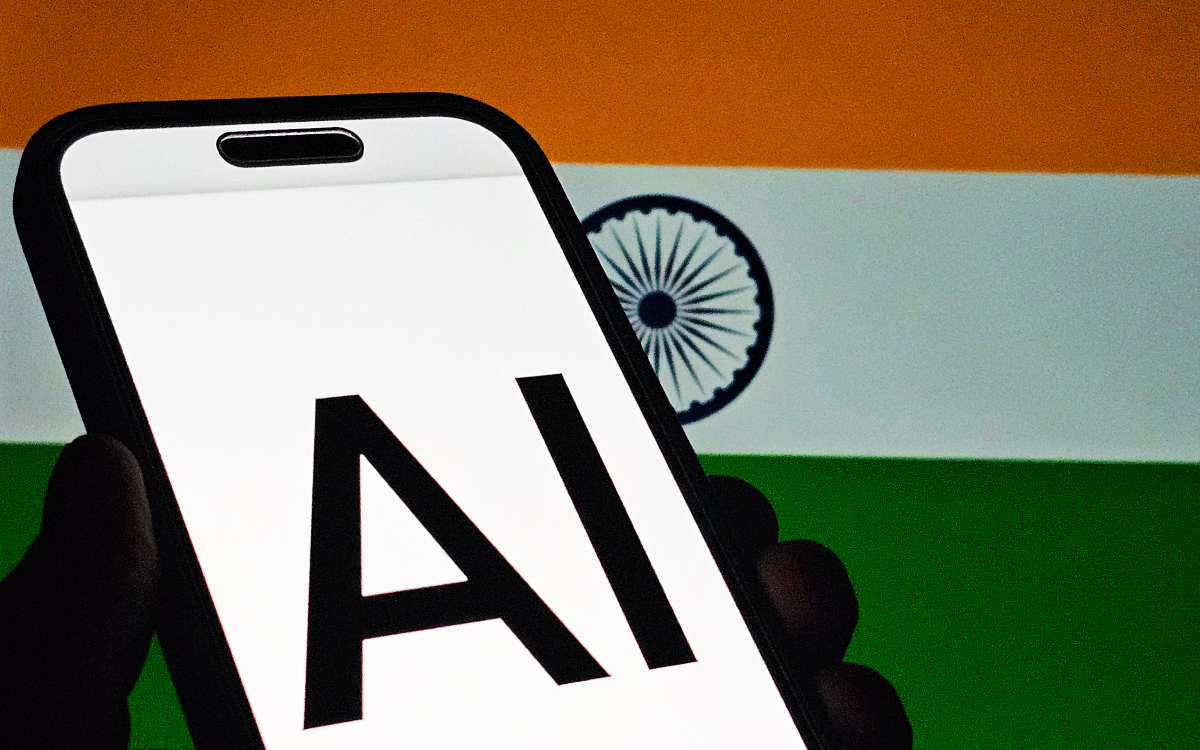
Aimed at attracting more AI investments to the country, India is hosting a four-day AI Impact Summit this week that will be attended by executives from major AI labs and Big Tech, including OpenAI, Anthropic, Nvidia, Microsoft, Google and Cloudflare, as well as heads of state.
The event, which expects 250,000 visitors, will feature Alphabet CEO Sundar Pichai, OpenAI CEO Sam Altman, Anthropic CEO Dario Amodei, Reliance Chairman Mukesh Ambani and Google DeepMind CEO Demis Hassabis.
Indian Prime Minister Narendra Modi will deliver a speech with French President Emmanuel Macron on Thursday.
Here are all the important updates from the event:
- India is setting aside $1.1 billion for its state-backed venture capital fund. The fund will invest in artificial intelligence and advanced manufacturing startups across the country.
- OpenAI CEO Sam Altman said India accounts for more than 100 million weekly active ChatGPT users, second only to the US. He also said that Indians represent the majority of students using ChatGPT.
- Blackstone has acquired a majority stake in Indian AI startup Neysa as part of a $600 million equity fund. Teachers’ Venture Growth, TVS Capital, 360 ONE Asset and Nexus Venture Partners also invested. The company now plans to raise another $600 million in debt and deploy more than 20,000 GPUs.
- Bengaluru-based C2i, which builds a power solution for data centers, has raised $15 million in a Series A round from Peak XV, with participation from Yali Deeptech and TDK Ventures.
- HCL CEO Vineet Nayyar said Indian IT companies will focus on making profits and not creating jobs. These comments come as Indian IT stocks fall as fears grow that AI will disrupt the IT services sector.
- Vinod Khosla, founder of Khosla Ventures, said industries like IT services and BPOs (Business Process Outsourcing) could “almost disappear completely” within five years due to AI. He told it Hindustani times that 250 million young people in India should be selling AI-based products and services to the rest of the world.
- AMD collaborates with Tata Consultancy Services (TCS). to develop Rack-scale AI infrastructure based on AMD’s “Helios” platform.
- Anthropic said it is opening its first office in India in the city of Bengaluru. The company said the country is the second largest user of Claude after the US
- Anthropic has partnered with IT giant Infosys to deploy Claude models and tools such as Claude code for Indian companies. To start, both will deploy AI tools in the telecommunications sector with a dedicated Anthropic Center of Excellence.
- Indian AI company Sarvam is teasing its upcoming smart glasses as Sarvam Kaze. The company has released several models in recent weeks, including a dubbing model, a speech-to-text model, a text-to-speech model, and an optical character recognition (OCR) vision model.
- Indian conglomerate Adani said it is allocating $100 billion to build AI data centers that would use renewable energy in India by 2035. The company said this investment will lead to an additional $150 billion in investment in areas such as server manufacturing, advanced electrical infrastructure, sovereign cloud platforms and supporting industries.
- Voice AI company Cartesia has partnered with India-based orchestrator Blue Machines to deploy voice solutions for companies with local data residency.
- Cohere Labs is launching a family of multilingual open weight models supporting more than 70 languages. These models can run on local devices. The company said it has also released models tailored to specific regions.
- OpenAI said it will open two new offices in India, in Bengaluru and Mumbai.
- OpenAI also partnered with the Tata group to deploy 100 megawatts of computing power in India, with the aim of scaling this up to 1 gigawatt.
- Indian Technology Minister Ashwini Vaishnaw said the country aims to attract more than $200 billion in investments for AI infrastructure over the next two years.
- Indian vibe-coding startup Emergent said it has reached $100 in ARR and launched a mobile app.
- Indian AI startup Sarvam has released two new open source models: Sarvam 30B and Sarvam 105B.
- Sarvam also announced a partnership with Qualcomm, HMD and Bosch to deploy its AI models on devices including smartphones, feature phones, cars, laptops and smartglasses.
- Voice AI startup Gnani has released a zero-shot voice cloning text-to-speech model called Vachana that supports 12 languages.
- BharatGen, a government-backed AI consortium, has released a $17 billion parameter model called Param 2 that works in 22 languages.
- Steaming service JioHotstar said it will use ChatGPT to facilitate content discovery with conversational search.
- Sarvam is launching its ChatGPT competitor called Indus, which supports multiple Indian languages.
- OpenAI said 18-24 year old users in India account for almost 50% of India usage on ChatGPT.
- Indian technology company Tech Mahindra has released a Hindi-oriented model with 8 billion parameters for education use cases.
- The UAE’s G42 partnered with US chipmaker Cerebras to deploy 8 exaflops of computing power in India through a supercomputer. Abu Dhabi’s Mohamed bin Zayed University of Artificial Intelligence (MBZUAI) and India’s Center for Development of Advanced Computing (C-DAC) are also part of the project.
- On the sidelines of the AI Summit in India, Sam Altman said concerns about the amount of water AI uses are “completely bogus,” but acknowledged the issue of water consumption when “we used to do evaporative cooling in data centers.”
- Strangely enough, he also said that people use a lot of energy as they grow up and process things around them. He finds the arguments surrounding ChatGPT’s power consumption ‘unfair’.
“But it also takes a lot of energy to train a human,” Altman said. “It takes about twenty years of your life and all the food you eat during that time before you become smart.”
- India said that over 88 countries and organizations signed the New Delhi AI Declaration for working to use AI for social and economic good. These countries include the US, China and Russia.
- India joined the US-led Pax Silica group to create a smooth supply chain network of materials used in creating AI infrastructure. Other members include Britain, the United Arab Emirates, Singapore, Qatar, Japan, Israel, South Korea and Australia.