Top marketing and business leaders at Cannes Lions: Strictly Business
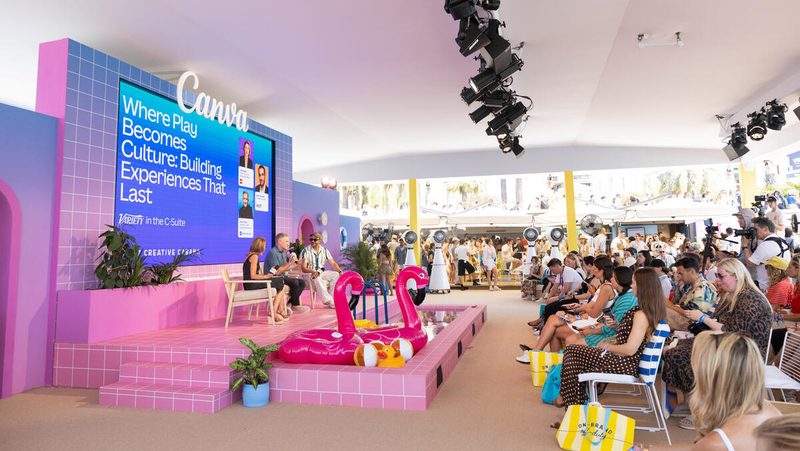
In the latest episode of Variety‘s “Strictly Business” podcast, top leaders from NBCUniversal, IBM, State Farm, Autodesk and Coinbase discuss and compare notes on marketing, technology and consumer trends in conversations with Todd Spangler, Variety business editor. The conversations were recorded from June 22 to 25 in the Canva Creative Cabana space at the Cannes Lions international creativity festival.
Dara Treseder, CMO of Autodesk, and Cat Ferdon, CMO of Coinbase, compare notes on how they are reaching audiences and how they have leveraged the power of AI in their next generation of digital giants.
Treseder cited research showing that an overwhelming number of people (82%) “feel comfortable using AI in their general lives – perhaps a little too comfortable, I don’t think we need AI as our therapist – but only a third feel comfortable using it in their field. Meanwhile, the increase in the number of jobs with AI as a prerequisite has more than doubled. So there is a mismatch between job seekers and the jobs available. [Autodesk] just announced a $350 million commitment aimed at preparing the next generation and job seekers for jobs in this AI era in design and make – whether in architecture, engineering, construction, product design, manufacturing or media and entertainment.
Ferdon explained how the cryptocurrency exchange became one of the biggest brands in the emerging world of non-traditional financial and banking options. AI has been baked into Coinbase from the beginning, she noted.
“Coinbase has been super agent forward and our CEO and founder [Brian Armstrong] has been very public about this. So we’ve been working a lot on our workflows over the past year and we use it to optimize everything within marketing,” says Ferdon. “But we at Coinbase believe quite strongly that AI can help you get to creative results faster, but it’s not a substitute for human creativity.”
Jonathan Adashek, Senior VP of Marketing and Communications at IBM, offered perspective from one of Big Tech’s most enduring brands, which is increasingly focused on helping large organizations build the systems that help them get the most out of their AI investments. For Big Blue, it started with seriously embracing AI in their own workflows. It’s been transformative, Adashek says.
“Our creatives spent 80% of their time on derivatives. So they don’t really become creatives. They do cruddy work. Yes. And that’s not what they’re passionate about,” says Adashek. “We managed to get that number down to about 40% and down. We did something with the Sphere in Las Vegas and we turned it into a giant fishbowl and used AI to help us with the creative design and concept. We thought it would take us about 15-16 days to do that. It took us two days, and the creatives involved even said they got more ideas out of it because it gave them new things to think about. As an organization within IBM we have used AI and automation and associated process improvements to remove $4.5 billion from our annual spend over the last three years, and this year we will remove another $1 billion.”
Mark Marshall, chairman of the advertising partnership for NBCUniversal, and Kristyn Cooke, head of sales marketing for State Farm, have done a lot of business together over the years and their conversation shows. Cooke explains why an event like NBCU’s BravoCon fan meeting is the kind of cultural event that State Farm should be present at to reach the next generation of consumers.
“It’s about connecting around shared interests and relationships and your passion points. And that’s what BravoCon brings us,” says Cooke. “It’s a very powerful thing because the audience is actually the story. They just are, and they’re super engaged. And we learned a lot because when we worked with BravoCon, we created brand spaces and then we evolved into creating these kinds of memorable experiences. We created a way for fans to interact with each other and feel something in that moment. BravoCon overall has been very good for us.”
With the 2028 Summer Games in Los Angeles just two years away, Marshall spoke about NBCU’s plans to take its coverage even beyond the heights reached during the 2024 Summer Games in Paris with a hometown event.
“The last US Summer Olympics were in Atlanta [in 1996]. That year, NBC broadcast 186 hours of programming. In ’28 we will have almost 8,000 hours of programming,” Marshall explains. “The difference is now fans can curate their own Olympic experience. You can watch any sport you want live on Peacock, or you can let Mike Tirico’s soothing voice talk to you at night and tell you about the day and what happened and the backstories of what it is. What we’ve come to learn is that fans love watching sports, but what they really love is telling the story [the athletes and teams] got this far. Those are the stories we tell now. And at NBC, across the NBA, MLB and NFL, we apply the same strategy everywhere.”