Trump presidency reignites its founding debate – how much power is too much?
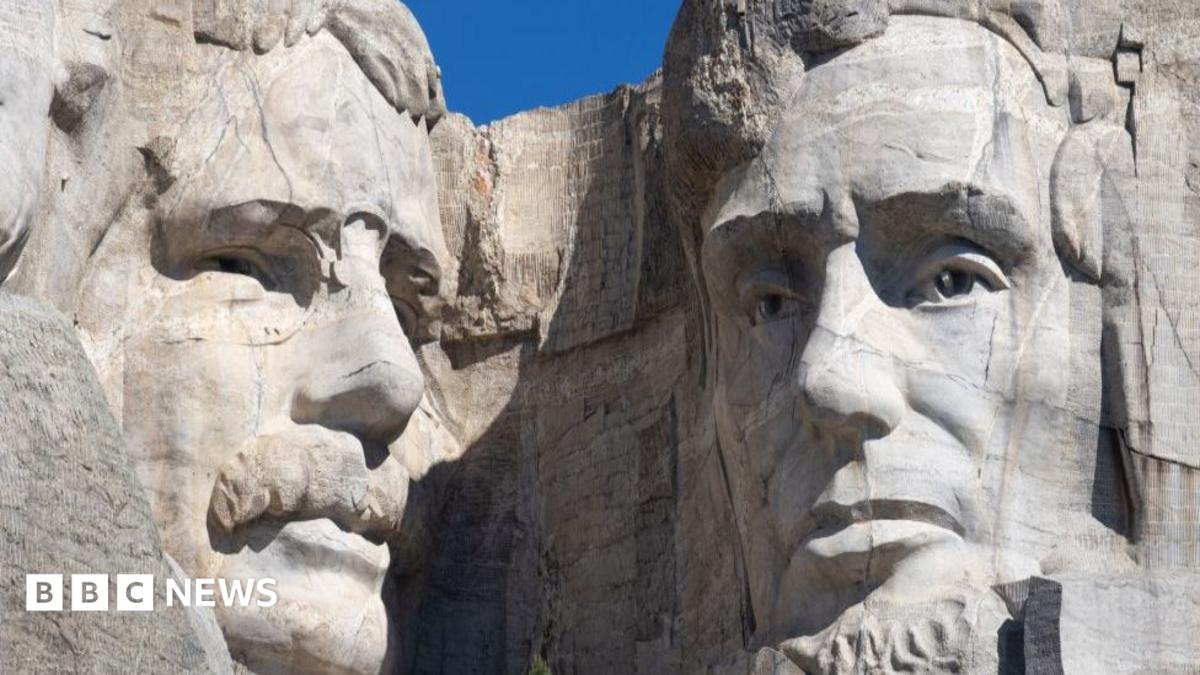
Halfway across the country, at a scenic lookout in Keystone, South Dakota, military planes are flying overhead and Secret Service officers are preparing for the president’s visit here on Friday. He’ll be spending the eve of the 250th anniversary celebrations visiting Mount Rushmore, where four presidents’ likenesses are carved into granite rock.
Donald Trump has leaned into memes that put him on the mountain face alongside George Washington, Thomas Jefferson, Abraham Lincoln and Theodore Roosevelt. Many of his supporters welcome the idea. There’s even a bill in front of Congress demanding Trump be added to the iconic monument.
Terry Davis and Tim Burke are among a group of old friends riding their motorbikes around the American heartland from one national park to the next. They tried to get tickets to the president’s fireworks display on Friday night, but had no luck.
I ask if they can imagine Trump’s face being added to the national monument.
Terry, 72, says Trump should be front and centre, and the biggest. “I have not been this passionate about any other president in the past until he took the reins of this country.”
These bikers celebrate what they still see as Trump’s non-politician, outsider status – and they are happy for him to use his powers as president to take on the Democrats and a federal government they perceive as too intrusive.
“Long after he’s left office, 20, 30 years from now,” Tim says, “I believe the historians will say that he’s been one of the greatest presidents in the history of our nation for the things that he has done for it.”
What the president does with his powers does not just impact the country’s current citizens – it can shape the way future presidents use their power as well.
Zelizer, the historian, said that “every chapter in the expansion of presidential power has had long-lasting consequences”.
“It creates actual precedents that future presidents can use that they didn’t have before. And it also fuels a process of normalisation where this just becomes part of what we expect presidents to do.”
The mould for a president was set in 1789, when America swore in George Washington as the country’s first.
In his inaugural address, Washington appeared chastened by the power that he was given, saying a leader “ought to be peculiarly conscious of his own deficiencies”.
It is hard to imagine Trump – who has said “I’m the greatest president in history” – expressing a similar sentiment.
Source link