Supreme Court takes sledgehammer to much of federal government’s regulatory structure : NPR
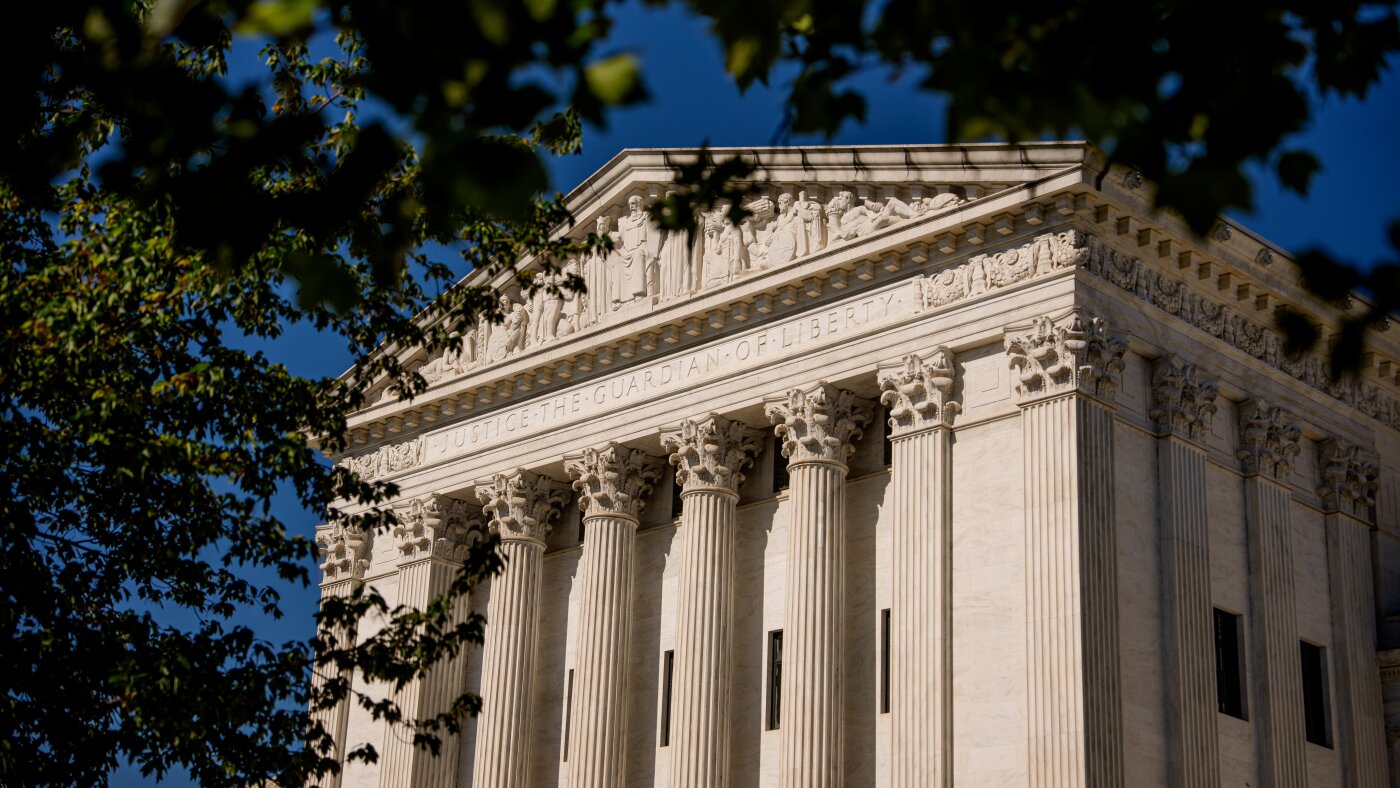

The U.S. Supreme Court
Andrew Harnik/Getty Images
hide caption
toggle caption
Andrew Harnik/Getty Images
The Supreme Court’s conservative majority took a sledgehammer to much of the federal government’s regulatory structure Monday, striking down almost all the limits that Congress—and the courts—had previously established to protect the independence of regulatory agencies that make up roughly a third of the federal government.
The court’s decision reversed a 90-year-old precedent that had protected multi-member and term-limited agency heads from being fired, except for misconduct or malfeasance in office. The decision could also open the door to allowing presidents to fire at will not just agency leaders, but potentially lower-level government experts who have been protected by the Civil Service Reform Act since 1883. In a Truth Social post, President Trump called the decision a “BIG WIN,” one of the most important rulings “ever given with respect to Presidential Powers.”
Chief Justice John Roberts wrote the majority opinion for the court’s six conservative justices, with the three liberals in dissent. Quoting President George Washington, Roberts said in order to discharge his duties, the president must have the assistance of officers he can trust. And although it is up to the Senate to decide whether to confirm those with whom the president would prefer to work, neither Congress nor the courts can saddle him with people he can’t work with.
Just how far down the chain of command that mandate reaches is unclear. Could the president fire apolitical scientific or health experts, nuclear weapons specialists, weather predictors or accountants, Social Security case workers, or even secretaries?
Yes, says Jacob Hurbert, a senior litigation counsel for the conservative New Civil Liberties Alliance, which filed a brief in the case supporting Trump’s position.
“The president is in charge of the executive branch. That means the whole executive branch, not just the officials at the top but people underneath that as well,” he says. “Whether those are officials high up in an agency or down low in an agency,” they are ultimately controlled solely by the president, according to Huebert.
Monday’s ruling is the greatest expansion of presidential power since the court, just two years ago, ruled that even former presidents are broadly immune from prosecution for their official acts while in office.
Prior to Monday’s ruling, no president has tried to wrest control of agencies that regulate such a huge swath of American life and the economy.
“The court has pursued quite an aggressive form of unitary executive theory,” Harvard law professor Daniel Tarullo said in an interview with NPR. “This case is a result of that theory, which states that all power in the executive branch rests solely with the president.” As a result, he says, the court has “essentially eliminated independent agencies from the United States government.”
But he notes that regulatory agency policy has in modern times whipsawed back and forth between administrations. And that whipsawing effect is likely to grow now, as Tarullo expects presidents of both parties to take advantage of their newfound power over the administrative state.
Dissenting from Monday’s decision were the court’s three liberal justices. Speaking for them, Justice Sonia Sotomayor accused the majority of discarding a democratic regime that has long been in place, and substituting “the majority’s theory of unitary, total executive control.” The result, she said, “is a president who emerges with far greater power than ever before.”
But in a second decision Monday, the court took a contrary position when it came to the Federal Reserve Board, and Trump’s attempt to fire economist Lisa Cook, the first Black woman appointed to the Fed’s board of governors.
While the court did not fully resolve the case, it refused to remove Cook from the Fed board, and sent her case back to the lower courts to determine whether she did anything wrong that would justify her firing. The president tried to fire her, accusing her of mortgage fraud, though she has strongly denied the accusations — and subsequent reporting has strongly indicated the charges are without merit. Indeed, in his opinion for the court majority, the chief justice warned lower courts to examine such charges to ensure they are not pretextual.
Tarullo, himself a former member of the Federal Reserve Board, said he was relieved by the court’s decision to protect the Fed’s independence. That, he thinks, is an essential win. Indeed, as Chief Justice Roberts observed in his opinion, the last time that the country abandoned the idea of an independent bank to set monetary policy, what followed was an era of “ruinous financial panics,” which ultimately led to the creation of another central bank in 1913. That bank — the Fed — sets monetary policy today.
The vote in the Federal Reserve case was 5-to-4, with Justice Brett Kavanaugh joining Chief Justice Roberts and the court’s three liberals in the majority. Writing in dissent, Justice Clarence Thomas blasted the majority for what he called second guessing the U.S. Constitution.
Source link