Team ‘For All Mankind’ is working with Apple to bring back the Newton
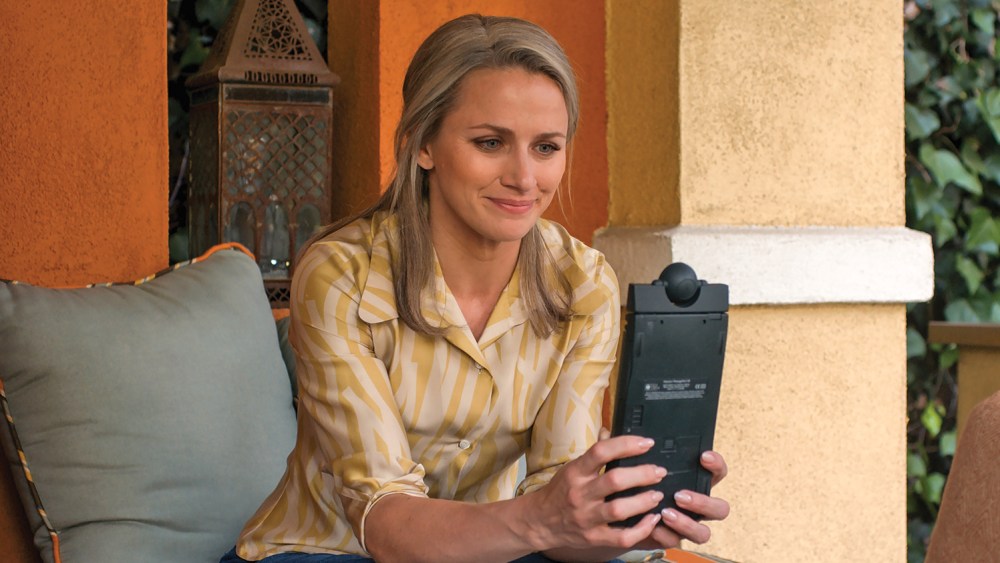
Each season of Apple TV’s “For All Mankind” starts the same for prop master Jaime Mengual: a meeting with co-creators and showrunners Ben Nedivi and Matt Wolpert and producer Ben McGinnis to discuss one prop: the Apple Newton.
Apple products and their use in film and TV have long been a source of conversation. Who can wear an iPhone on the screen? Are bad guys forced to use inconspicuous phones and computers to avoid wreaking havoc with a device bearing the famous Apple logo? Well, “For All Mankind” asks a very different question: Can the characters use a completely forgotten Apple product that was canceled twenty years ago?
For those who didn’t live through the portable personal assistant phase of the 1990s, the Newton was an early mobile device from Apple that used a stylus-controlled touchscreen for digital planning and organization. But in a world of PalmPilots and BlackBerrys, it was overthrown by fiercer competition and discontinued in 1998 – even though it is credited with paving the way for the iPhone. And yet, in the alternate history timeline where “For All Mankind” has been around for five seasons, where America’s ambition to explore space never ran out of rocket fuel, the Newton thrives as the iPhone of its time.
But it doesn’t work exactly like our smartphones. It is a highly advanced means of communication that bridges the gap between people on Earth, Mars and anywhere in between, but with less addictive properties.
“The technology in our world is really dictated by the fact that when the internet started, it wasn’t public domain, and so the rise of social media isn’t really happening in the ‘For All Mankind’ world,” says Mengual. Variety. “That really changes the personal connection they have with their devices. In our world, it’s really heavily used for communication and characters learning about things through their Newtons.”
Thanks to Apple
The first Newton to appear on the series in Season 3 came courtesy of some digging around on eBay, where Mengual found a few real Newtons that were still in good condition. He removed the artifacts, backlit them, and burned some images into them. They soon added a mounted camera, giving it video capabilities – something it never actually had.
“I like to search the archives for prototype images of iPhones that never existed or things they tried,” says Mengual. “We’re following the iPhone a little bit, even though our Newton does some of the things we’d like the iPhone to be able to do, but we’re not quite there yet.”
At least we weren’t around in the ’90s when “For All Mankind” introduced its Newtons FaceTime-like features and capacitive touch technology. Every choice made for their evolving Newton is discussed with the Apple team, who approve designs for how apps and sounds change from season to season. Specifically for Mengual, he focused mainly on the hardware, and whether and where the buttons would be located.
In Season 4, the Newton’s elaborate design was heavily influenced by the iPad Mini. In season 5 they scaled back the size just like the iPhone did. Mengual tried to build a model from scratch using AMOLED screens, but that didn’t go well and he backed out, deciding to house a real iPhone in an aluminum Newton case. However, their Newtons are not slim or sexy. They are practical for their circumstances.
“Just because our technology is advanced doesn’t mean the hardware won’t end up looking a little clunkier or retro,” he says. “Part of that design motivation was that the technology in the Martian environment and on the moon needs to be a little more robust.”
Mengual also has to take into account the almost certain lack of a Genius Bar in the room. “There may not be an Apple repair shop on Mars as close as you would like,” he says, “so things have to last a little longer.”