The Origins of the Airline Alliance: How Three Rival Networks Redefined Global Aviation | News
Most airline passengers interact with an alliance before they realise one exists.
The lounge access waiting at the other end of a long-haul flight. The frequent-flyer miles earned on a carrier they have never flown before. The ability to check baggage in London and collect it in Sydney despite travelling on multiple airlines with different owners, different liveries and different national identities.
Today these experiences feel routine. In the late 1990s they represented one of the most ambitious experiments the aviation industry had ever attempted.
The emergence of Star Alliance, Oneworld and SkyTeam fundamentally changed how airlines compete. Together, the three alliances now carry more than 1.8 billion passengers each year, generate revenues approaching US$700 billion and connect almost every significant aviation market on the planet. In scale alone, they rank among the most influential commercial organisations ever created in travel.
Yet none of them were originally conceived as marketing programmes.
They were born out of a structural problem.
As globalisation accelerated throughout the 1990s, airlines found themselves trapped between two opposing realities. Their customers increasingly operated internationally, while the airlines themselves remained constrained by national ownership rules, bilateral air service agreements and political sensitivities that made cross-border mergers extraordinarily difficult.
A multinational corporation could serve customers around the world. An airline largely could not.
The solution emerged not through consolidation, but cooperation.
Chapter One: Star Alliance Creates a New Category
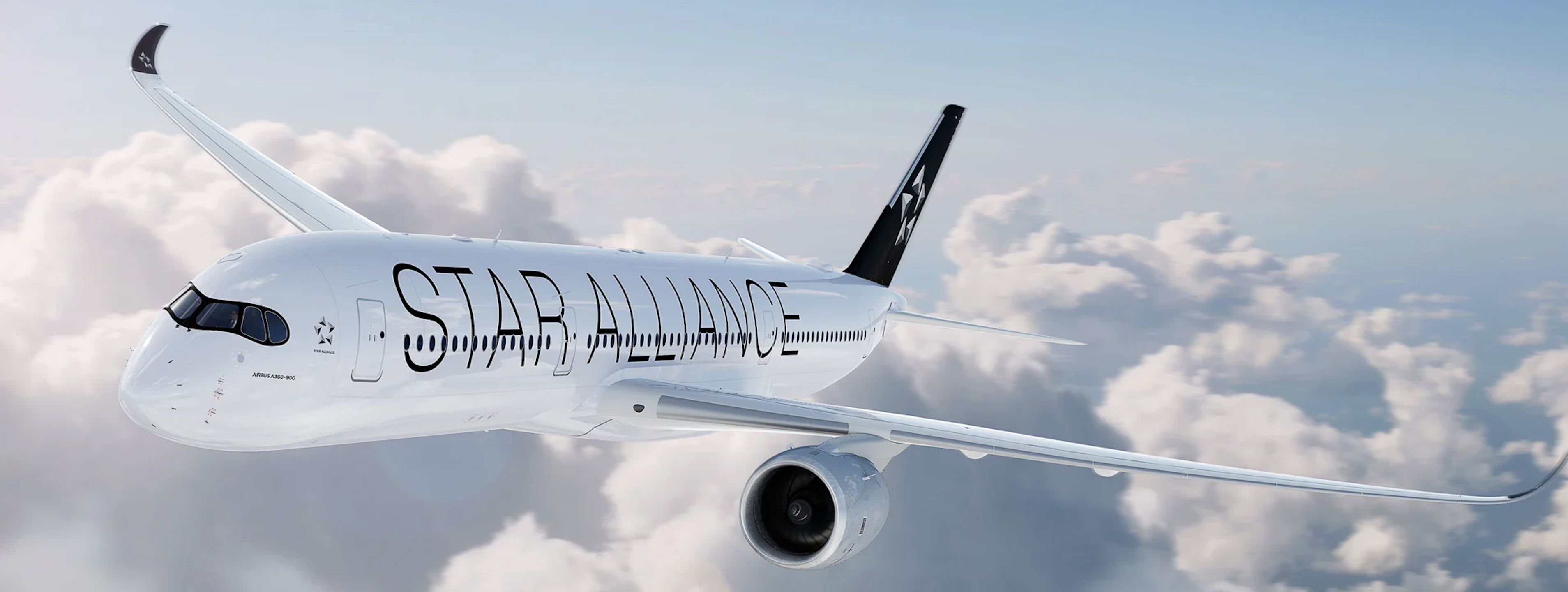
When executives from United Airlines, Lufthansa, Air Canada, SAS and Thai Airways gathered in Frankfurt on 14 May 1997, they were not simply announcing a partnership. They were attempting to create an entirely new category of business.
Among the driving forces behind the initiative were Lufthansa chief executive Jürgen Weber and United Airlines chief executive Gerald Greenwald. Both recognised that airlines needed to find a way of behaving globally without actually becoming global companies.
“This is a historic step in commercial aviation,” Weber declared at launch.
At the time, the claim sounded bold.
The aviation industry had spent decades competing through route networks, aircraft orders and national prestige. Cooperation was generally limited to bilateral agreements and relatively simple codeshare arrangements. The notion that five independent airlines could effectively market themselves as a single network struck many observers as overly ambitious.
Not everyone was convinced.
Some analysts questioned whether airlines with different cultures, labour structures and commercial priorities could genuinely work together. Others argued that passengers still bought tickets primarily based on schedule and price. Frequent-flyer reciprocity and shared branding seemed unlikely to influence consumer behaviour on a meaningful scale.
The sceptics underestimated how quickly the market was changing.
Corporate travel buyers immediately understood the value proposition. Multinational companies wanted fewer supplier relationships, broader coverage and more consistent service. Star Alliance offered exactly that.
Greenwald framed the opportunity succinctly when he observed that customers were increasingly demanding “a seamless travel system.”
The timing was almost perfect. International business travel was expanding rapidly. Global consulting firms, investment banks and multinational corporations were building increasingly international workforces. The internet was beginning to shrink distances between markets. Airlines that remained confined to their own route networks suddenly looked vulnerable.
Star Alliance transformed the economics of aviation by creating what was effectively a virtual global airline. A passenger could book through one carrier, earn miles across multiple carriers, access lounges around the world and enjoy coordinated schedules without ever needing to understand the complexity behind the scenes.
The alliance expanded rapidly. Airlines across Europe, Asia, Africa and Latin America sought membership. The network effect became increasingly powerful. Every new member increased the value of the alliance for existing members.
Today Star Alliance remains the world’s largest airline alliance, comprising 25 member airlines, more than 5,000 aircraft, approximately 760 million annual passengers, over 18,000 daily flights and estimated combined revenues of US$230-250 billion.
Its membership now includes some of aviation’s most respected brands, among them Lufthansa, United Airlines, Singapore Airlines, ANA, Air Canada, Swiss and Turkish Airlines.
What makes Star Alliance remarkable is not simply its scale but its influence. It established the template that every major competitor would eventually follow. Before Star Alliance, there was no recognised category called the global airline alliance. After Star Alliance, every major airline needed an alliance strategy.
The industry had been changed permanently.
Chapter Two: Oneworld Fights Back
Star Alliance’s success created an uncomfortable reality for everyone outside the network.
The alliance was attracting corporate contracts, strengthening customer loyalty and expanding its global reach. Airlines that had previously viewed themselves as competitors suddenly found themselves competing against something larger, a coordinated ecosystem.
For British Airways and American Airlines, the response could not wait.
In September 1998, British Airways, American Airlines, Cathay Pacific, Qantas and Canadian Airlines announced plans to form Oneworld. The alliance formally launched in February 1999 and immediately positioned itself as a credible alternative to Star Alliance’s growing dominance.
The personalities behind the launch were formidable. British Airways chief executive Robert Ayling and American Airlines chief executive Donald Carty understood the strategic stakes. Their carriers already occupied dominant positions in some of the world’s most valuable aviation markets. London and New York remained the centre of global business travel. The transatlantic corridor generated extraordinary yields. Allowing Star Alliance to dominate the emerging alliance landscape was not an option.
Unlike Star Alliance, however, Oneworld did not attempt to win through sheer scale.
If Star Alliance was built around reach, Oneworld was built around influence.
British Airways brought Heathrow. American Airlines brought the largest domestic aviation market in the world. Cathay Pacific controlled one of Asia’s most important gateways through Hong Kong. Qantas dominated Australia’s long-haul connections.
The alliance effectively assembled a collection of premium brands whose combined influence exceeded their numbers.
“This is all about people, customers, employees and shareholders,” Donald Carty said at launch, emphasising that the alliance was intended to create value far beyond route maps and schedules.
Robert Ayling described Oneworld as “a truly global alliance,” but even as the alliance launched, there remained a fascinating tension at its heart. British Airways and American Airlines continued pursuing deeper bilateral cooperation across the Atlantic. The alliance was the public face of global cooperation, but the real commercial value increasingly sat beneath the surface in more integrated partnerships.
Some industry observers questioned whether airlines with such powerful individual brands would ever truly subordinate themselves to a shared alliance strategy. Others wondered whether Oneworld was simply a defensive reaction rather than a coherent vision.
What emerged was something different.
Rather than becoming a unified network in the Star Alliance mould, Oneworld evolved into a federation of premium carriers. The alliance focused heavily on business travellers, premium passengers and some of the world’s most lucrative long-haul routes.
This positioning proved highly effective.
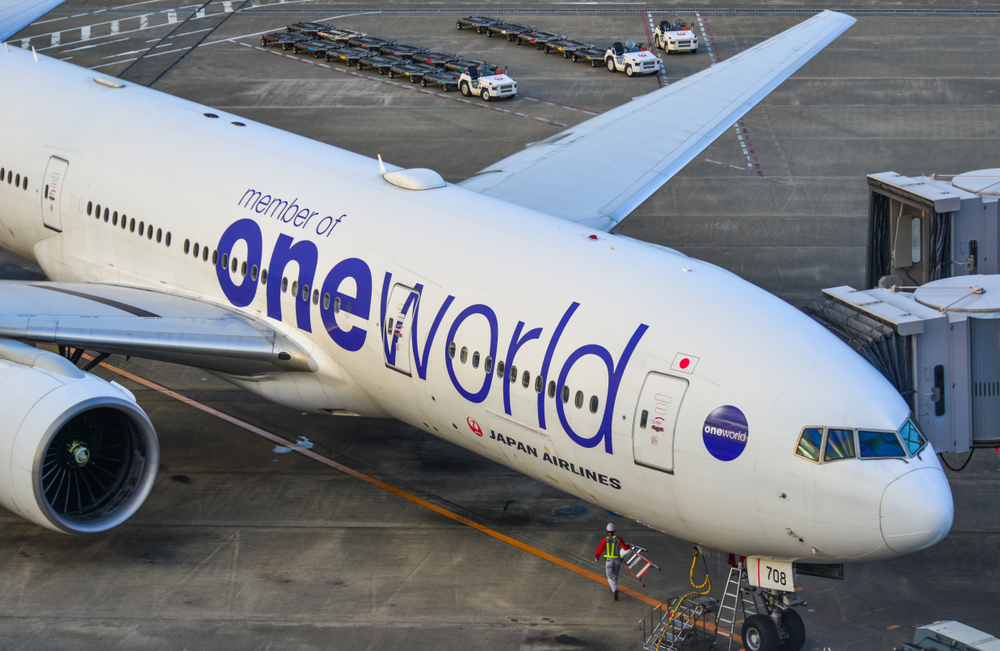
Over the following decades Oneworld attracted additional high-profile members including Finnair, Iberia, Japan Airlines and, perhaps most significantly, Qatar Airways. The addition of Qatar brought one of the aviation industry’s fastest-growing global networks into the alliance and strengthened its position across the Middle East.
Today Oneworld comprises approximately 13 member airlines, around 4,300 aircraft, roughly 500-550 million annual passengers and estimated combined revenues of US$180-220 billion.
Its influence extends well beyond those numbers.
Many of the world’s most profitable aviation corridors sit within the Oneworld ecosystem. London-New York, London-Hong Kong, Sydney-Los Angeles and numerous transatlantic business markets continue to generate substantial value for member airlines.
While Star Alliance may be larger, Oneworld demonstrated that alliances could compete on quality, premium positioning and strategic influence rather than scale alone.
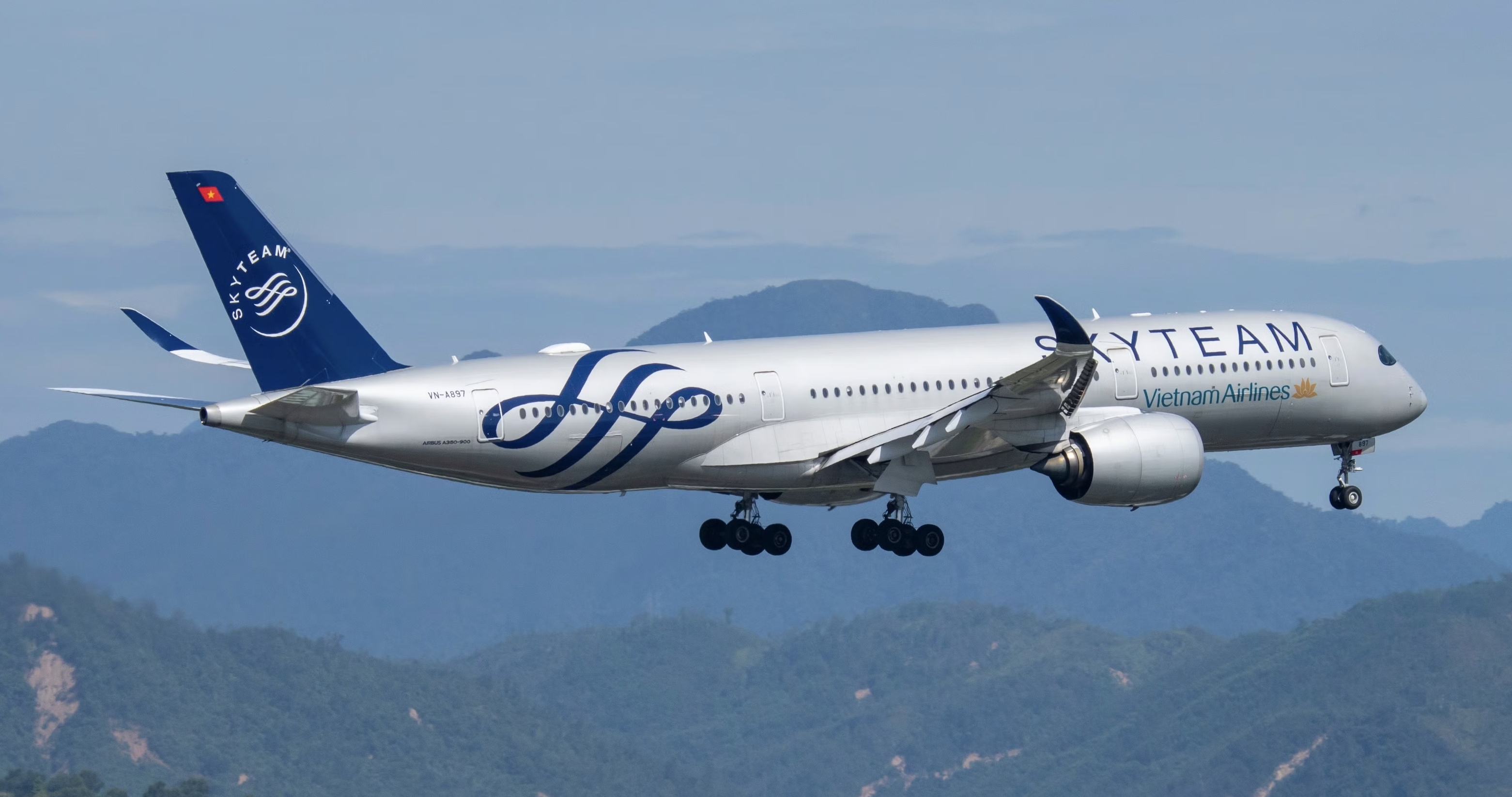
Chapter Three: SkyTeam Arrives Late and Wins Anyway
By the summer of 2000, the alliance movement appeared to be settling into a two-horse race.
Star Alliance had pioneered the model. Oneworld had assembled an impressive roster of premium brands. Many observers assumed the industry’s future would revolve around these two competing networks.
Delta Air Lines and Air France saw things differently.
On 22 June 2000, Delta Air Lines, Air France, Aeroméxico and Korean Air launched SkyTeam in New York.
Unlike Star Alliance, which was driven by first-mover ambition, or Oneworld, which emphasised premium positioning, SkyTeam emerged from necessity.
The airlines involved recognised that remaining outside the alliance system carried increasing risks. Corporate travel buyers were beginning to evaluate networks rather than individual airlines. Loyalty programmes were becoming more important. Global connectivity was rapidly becoming a competitive requirement rather than a differentiator.
Leading the initiative were Delta chief executive Leo Mullin and Air France chief executive Jean-Cyril Spinetta, two executives who understood that aviation was entering a period of structural change.
Spinetta described SkyTeam as a customer-focused alliance that would deliver global reach and seamless service. Mullin similarly emphasised simplicity and convenience for travellers navigating increasingly international lives.
The launch was greeted with less excitement than Star Alliance had generated three years earlier, largely because the concept itself no longer needed proving.
The debate had shifted.
The question was no longer whether alliances would succeed.
The question was which alliances would dominate.
SkyTeam’s founding members brought together a compelling collection of hubs. Atlanta provided unrivalled domestic connectivity within the United States. Paris Charles de Gaulle offered one of Europe’s most important international gateways. Seoul strengthened the alliance’s position in Asia. Mexico City expanded its reach across Latin America.
Critics nevertheless questioned whether the alliance could match Star Alliance’s scale or Oneworld’s prestige.
Those concerns proved short-lived.
A series of industry-defining mergers transformed SkyTeam’s trajectory. Air France merged with KLM in 2004, creating one of Europe’s largest airline groups. Delta merged with Northwest Airlines in 2008, dramatically expanding its international footprint.
Rather than trying to replicate its rivals, SkyTeam built strength through consolidation, operational scale and powerful connecting hubs.
The strategy worked.
Today SkyTeam comprises approximately 19 member airlines, around 4,000 aircraft, between 630 and 700 million annual passengers and estimated combined revenues of US$180-210 billion.
Members include Delta Air Lines, Air France-KLM, Korean Air, China Eastern, Saudia and Aeroméxico, creating one of the world’s most extensive aviation networks.
Its success demonstrated an important lesson. Being first is not always necessary. Sometimes arriving later allows an organisation to learn from the strengths and weaknesses of those who came before.
Is That It? Or Is Another Chapter About to Be Written?
Looking back, the airline alliance appears almost inevitable.
In reality, it was anything but.
The industry spent much of the twentieth century organised around national carriers competing primarily within regulatory frameworks designed for another era. The rise of globalisation exposed the limitations of that model. Airlines needed international scale, but governments remained reluctant to surrender national ownership and control.
Alliances became aviation’s workaround.
They allowed airlines to create global businesses without creating global airlines.
The results have been extraordinary. Combined, Star Alliance, Oneworld and SkyTeam carry more than 1.8 billion passengers each year, operate approximately 13,000 aircraft and generate revenues approaching US$700 billion.
Yet for all their success, airline alliances no longer sit at the centre of aviation strategy in quite the same way they once did.
The industry’s deepest commercial relationships increasingly exist beneath the alliance brands themselves. Joint ventures between British Airways and American Airlines, Lufthansa and United, or Delta and Air France-KLM often generate more value than the broader alliance structures in which they sit. At the same time, airlines such as Emirates have demonstrated that global scale can be achieved without joining any alliance at all.
Meanwhile, a new generation of partnerships is emerging.
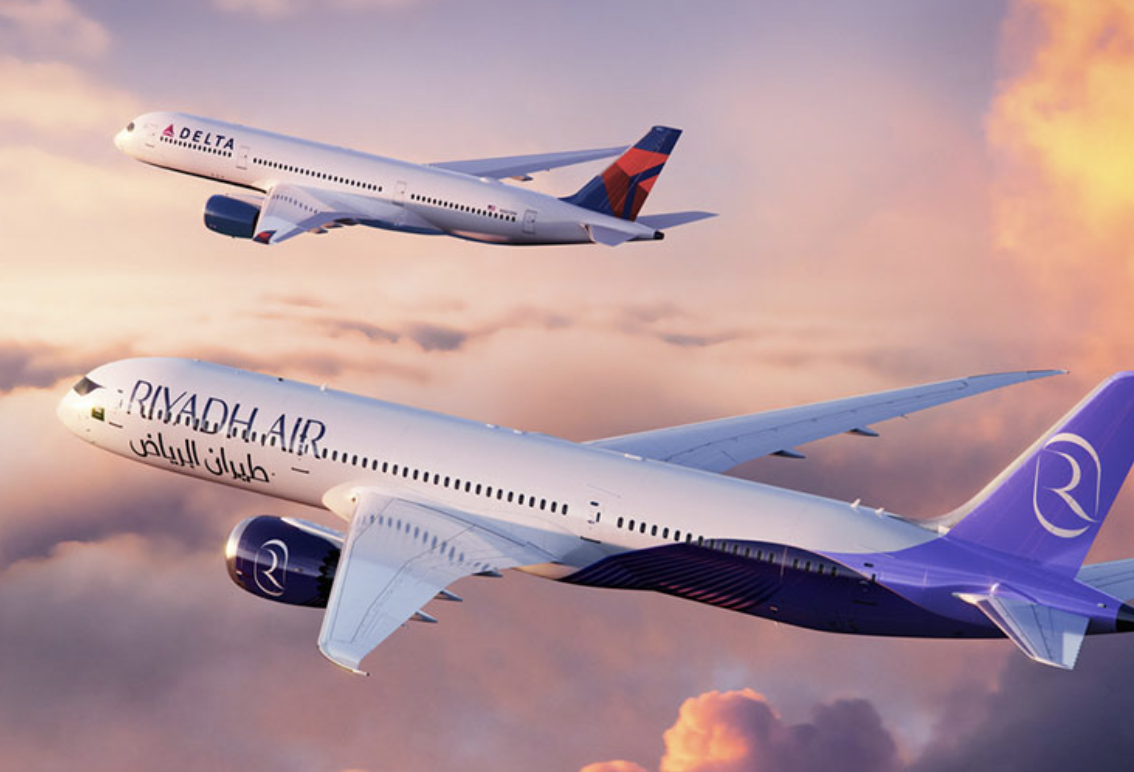
The relationship between Riyadh Air and Delta. The growing cooperation between Gulf carriers and Western airlines. The rise of digital distribution, AI-driven trip planning and increasingly personalised loyalty ecosystems. Each points towards a future where passengers may care less about alliance logos and more about whether their journey simply works.
There is also a geopolitical dimension. The centre of gravity in global aviation continues to shift eastward, with India, Saudi Arabia, the UAE and Southeast Asia becoming increasingly influential in shaping future air travel flows. The alliances that emerged from the North Atlantic aviation order of the 1990s may eventually need to adapt to a very different world.
Which raises a fascinating question.
Were Star Alliance, Oneworld and SkyTeam the final answer to aviation’s globalisation challenge?
Or were they simply the first answer?
Nearly thirty years after five airlines gathered in Frankfurt to launch Star Alliance, the alliance era remains one of the most successful innovations in aviation history. Yet the forces that created it, technology, globalisation, changing consumer expectations and shifting economic power, continue to evolve.
The first chapter of airline alliances has undoubtedly been written.
Whether the next chapter belongs to deeper joint ventures, AI-powered travel ecosystems, new Gulf-led partnerships, or perhaps an entirely new form of global aviation network remains one of the most intriguing strategic questions facing the industry.
Because if aviation history teaches us anything, it is that the structures that seem permanent rarely are.