European travelers seek active and nature-led US itineraries as perception enters a sensitive phase | Focus
European travel demand to the United States is evolving as European travelers approach long-haul travel to U.S. destinations with greater selectivity, shorter planning windows and a stronger appetite for diverse, authentic experiences that extend beyond iconic urban centers.
This is the key takeaway from The Evolution of European Demand to the US: Understanding Shifting Travel Patterns, a white paper developed by The Data Appeal Company / Almaviva Group, in collaboration with Phocuswright, aimed at sparking analysis and discussion ahead of Phocuswright Europe 2026, held in Barcelona from 15 to 17 June. “With the industry gathering in Barcelona this June for Phocuswright Europe, the timing could not be more relevant: the decisions travel companies make now on product, positioning and channel strategy will determine how they capture or lose European demand in the coming years,” said Eugene Ko, senior director, marketing and communications at Phocuswright.
The report, developed by Data Appeal Mabrian, the company’s Tourism & Destinations division, analyzes flight bookings, preferred and emerging destinations, arrival airports, visitor profiles, accommodation preferences, demand factors, traveler experiences and perception indexes from EU28* countries to examine how European travel behavior towards the United States has evolved since 2023.
“European demand for the US is nuanced in ways that simply cannot be captured in aggregated data,” Ko added. “What makes this partnership with Data Appeal so valuable is the ability to combine the information from Phocuswright consumer surveys, specifically how travelers from Britain, France, Germany, Italy and Spain think, plan and book, with real-time demand signals and perception indices. Together they give travel companies a much more actionable picture than any data set alone can provide.”
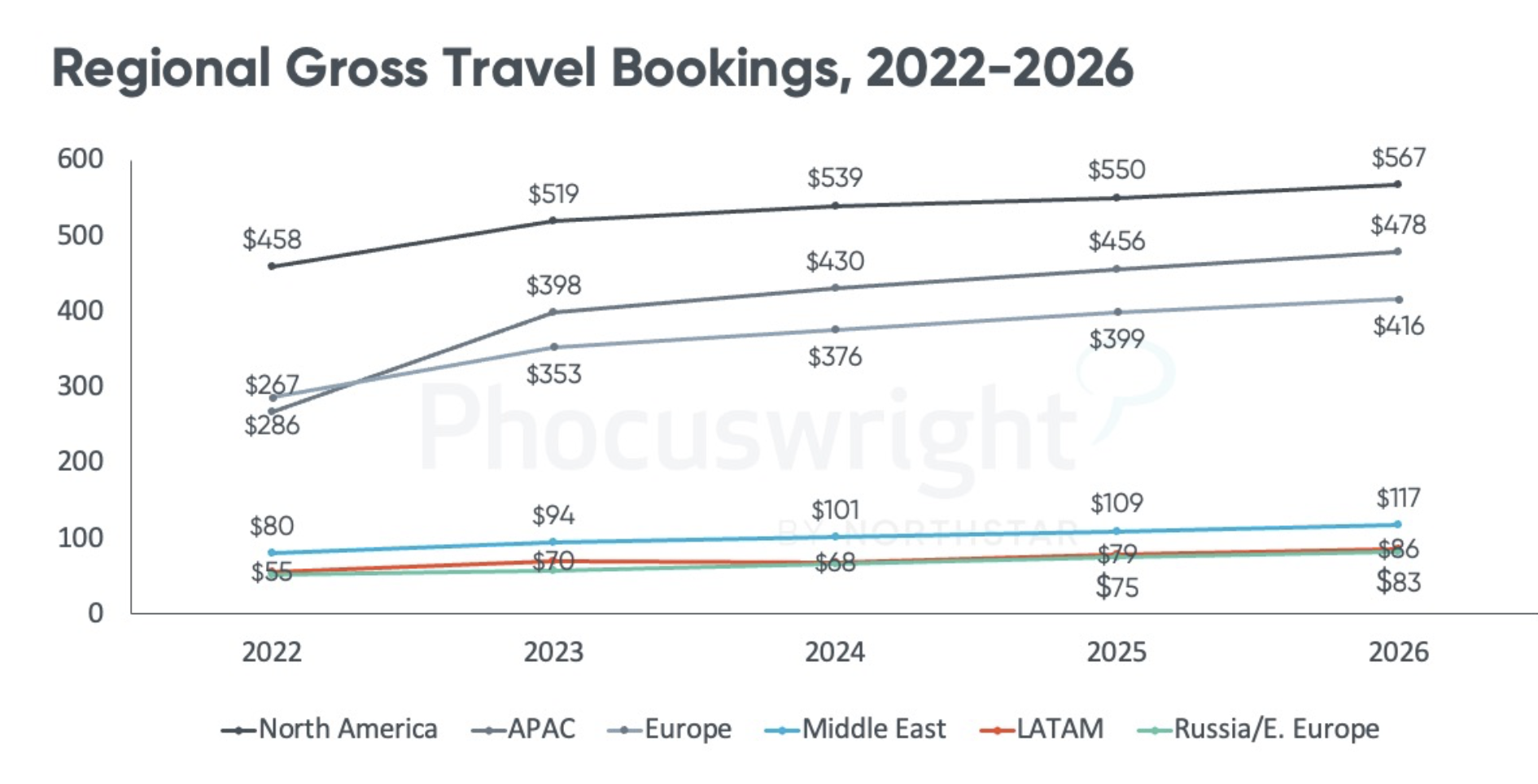
According to Phocuswright, North America is expected to reach $567 billion in gross bookings by 2026, up +3.1% year-over-year, cementing its position as the world’s largest regional travel market. Of the markets analyzed in a forthcoming report, Britain shows the strongest connection to North America, with 15% of the UK traveler population visiting the region. France follows with 11%, while Germany – despite the largest traveler base – records 9%, while Spain and Italy remain at 8% and 6% respectively.
Given Europe’s central role in long-haul markets for inbound goods to the US, the analysis aims to highlight behaviors, preferences and emerging trends to help US travel stakeholders stay competitive.
Perception, a key factor in understanding European demand for the US
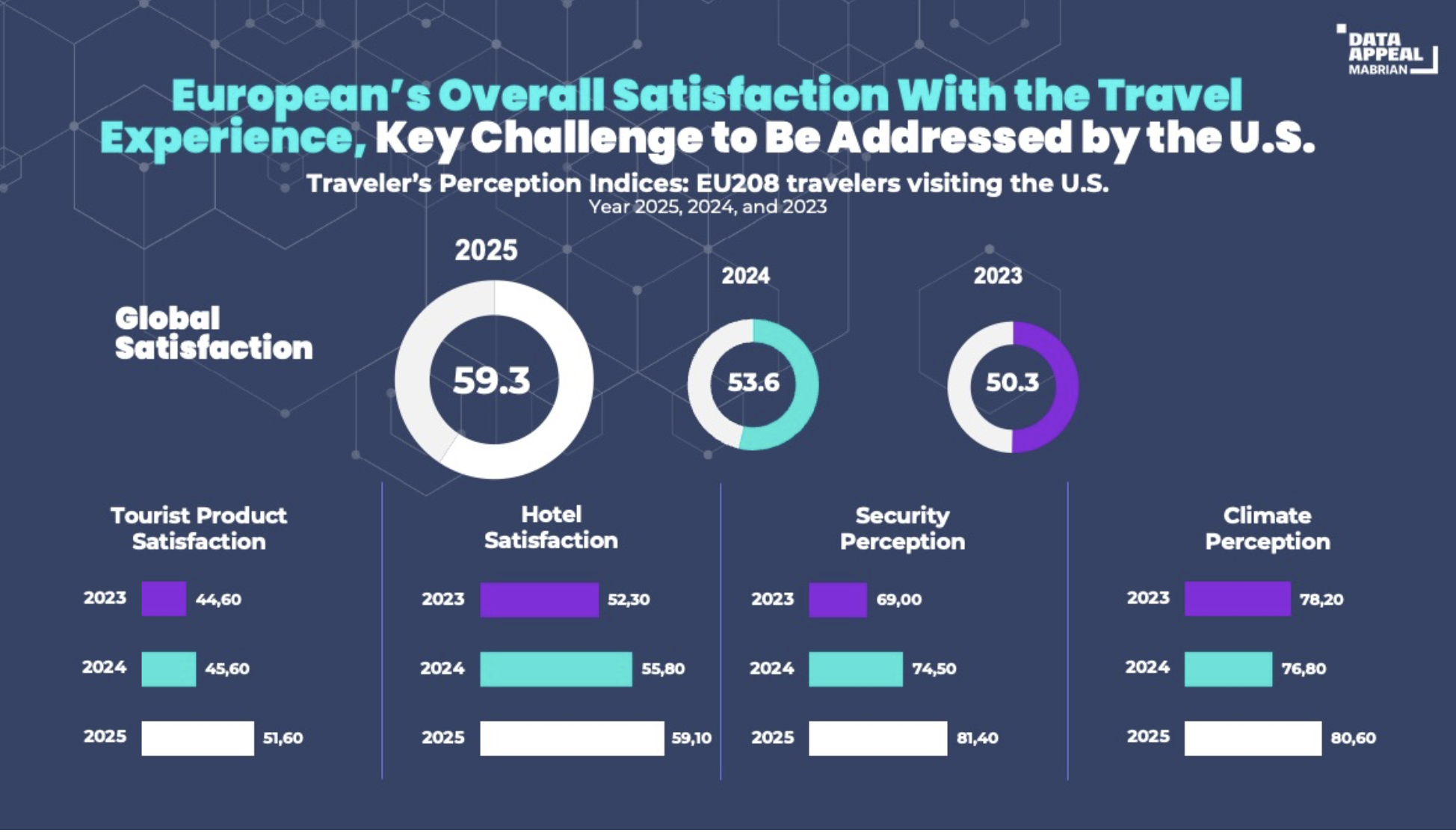
“Perception indices for overall experiences and tourism products indicate that European travelers are a discerning audience whose high expectations of a world-class destination like the US are not always fully met,” emphasizes Maria Pradissitto, North America Market Manager at Data Appeal.
Compared to 2023, European traveler perception indices improved in 2025, especially the Perception of Security Index, which increased by +12.5 points to 81.4/100, and the Perception of Climate Index, which increased by +2.4 points to 80.6/100.
However, despite an improvement of +9 points to 59.3 out of 100, the Global Tourist Perception Index remains low compared to other relevant destinations worldwide, underscoring the need to closely examine the underlying factors impacting performance, says the Data Appeal expert.
In fact, the European perception indices for 2026 show a slight decline compared to the same period in 2025, mainly driven by the Global Tourist Perception Index (-1.5 points, now at 56.6/100) and the Perception of Security Index (-0.7 points, now at 81.1/100), as well as lower security perception scores in key origin markets such as Germany (-1.3 points, now at 81.1/100). 80.7/100), Great Britain (-0.6 points, now 83.2/100) and Italy (-0.5 points, now 87.6/100).
According to Pradissitto, “these trends suggest that European travelers’ perceptions of the United States are entering a more sensitive phase – a development that destinations must monitor closely to remain competitive in the long-haul travel market,” especially in terms of expectations and quality standards in tourism products, services and hotel experiences.
Wonderful outdoor living and all-American experiences that are popular with European demand
More immersive itineraries and better travel experiences that reflect the interests, motivations and levels of engagement of European travelers will play a key role in shaping their perception of the United States, according to insights from Data Appeal.
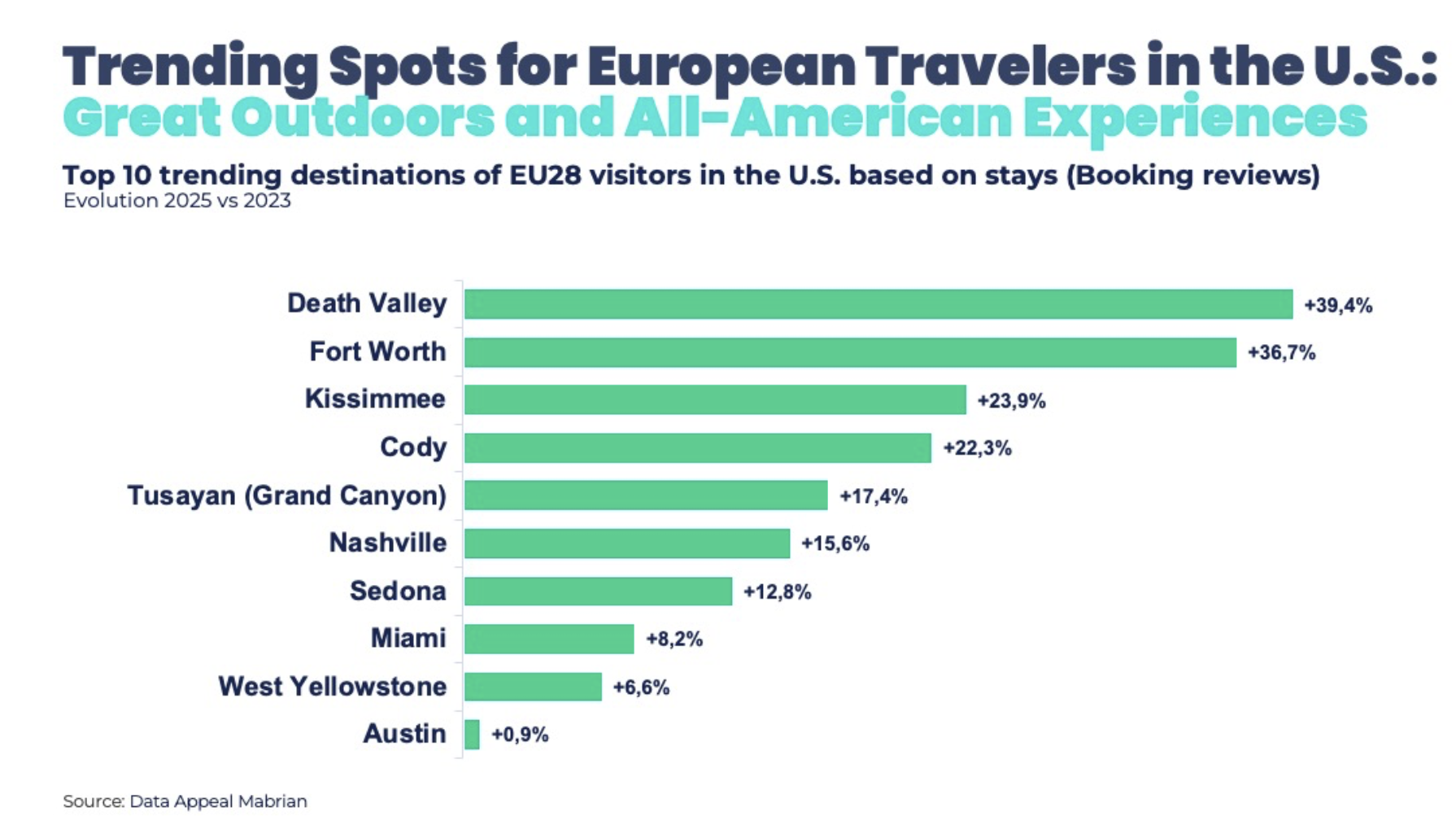
“Many of the trendiest U.S. destinations among European travelers are closely tied to active tourism and nature, including national parks, iconic landscapes and classic road trip circuits – from Death Valley and Cody to Tusayan and Sedona near the Grand Canyon, as well as West Yellowstone,” Pradissitto explains. This is reflected in demand factors, where active tourism has shown the most consistent growth since 2023, increasing by 1.5 percentage points to 17.2% of European travel motivations.
This trend highlights a strategic opportunity for the US to present a broader and more diverse travel offering through experiences, products and services that truly resonate with travelers’ evolving interests, improving traveler perception. Insights from Data Appeal show that while culture remains the main demand driver, accounting for 31.9% of motivations in 2025, despite a decline of 2.8 percentage points since 2023, nature still represents a significant share at 17%. Together with active tourism, these segments provide a strong foundation for developing more attractive itineraries, while also tapping into other growing motivators such as sunbathing and food and cooking.
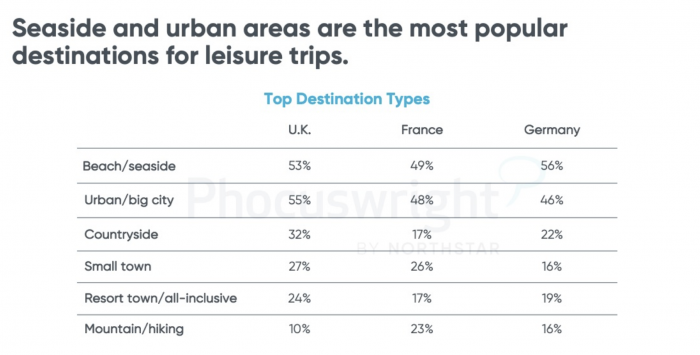
In this scenario, the data suggests that major connectivity hubs are still crucial for European demand. Phocuswright’s upcoming European Consumer Travel Market Report 2026 shows that travelers from the UK, France and Germany visiting the US are particularly drawn to iconic urban and coastal destinations, with 46% to 55% choosing top urban hotspots and 49% to 56% preferring beach and ocean destinations. The findings from the new report will be presented on Center Stage at Phocuswright Europe 2026.
A closer look at Data Appeal’s demand trend insights, based on consolidated stay ratings, reinforces this pattern. New York City, Las Vegas, Los Angeles, Miami Beach and San Francisco top the rankings of the top 15 favorite US destinations for EU28 travelers, and eight of these also correspond to the main arrival airports for European visitors. Interestingly, European demand for top travel destinations has been on a downward trend since 2023, with a decline of -15.9% in 2025, indicating weaker momentum among the most mature hotspots – even as the broader 2026 outlook for US travel remains positive.
This broader trend is reflected in flight booking data. GDS bookings from the EU28 countries* for travel throughout 2026, made at least six months in advance and registered through April, increased by +11% compared to the same period last year, following a -4% decline in 2025 compared to 2024. This recovery, combined with shorter booking windows than in 2025, signals a more reactive but deliberate planning process as European travelers continue to show strong interest in the US while becoming more selective about where and how they travel.
The full report, The Evolution of European Demand to the US: Understanding Shifting Travel Patterns, is available here: http://www.datappeal.io/evolution-european-demand-US