QuickBooks Online Comparison for 2026: Plans & Pricing Guide
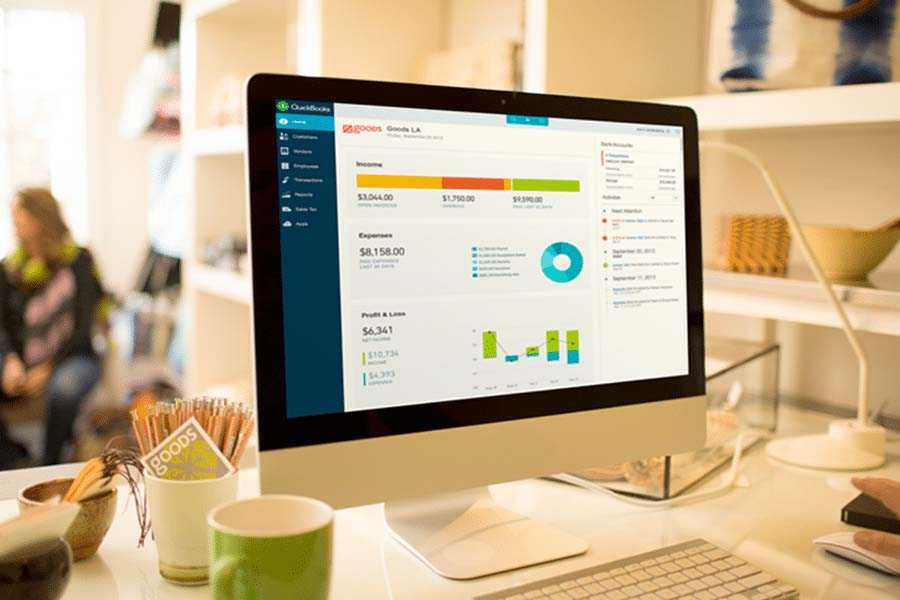
I evaluated all five QuickBooks Online plans — Solopreneur, Simple Start, Essentials, Plus, and Advanced — which range from $20 to $275 per month. This comparison outlines their features, pricing, and ideal use cases to help you determine which tier aligns best with your business needs.
I evaluated each QuickBooks Online plan based on pricing, accounting features, reporting, scalability, automation, usability, and operational fit for different business types. I focused on the real differences that affect day-to-day accounting workflows, including inventory tracking, project profitability, multicurrency support, user limits, reporting depth, workflow automation, and upgrade flexibility.
Instead of repeating vendor marketing copy, I compared how each QuickBooks Online plan fits different business stages and operational needs. I also evaluated where businesses are likely to outgrow a plan and when upgrading to a higher tier makes practical sense.
Because QuickBooks Online pricing, AI features, and promotions can change frequently, I also reviewed the current live QuickBooks pricing and plan information available at the time of writing.

Accounting and Bookkeeping Expert at Fit Small Business
I compared the QuickBooks Online plans by looking at the features that most often affect small business accounting decisions: monthly pricing, number of users, core bookkeeping tools, invoicing, bill management, time tracking, inventory, project profitability, reporting, automation, and scalability.
I also considered which businesses each plan fits best. For example, I looked at whether a plan is better suited for a solo contractor, a small service business, a product-based business, a project-based company, or a more established business with multiple users and more complex workflows.
Finally, I reviewed plan limitations and upgrade triggers, such as when a business needs inventory tracking, more users, class and location tracking, batch workflows, advanced reporting, or stronger access controls. My recommendations are based on practical fit rather than a formal scoring rubric.
QuickBooks Online plans comparison chart: Pricing & features
The QuickBooks Online comparison chart below highlights some of the key features of the five plans. We include in-depth, side-by-side comparisons of each plan against its next-level tier in the sections that follow.
When to use each
AI-powered bookkeeping with Intuit Assist
Intuit Assist functions as Intuit’s generative AI financial assistant inside QuickBooks Online, using your live financial data and Intuit’s AI models to automate everyday accounting and cash flow tasks. It works as an embedded helper that answers natural-language questions while handling back-office work through specialized AI agents. Its core purpose is to reduce manual bookkeeping so business owners can focus more on operations.
The level of AI capability increases with each plan:
- Simple Start: Core Intuit Assist only, covering basic Q&A, simple invoicing help, and light suggestions
- Essentials and Plus: Additional AI agents for payments, customer follow-up, reminders, and basic operational or cash flow support
- Advanced: Higher-level agents, such as Finance and Project Management, for deeper reporting, forecasting, and project workflows
The primary limitations in lower tiers involve missing AI agents and advanced scenario-style intelligence, not the baseline conversational assistant. Because Intuit continues to update availability by region and plan, checking the in-product plan comparison for the specific country remains the most reliable way to confirm current access.
Fit Small Business case study
The Fit Small Business internal case study compares the four standard QuickBooks Online plans for small businesses across major accounting categories and functions to help you decide which one fits your needs. I excluded QuickBooks Solopreneur because it’s not a double-entry accounting system.
QuickBooks Online comparison interactive chart
Touch the graph above to interact
Click on the graphs above to interact
-
Simple Start
$38 per month -
Essentials
$75 per month -
Plus
$115 per month -
Advanced
$275 per month
Simple Start performs well on everyday tasks like banking, invoicing, and tax basics, but it dips once features get more complex. Essentials and Plus strengthen those weaker areas, especially in A/P, reporting depth, and inventory needs, making them better fits for growing businesses. Advanced levels everything out with consistently high performance across almost all categories, reflecting tools built for companies that need stronger controls, richer reporting, and more sophisticated workflows.
QuickBooks Solopreneur vs QuickBooks Online Simple Start
QuickBooks Solopreneur suits one-person businesses that need straightforward income and expense tracking with invoicing, estimates, mileage tracking, and Schedule C tax filing. Simple Start, on the other hand, is built for small businesses that are beginning to grow, adding capabilities like payroll processing, automated sales tax, and 1099 contractor tracking, though it offers less of the simplicity solo operators often prefer.
Solopreneur can produce a profit and loss report, but it does not generate a balance sheet, which limits a full assessment of a business’s financial position.
Advantages of QuickBooks Online Simple Start
- Manage and pay bills directly through QuickBooks Bill Pay
- Track unpaid bills and process selected payments efficiently
- Run payroll with a QuickBooks Workforce add-on for automated taxes and direct deposits
- Track assets and liabilities through double-entry accounting
- Monitor payroll liabilities automatically when using QuickBooks Workforce
- Record and categorize payments to 1099 contractors
- Generate and print 1099 forms, with e-filing available through QuickBooks Workforce
QuickBooks Online Simple Start vs Essentials
Simple Start works well for small businesses that need core accounting tools like invoicing, sales tax automation, bill management, and 1099 contractor tracking. Essentials adds more operational depth with features like time tracking and access for up to three users, making it a stronger fit for teams or businesses with more complex financial workflows.
Advantages of QuickBooks Online Essentials
- Track billable hours by job and assign them to specific customers
- Add billable time directly to invoices for service-based billing
- Access 20+ Simple Start reports plus 20+ additional Essentials reports
- Analyze A/P and A/R aging, expenses by vendor, and uninvoiced charges in detail
- Review outstanding invoices and unpaid bills for clearer financial insight.
Upgrading from Simple Start to Essentials, Plus, or Advanced is straightforward, with direct migration available. In contrast, moving from Solopreneur requires canceling your subscription and creating a new company file.
QuickBooks Online Essentials vs Plus
Simple Start is a strong entry point if your small business needs essential features like invoicing, sales tax automation, bill management, and 1099 contractor tracking. However, if you have employees or need more control over their finances, I recommend upgrading to Essentials, which adds time tracking and supports up to three users.
If you manage inventory, projects, or a growing team, Plus is the logical next step. It includes job costing, inventory tracking, and access for up to five users, making it a better fit for more operational complexity.
Advantages of QuickBooks Online Plus
- Track inventory with FIFO to monitor stock levels and calculate COGS
- Create and send purchase orders that convert seamlessly into bills
- Assign classes and locations to analyze P&L by division or area
- Monitor project income, expenses, and wages to assess profitability
- Manage job costs with clear visibility into labor and material spending
QuickBooks Online Plus vs Advanced
QuickBooks Advanced builds on the features of Plus with tools designed for larger businesses or those managing more complex workflows. While Plus supports up to five users, I appreciate that Advanced accommodates up to 25 seats, offers custom user permissions, batch transactions, and automated workflows.
It also provides exclusive benefits I find valuable, such as a dedicated account manager, premium support, and unlimited chart of accounts and classes. If your business has multiple entities, advanced reporting needs, or larger teams, I recommend considering Advanced despite its higher monthly cost.
Advantages of QuickBooks Online Advanced
- Create multiple invoices at once using batch invoicing
- Record and categorize expenses in bulk with batch expensing
- Build customizable reports with filters, dashboards, and Spreadsheet Sync
- Access Priority Circle for dedicated support and faster assistance
- Track fixed assets with automated depreciation schedules
- Compare estimated and actual project costs to spot profitability issues
How I evaluated QuickBooks Online plans
My QuickBooks Online comparison is based on the Fit Small Business internal case study, explained below. As mentioned earlier, QuickBooks Solopreneur is excluded from my assessment since it’s not a double-entry accounting software.
30%
Core accounting features
15%
Automation & workflow
15%
Reporting & analytics
10%
Compliance & security
10%
Integrations & scalability
15% of Overall Score
I evaluated pricing by looking at transparency, upgrade costs, and the overall value delivered at each tier. I reviewed vendor pricing pages to confirm whether full pricing, add-ons, and plan limitations are publicly disclosed or gated behind sales conversations. I also compared the cost of upgrading between tiers using a cost-per-feature formula that estimates how much additional functionality each upgrade unlocks relative to price increases.
In addition to subscription costs, I assessed free trials, cancellation policies, and available discounts to understand how easy it is for businesses to test and exit a platform. These factors help determine whether the software delivers clear, predictable pricing and reasonable value as companies grow.
30% of Overall Score
I analyzed how reliably each platform performs essential accounting tasks such as maintaining the general ledger, managing payables and receivables, reconciling bank transactions, tracking inventory, handling fixed assets, and calculating sales tax. I examined whether the system enforces true double-entry accounting, updates financial reports in real time, and provides audit trails for transaction changes.
I also looked at how efficiently businesses can manage vendor bills, issue invoices, reconcile bank feeds, and generate tax or financial reports without manual workarounds. When possible, I reviewed product documentation and walkthroughs to understand how these workflows function in practice. Platforms scored higher when they automate core accounting tasks while maintaining reliable financial accuracy.
15% of Overall Score
I evaluated how effectively each platform reduces manual accounting work through automation. This included reviewing approval workflows, recurring transactions, bulk processing tools, AI-powered features, and the ability to consolidate multiple entities. I looked for tools that automate routine processes such as recurring invoices, scheduled journal entries, or batch transaction imports.
I also examined whether AI tools provide meaningful operational insights, predictive categorization, or anomaly detection rather than simple rule-based automation. Systems scored higher when automation reduced repetitive accounting tasks while maintaining transparency and user control.
15% of Overall Score
I compared reporting capabilities by analyzing how easily businesses can generate financial statements, analyze performance trends, and build custom reports. I reviewed the flexibility of standard financial reports such as the balance sheet, income statement, and cash flow statement, along with the ability to filter, segment, and export data.
I also evaluated dashboard tools, KPI tracking, and the ability to drill down from summary reports into transaction-level details. For more advanced analytics, I looked for forecasting tools, profitability analysis, and integrations with external analytics platforms. Platforms scored higher when reporting tools supported both daily financial oversight and deeper business analysis.
10% of Overall Score
I reviewed how each system protects financial data and maintains accountability within accounting workflows. This included evaluating audit trails, user permissions, period locks, and authentication methods such as two-factor authentication or single sign-on.
I also looked at how clearly systems track user activity and prevent unauthorized changes to financial records. Platforms with stronger monitoring tools, access controls, and compliance readiness scored higher in this category. These features help ensure financial accuracy while protecting sensitive accounting data.
10% of Overall Score
I evaluated how easily each accounting platform connects with other business tools and scales as operational complexity grows. This included reviewing integrations with payroll systems, expense tracking tools, banking providers, e-commerce platforms, and CRM software.
I also examined whether the platform supports multi-currency transactions, APIs for custom integrations, and multi-entity accounting structures. Platforms that integrate easily with operational systems and support higher transaction volumes scored higher. These capabilities help ensure the software can continue supporting a business as it expands.
5% of Overall Score
I assessed usability by examining how easily non-accountants can complete common accounting tasks. I looked at the number of steps required to create invoices, enter bills, reconcile bank accounts, and generate reports. I also reviewed interface design, navigation clarity, mobile capabilities, and the availability of prompts or error guidance during workflows.
Platforms scored higher when they allowed users to complete common accounting tasks quickly with minimal training. These usability factors are important for small businesses that manage accounting internally.
*Percentages of overall score
When to consider a QuickBooks Online alternative
QuickBooks Online isn’t always the perfect fit for every business. Here are some situations where an alternative might be better:
- If you want free accounting software: Managing your finances on a budget is possible. Check out our top-recommended free accounting software for the best options and their features.
- If you need parts inventory management: While QuickBooks Online has strong inventory management features, it can’t track parts and inventory assemblies. See our best accounting software for small manufacturing businesses for options.
- If you prefer desktop-based software: If your business has limited internet connectivity, QuickBooks Desktop may be the better choice. Our QuickBooks Online vs Desktop comparison highlights the differences, including features in QuickBooks Desktop Enterprise, the only available desktop version.
- If you need better scalability: As your business grows, QuickBooks Online may struggle with higher transaction volumes, more users, or complex operations. Explore our list of the leading small business accounting software for scalable solutions.
- If you require industry-specific features: QuickBooks Online is versatile but may not meet all industry-specific needs. If you rely heavily on workarounds or third-party integrations, consider specialized software. Check out our buyer’s guides for tailored solutions:
Frequently asked questions (FAQs)
Yes, you can. However, note that there’s no direct data migration option available from QuickBooks Solopreneur to any higher version of QuickBooks Online. This means you must first cancel your Solopreneur subscription and then sign up for the QuickBooks Online version you wish to upgrade to.
QuickBooks Online is better than QuickBooks Desktop if you prefer cloud-based accounting software to a locally installed one. QuickBooks Online’s biggest advantage is its ability to be accessed from anywhere with an internet-enabled device. Learn about all the differences in our QuickBooks Online vs Desktop comparison.
The QuickBooks Online Plus tier is the most popular plan among small to midsize businesses. It offers robust features, such as inventory tracking, project profitability tracking, budgeting, and class/location tracking, making it ideal for businesses with diverse needs. It also supports up to five users, which is perfect for growing teams.
Yes, QuickBooks Online offers a mobile app that allows you to access your account, track expenses, create and send invoices, and more, all from your smartphone or tablet.
Source link