US-Senegal friendly carries World Cup-level stakes
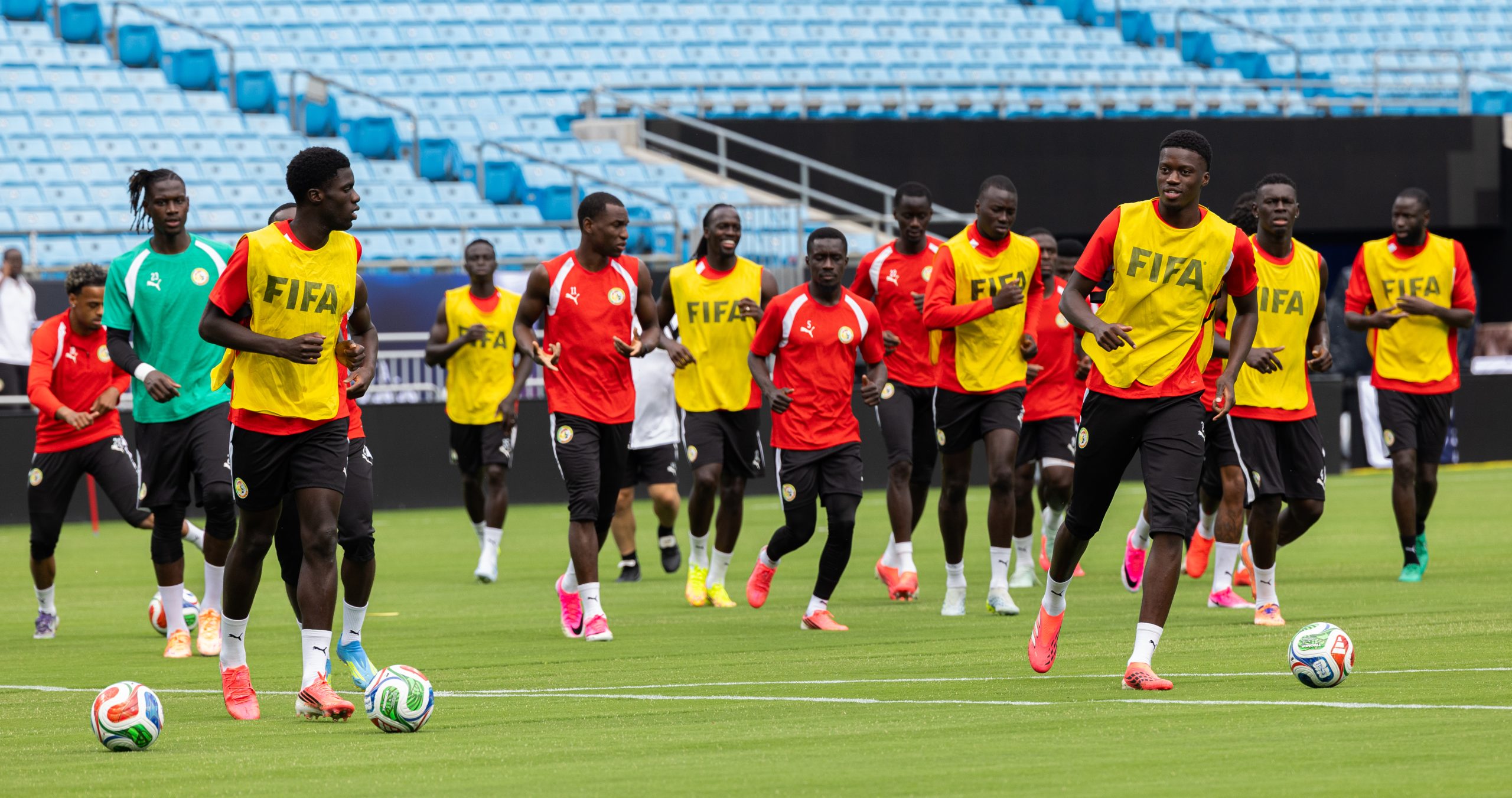
CHARLOTTE, N.C. – On paper, Sunday’s match between the U.S. men’s national soccer team and Senegal is simply another international friendly. In reality, it may be one of the most revealing World Cup dress rehearsals either team could have asked for.
For the U.S., Senegal represents exactly the type of opponent head coach Mauricio Pochettino wanted before the June 12 opening match against Paraguay: athletic, organized, experienced and comfortable competing against elite opposition.
“Senegal is one of the best teams. … The quality is amazing,” Pochettino told reporters Saturday in Georgia at the U.S. training facility.
For Senegal, recently stripped of the Africa championship and fighting to overturn that ruling, the U.S. match offers an opportunity to remind the soccer world that it remains a legitimate contender in the 2026 FIFA World Cup.
“We are going to face a very good United States team,” head coach Pape Thiaw told reporters in Charlotte on Saturday before a practice.
“They are a strong football nation, with many players competing in Europe and coached by a really good and well-known head coach,” he said. “It’s an exciting test for us, and an opportunity to learn and measure ourselves ahead of the tournament.”

The matchup comes at a key moment for both programs.
The U.S. carries the pressure of being a host nation and the expectations that come with what many consider its most talented generation of players ever. Yet despite having stars such as Christian Pulisic, Weston McKennie, Tyler Adams and Gio Reyna, questions remain about the team’s identity under Pochettino.
More than a year into the Argentine’s tenure as head coach, many supporters are still debating exactly what a Pochettino team is supposed to look like.
His decision to omit players such as Diego Luna and Tanner Tessmann from the roster unveiled Tuesday raised eyebrows. So did his choice to put 10 defenders on the squad of 26 – an unusually heavy emphasis on defensive options.
Pochettino has pushed back against the criticism.
“I think it’s important that you need to see the roster trying to provide the right balance and for us, in the way that we play, it’s important to have enough bodies in defense,” said Pochettino at the roster announcement in New York.
Rather than building around a single recognizable system, Pochettino appears focused on creating a group capable of changing shapes, adjusting tactics and responding to different challenges throughout the tournament.
“This roster gave me a lot of possibilities to play in different ways and formations,” Pochettino said in New York.
Whether that flexibility becomes a strength or contributes to the perception that the U.S. still lacks a clear identity remains one of the biggest questions heading into the World Cup.
Sunday’s match at Charlotte’s Bank of America Stadium could help Pochettino figure out his starting 11.
But, he said, “We are not about to take risks.”
With defender Chris Richards nursing an ankle injured while playing for Crystal Palace two weeks ago, the U.S. team brought just 25 players to Charlotte.
“Go to compete, to play, come back, and continue our preparation” for Paraguay, Pochettino said, adding that he may also let some players rest.
“Maybe we are going to manage the game time with some players that maybe play too much. … Zero risk (is) impossible, but if it’s possible to arrive to zero, we will,” he said.
That makes Senegal one of the final measuring sticks for the U.S. before the tournament.
As the U.S. team seeks answers, Senegal arrives in Charlotte determined to remind the soccer world why it remains one of the best national teams outside the traditional powers of Europe and South America.
The country’s famous 2002 squad stunned defending champion France and became only the second African nation to reach a World Cup quarterfinal. Senegal’s coach was on the bench for that match.
Now led by veterans such as Sadio Mané, Kalidou Koulibaly, Idrissa Gana Gueye and Edouard Mendy, the Lions of Teranga boast a seven-game unbeaten run, with just one defeat in the last 30 matches.
Senegal defeated Morocco 1-0 in the Africa Cup of Nations final on Jan. 18. But the Confederation of African Football appeals board ruled March 17 that Senegal had forfeited the game by walking off the field to protest a penalty, and awarded the title to Morocco.
Senegal has appealed to the Court of Arbitration for Sport.
Thiaw said his team still considers itself the champion – but is focused on the World Cup, starting with a match against its 2002 rival France.
“Winning the AFCON was really important and was one of our main objectives but that’s behind us,” he said in French. “We were the champions of Africa and now we are arriving to a new competition … where we are going to face the best teams in the world.”
“The mindset is here, the desire is here. So we’re going to give everything and play in the best way possible to accomplish our objectives at the World Cup,” he said.
Few nations have been as consistently competitive in recent years. Senegal’s physicality, defensive organization and ability to transition quickly into attack make it one of the most difficult opponents the U.S. could face.
Those qualities are exactly why this match matters.
“It’s going to be nice because we are going to meet Gana Gueye, Nicolas Jackson, Sadio Mané,” Pochettino said Saturday. “The team is a good challenge for us. … It’s a fantastic team. It’s for me, one of the contenders from Africa … because of the capacity and the quality of the players.”
Pochettino will have just one more pre-World Cup opportunity to evaluate how his roster functions under pressure: a friendly against Germany on June 6 in Chicago.
That reality raises the stakes for players still competing for minutes on the field and positions within the squad.
Who starts in midfield? Who partners the center backs? Who can the coaches count on when the team is struggling?
Which of the three center strikers on the squad will start?
Haji Wright “can play in different positions,” Pochettino said, and Folarin Balogun “can play alone” and fight two or three center backs. He called Ricardo Pepi “a killer” who can “read where is the space” and then “ride the ball and have the possibility to score.”
“The three are completely different,” he said.
What matters Sunday isn’t the final score but whether the U.S. leaves with more answers than questions and whether Senegal can shake off the AFCON controversy.
Related

Source link