easyJet and Amsterdam Schiphol Airport use automated taxiing to reduce emissions on the ground | News
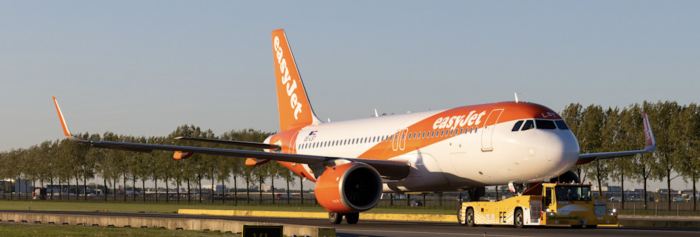
easyJet and Amsterdam Schiphol Airport today announce the rollout of electronic TaxiBot technology for Airbus aircraft operations at Schiphol, following a successful trial earlier this year. The launch marks another step in easyJet’s ongoing strategy to improve operational efficiency and reduce emissions both in the air and on the ground.
TaxiBot, funded by the SESAR project HERON**, is a semi-robotic, push-pull-free aircraft tractor that allows aircraft to taxi between the gate and the runway without using their main jet engines. Instead, the aircraft uses its Auxiliary Power Unit (APU) exclusively, significantly reducing fuel consumption, CO₂ emissions and noise during ground operations.
After an initial and successful test in March, easyJet’s first passenger flight took place on April 30. As part of the program, three more easyJet Airbus A320neo aircraft are now permanently equipped with TaxiBot systems, supplied in collaboration with Amsterdam Airport Schiphol, Menzies Aviation, Airbus and SAS.
easyJet estimates that TaxiBot will save an average of 95kg of fuel and 299kg of CO₂ per flight, while also reducing noise on the platform.
Schiphol is the first airport in Europe to use electric TaxiBot technology for Airbus aircraft operations. According to Schiphol, large-scale deployment could reduce fuel consumption during taxiing by up to 65%, while also significantly reducing CO2, NOx*** and ultra-fine particle emissions.
The commitment is part of Schiphol’s broader ambition to build a future that is more in harmony with the environment. Together with airlines such as easyJet, ground handlers, Air Traffic Control and the Netherlands and Smart Airport Systems, Schiphol develops solutions that make a difference in daily business operations, such as the electric TaxiBot.
David Morgan, Chief Operating Officer at easyJet, said of the rollout:
“TaxiBot is another important step in our mission to operate as efficiently as possible. This technology provides immediate reductions in fuel consumption, CO2 emissions and noise, while supporting more efficient ground operations at one of Europe’s busiest airports.
As we continue to modernize our operations, initiatives like this demonstrate how innovation and collaboration across the industry can help reduce aviation’s impact on the environment, both in the air and on the ground.”
Esmé Valk, Chief People & Transformation Officer at Amsterdam Airport Schiphol said: Schiphol:
‘With the use of the TaxiBot, we are taking another practical step towards fewer emissions and noise on the platform. In this way we create a healthier and cleaner workplace, and an increasingly sustainable and modern airport that is ready for the future.’
Miguel Gomez Sjunnesson, EVP Europe at Menzies Aviation, said:
“The introduction of TaxiBot at Schiphol shows what can be achieved when technology and collaboration come together. At Menzies we are focused on using solutions that improve efficiency and reduce emissions. We are working closely with Amsterdam Schiphol Airport and easyJet to make these changes part of everyday operations, while creating a cleaner, healthier environment on the platform.”
Operational efficiency improvements such as Taxibot are a key part of easyJet’s net zero roadmap. The airline remains committed to decarbonizing its fleet and remains on track to meet its ambitious target of reducing CO2 emissions by 35% by 2035.