How community groups, activists and local media turned Camden into a model of police reform
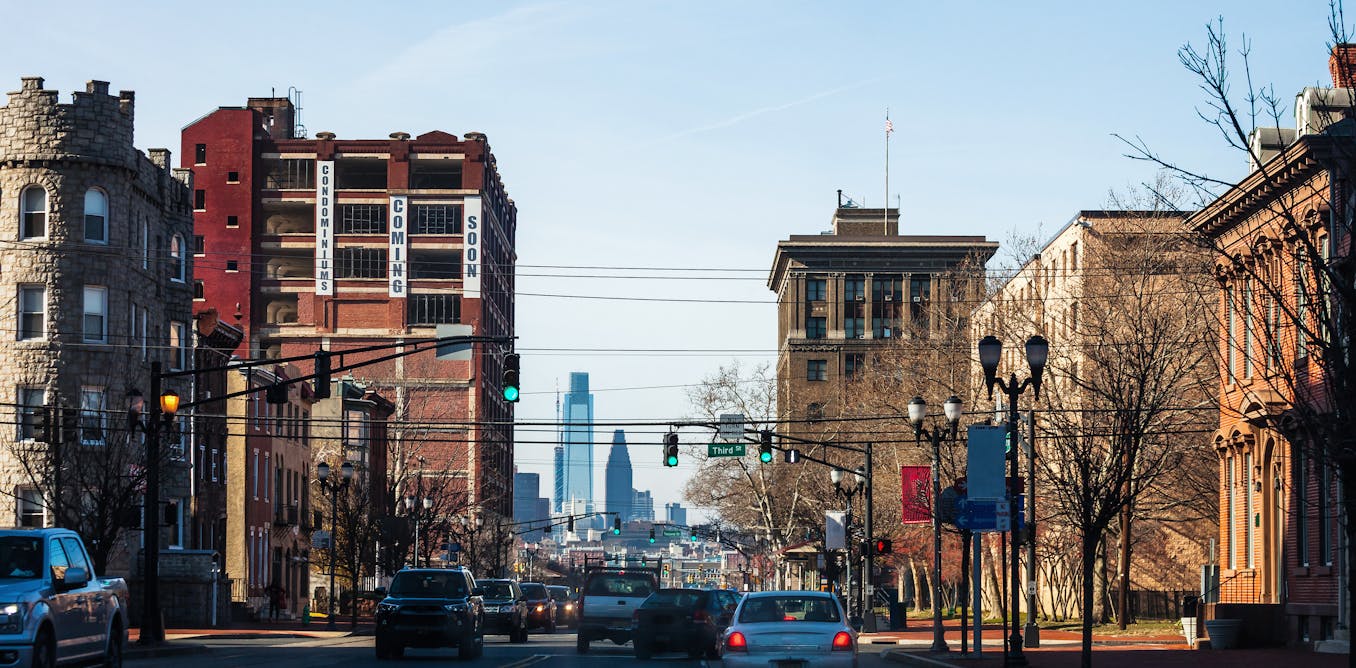
In 2025, Camden, New Jersey – a city of about 72,000 residents that sits across the Delaware River from Philadelphia – experienced its first homicide-free summer in nearly 50 years.
The city ended the year with 12 homicides – a stark drop from 2012 when it recorded 67, a per capita rate 18 times the national average at the time.
I’m a professor of criminal justice who wrote a book on police reform efforts in Camden over the last 15 years. The stunning turnaround in violent crime has led Camden and its newly formed Camden County Police Department, which was established in 2013 and replaced the Camden City Police Department, to be hailed as a model of reform. In 2015, then-President Obama visited the city to highlight the progress made.
Positive national and international attention on police reform in Camden continued in 2020 following the murder of George Floyd. This attention stemmed from the Minneapolis city council’s unanimous decision to dissolve the Minneapolis Police Department and start anew – much as Camden had done seven years earlier.
Yet one topic that I believe such discussions and commentary often overlook is the role that community and activist groups, as well as local media, played in better policing by the Camden County Police Department.
County takeover of city police department
Under-policing came to define the final years of the Camden City Police Department, or CPD. Police presence in the community was largely absent.
In contrast, the Camden County Police Department, or CCPD, began its new mandate with an aggressive, broken-windows style of policing that included targeting low levels of disorder and quality-of-life offenses, like loitering.
Residents were concerned about this new aggressive stance. The American Civil Liberties Union of New Jersey, researchers and local media used New Jersey’s Open Public Records Act to collect measures of the CCPD’s activity.
This data pointed to a troubling rise in officer-initiated vehicle and pedestrian stops, tickets for low-level violations, use of force, and citizen complaints of excessive force through 2014 and 2015.
CCPD officers in 2014 made 60,352 total stops, including 16,742 of people on foot. The per capita rate of pedestrian stops exceeded the rates in both New York City and Philadelphia during those cities’ peak stop-and-frisk years in 2011 and 2009, respectively, before stop-and-frisk tactics spurred court-ordered reforms.
Beyond the stops, CCPD officers issued more than 6,000 citations from May 1, 2013, when the new department launched, through the end of the year. They issued over 19,000 citations in 2014. During its first year or so, the CCPD’s total number of cases in municipal court increased by nearly 30% relative to the year prior.
Similarly, the number of tickets issued for minor infractions – such as riding a bicycle without a bell or a light, and disorderly conduct – rose steeply. For example, the number of citations for having tinted car windows more than tripled, while citations for not having proper car lights or reflectors more than quadrupled.
Bastiaan Slabbers/NurPhoto via Getty Images
Backlash to broken-windows policing
Citizen complaints against CCPD alleging excessive use of force increased from 35 in 2013 to 65 in 2014.
Organizations like the Camden County chapter of the NAACP and the ACLU-NJ drummed up attention to these figures by issuing announcements and press briefings. On the same day in May 2015 that President Obama heralded the CCPD, the ACLU-NJ issued a scathing rebuke to the President’s message. It read, in part: “Before we hold Camden up as a model of community policing, we must address the troubling indicators that point to Camden’s use of practices that appear to take a page from a broken windows approach to policing.”

Nicholas Kamm/AFP via Getty Images
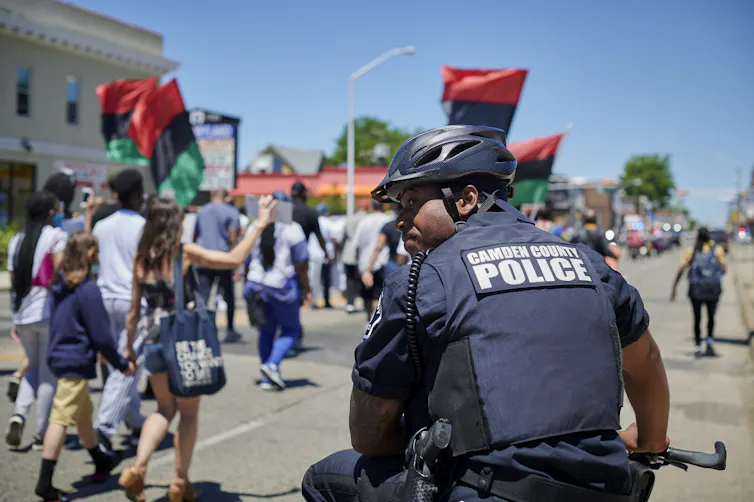
Mobilized residents and groups, including clergy members, made it clear that they did not appreciate this level and type of aggressive policing. The Philadelphia Inquirer and the Star-Ledger/NJ Advance Media amplified the coverage of Camden’s heavy-handed tactics.
What followed was a complete change in behavior among the CCPD from an activity, training and policy perspective. The numbers and rates of police stops declined. CCPD officers began issuing more warnings compared to tickets, to the point that “warnings over summonses” became an unofficial slogan of the department.
The top brass at CCPD sought out and implemented two types of de-escalation training, starting in the spring of 2015, for all officers. The CCPD also started to explore a complete overhaul of the agency’s use of force policy. It eventually adopted a more restrictive policy that emphasized de-escalation and the sanctity of life, while prohibiting tactics like chokeholds and shooting at moving vehicles. The CCPD’s innovative policy even inspired the New Jersey Attorney General to revamp its statewide policy years later.
As a result, complaints of use of force, in general, and of excessive force dropped from 43 in 2015 to 28 in 2016, and declined to 16 in 2017 and just three in 2018. Such complaints have usually been in the single digits each year since.
The CCPD deserves credit for course-correcting. But I believe it’s important to remember where that impetus came from: community and activist groups, as well as local media attention.
Many fewer murders, but persistent challenges
Camden has undoubtedly made progress. The city’s homicide rate in 2025 was four times the national average – a marked change from 18 times the national average in 2012. Homicides across the country have also declined in recent years.
Yet, problems persist. Camden is still a perennial contender for the most violent city in New Jersey. Despite a $1.6 billion economic package from the state to the city during the 2010s, which overwhelmingly took the form of tax subsidies to encourage businesses to either stay in or relocate to Camden, almost every census tract is among the most socially and economically disadvantaged in the state. Most companies that receive tax breaks do not employ a meaningful number of Camden residents.
The city is racially segregated from the rest of Camden County and the broader South Jersey region.
In my opinion, Camden, like most other cities, relies too much on the police, giving them a monopoly on public safety. I believe both the city and the CCPD should take a cue from places like Newark, New Jersey, and St. Louis, Missouri, to find innovative ways to collaborate and engage more with community groups, business associations and other non-police entities. Together they can co-produce public safety and take a more holistic approach to reducing crime, violence and disorder.
Source link