What Trump’s post as a Jesus-like figure tells us about political messianism
President Donald Trump sparked immediate outcry on April 12, 2026, when he posted an image of himself as a Jesus-like figure. The post, which Trump later said was supposed to depict him as a doctor, came shortly after the president criticized Pope Leo XIV as “weak” and “terrible.”
Three days later, Trump posted an image depicting Jesus with his left hand on the president’s shoulder. Referring to that post, Trump observed, “Radical Left Lunatics might not like this, but I think it is quite nice!!!”
These posts help illustrate the political messianism that Trump has brought to the Oval Office.
Political messianism is a style of leadership that places great faith in a single leader who is endowed with godlike attributes. It does not welcome dissent, and it portrays politics as a struggle between good and evil.
Eric Voegelin, a 20th-century political thinker, warned that political messianism often fuels authoritarian rule. It divides society, with a messianic leader’s supporters seeing him as a savior who will deliver their country into a golden age, while opponents foresee a coming apocalypse.
Democratic politics thrive when leaders and followers act with modesty and humility, when no one sees themselves as infallible or indispensable. As someone who teaches and writes about U.S. democracy, I don’t think it can thrive, or even survive, when its leaders see themselves as godlike and when the citizenry is divided into true believers and heretics.
Trump’s messianic vision
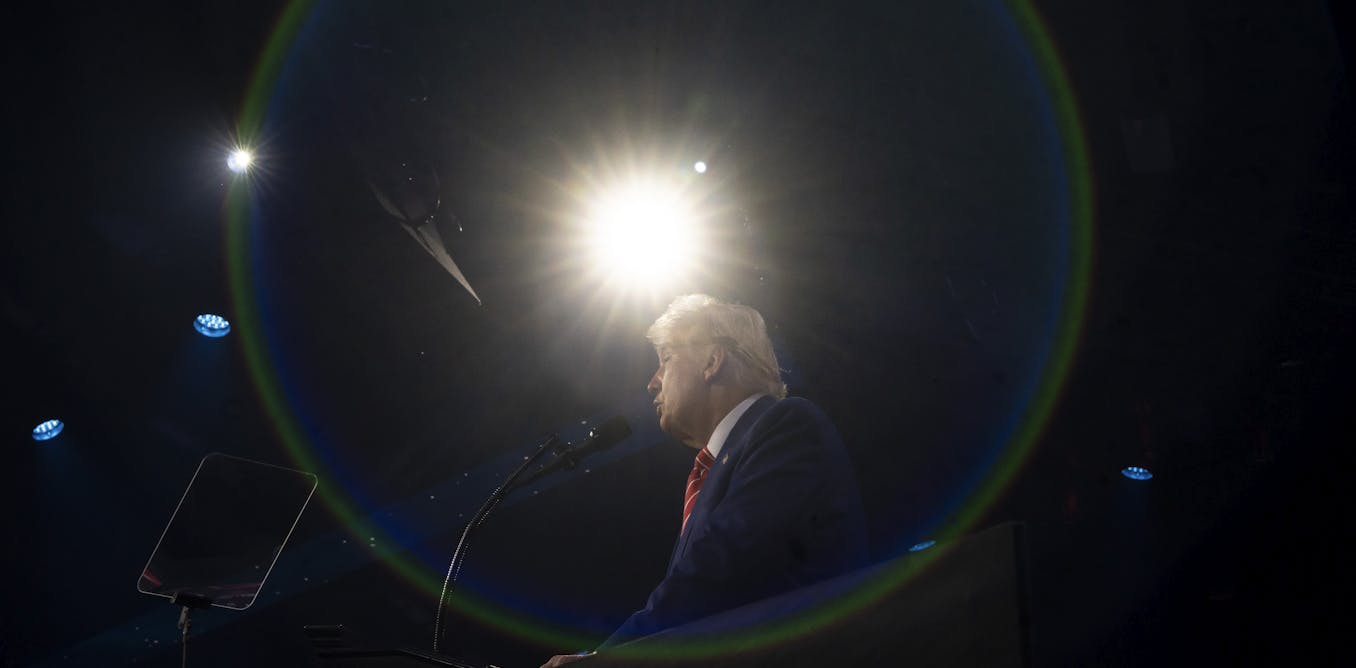
The image depicting Trump as a Jesus-like figure is the latest evidence of the president’s messiah complex.
At the Republican National Convention in 2016, he boasted that “I alone can fix it,” referring to a system that was responsible for what he would later call “American carnage.”
In a 2019 speech, Trump referred to himself as “the chosen one.”
In 2023, he described what he had done in his first term this way: “I think you would have a nuclear war if I weren’t elected.” As president, “I was very busy. I consider this the most important job in the world, saving millions of lives.”
And in a Jan. 8, 2026, interview with The New York Times, Trump said, “I don’t need international law,” since his actions as commander in chief were guided only by “my own morality. My own mind.”
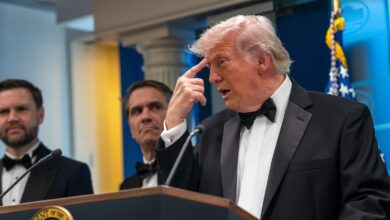
The president is not alone in believing in his messiah status, or in comparing himself to Christ. On April 2, 2026, at a White House Easter celebration, Paula White-Cain, one of his spiritual advisers, used Jesus’ death and resurrection to explain what had happened to Trump.
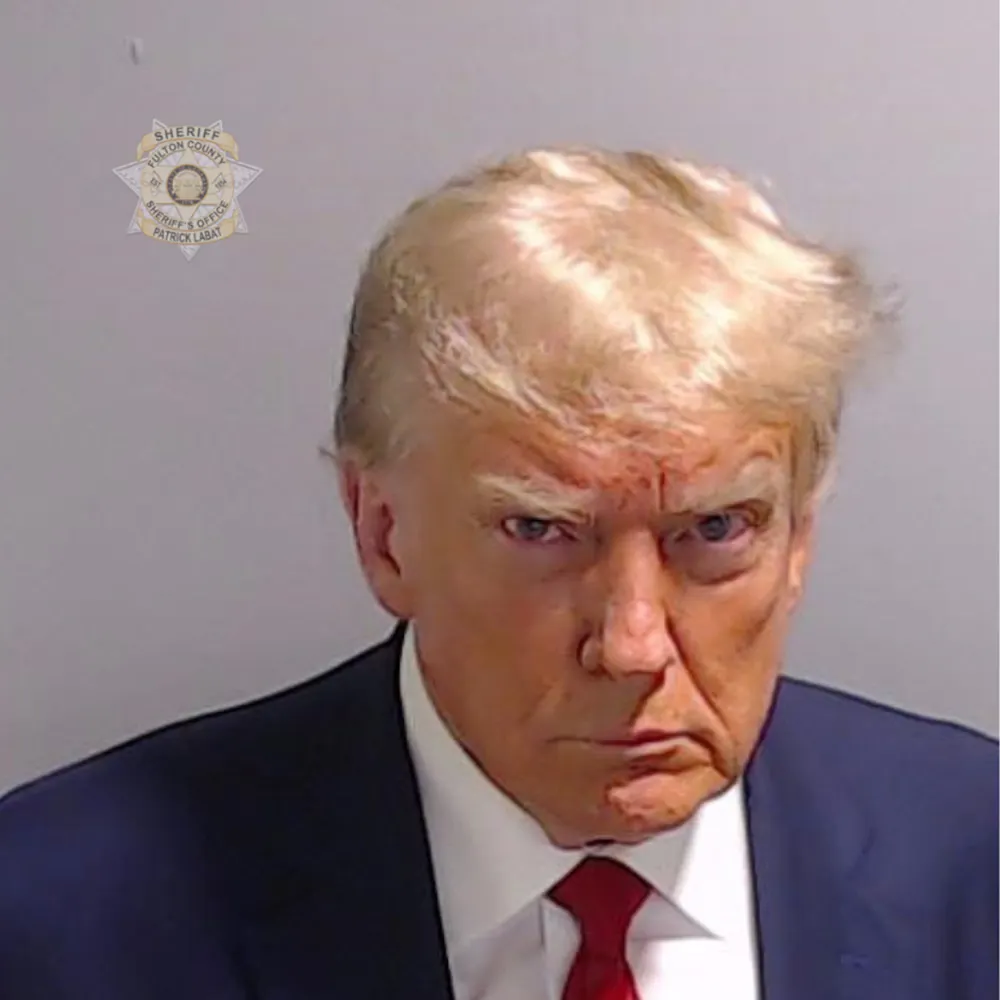
“Jesus taught so many lessons through his death, burial, and resurrection,” she said. “He showed us great leadership, great transformation requires great sacrifice. And Mr. President … you were betrayed and arrested and falsely accused. It’s a familiar pattern that our lord and savior showed us.”
Fulton County Sheriff’s Office via Getty Images
Democracy and humility
In a democracy, it’s dangerous for leaders to see themselves as better than or morally superior to the people they serve. President Joe Biden captured that insight when, after he was elected, he recalled a family mantra instilled in him by his mother: “‘Joey, no one is better than you. Everyone is your equal, and everyone is equal to you.’”
The political philosophy scholar Michael Sandel, whose book “The Tyranny of Merit” seeks to explain what happens to democracy when people, not just leaders, think that they are better than others, argues that such a view breeds “meritocratic hubris.” Such hubris has “a corrosive effect … on the social bonds that constitute our common life,” he writes.
“Humility is a civic virtue essential to this moment,” he adds. “It’s a necessary antidote to the meritocratic hubris that has driven us apart. It points … toward a less rancorous, more generous public life.”
Michael Walzer, another political theorist, explained the dangers of messianic politics this way: It “poses dangers to social order and national survival.” When it takes hold, he writes, “compromise is preempted by command; moral absolutism leaves no room – or all too little – for maneuver in times of crisis and emergency.”
Presidential fallibility
Even the greatest American presidents have not seen themselves as American saviors. They embraced at least some of the humility Sandel describes.
George Washington described the kind of person who would succeed him in office as just “a citizen,” not a savior or a person of extraordinary gifts. Their task, he thought, would not be grand. They would be chosen “to administer the executive government of the United States.”
Washington acknowledged that his judgment was “fallible” and that he’d made numerous errors during his time in office. “Whatever they may be,” he said, “I fervently beseech the Almighty to avert or mitigate the evils to which they may tend.”
He resisted the idea advanced by John Adams, who wanted the first U.S. chief executive to be called “His Elective Majesty,” “His Mightiness” and even “His Highness, the President of the United States of America and the Protector of their Liberties.” Washington turned down the pompous titles and accepted instead the simple title adopted by the House: “The President of the United States.”
Not a trace of a messiah complex in someone who could understandably have seen himself that way.

Mandel Ngan/AFP via Getty Images
Or take Abraham Lincoln.
In his Gettysburg Address, considered one of the greatest speeches in American history, Lincoln did not toot his own horn or exaggerate the significance of his own words. Just the opposite.
As Rabbi Menachem Genack observes, Lincoln asserted during the dedication of the cemetery for fallen soldiers at Gettysburg that “’the world will little note, nor long remember, what we say here.’ (T)hat phrase was not an expression of false modesty nor just a poor prediction of how that tribute would be recorded. It was a symbol of deep-seated humility.”
And in an 1860 letter to an admirer who wanted to inscribe a book to him during his first presidential campaign, Lincoln responded that “begging only that the inscription may be in modest terms, not representing me as a man of great learning, or a very extraordinary one in any respect.”
Almost 100 years later, President Harry Truman referred to himself as nothing more than an “old man who by accident became president of the United States.”
‘If men were angels’
Writing in 1788, Alexander Hamilton reminded Americans of a key maxim of life in a constitutional democracy. Government, he said, is “the greatest of all reflections on human nature. If men were angels, no government would be necessary.”
“If angels were to govern men, neither external nor internal controls on government would be necessary,” Hamilton said. “In framing a government which is to be administered by men over men, the great difficulty lies in this: you must first enable the government to control the governed; and in the next place oblige it to control itself.”
Democracy is a mode of government built on the idea that none of us is infallible, including those who assume positions of leadership. Elections give the people the chance to change course and correct mistakes.
Presidential scholar Stephen Hess captured the essence of democratic leadership in a 2009 interview with Reuters. He said: “It’s more important to admit mistakes than to make them.”
In the end, as Walzer observes, there can be no messiahs in a democracy. The leader cannot “cast aside” the people. In a democracy, they must be “chastised, defended, argued with, educated” by those who lead.
Those “activities,” Walzer insists, “undercut and defeat” any pretense that it is only the leader who knows the way.
Source link