Urban mobility tourism in Porto: tuk tuks, bike rental and city exploration | News
The rise of micromobility in tourism
Urban mobility is undergoing a transformation – and tourism is evolving along with it.
Across Europe, cities are rethinking the way visitors move through urban spaces, driven by sustainability goals, traffic congestion and changing traveler expectations. This shift has given rise to micromobility tourism, a concept that combines transportation with experience.
Instead of relying solely on traditional tours or public transportation, travelers are increasingly embracing flexible, low-impact ways to explore cities, from electric tuk-tuks to bike rentals.
Why travelers go beyond traditional tours
Today’s traveler values autonomy, authenticity and efficiency. They want:
● Explore at their own pace
● Access hidden areas beyond the usual ones
● Minimize environmental impact
● Combine mobility with meaningful experiences
Search behavior reflects this change. The number of inquiries regarding alternative urban exploration – such as flexible tours, bike rentals and small-group transport – continues to grow, especially in culturally rich destinations such as Porto.
Electric tuk tuks: accessibility meets experience
Electric tuk-tuks have quickly become one of the most innovative solutions in urban tourism. They offer a balance between comfort, accessibility and immersive exploration.
Unlike larger tour vehicles, tuk tuks can navigate narrow historic streets, allowing visitors to reach areas that would otherwise be difficult to access.
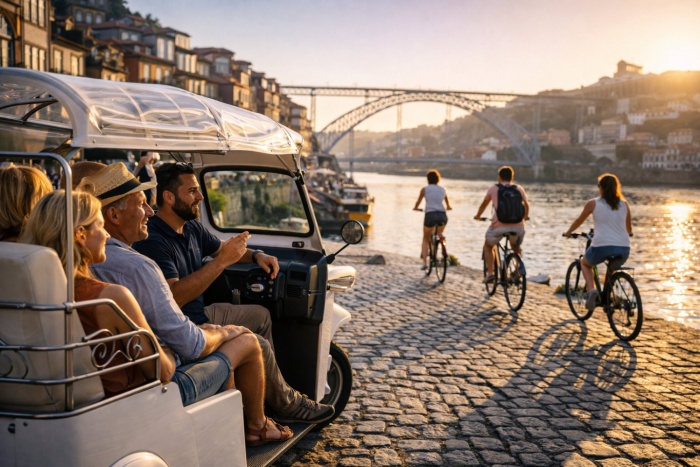
In cities like Porto, this format has become a premium experience. Operators such as Tuk tour Porto help redefine the way visitors interact with destinations by combining:
● Guided storytelling
● Flexible solutions
● Environmentally friendly electric mobility
● Personalized experiences for small groups
This approach makes transportation an integral part of the journey, and not just a means to an end.
Bike rental and the freedom to explore
At the same time, bicycle rental is gaining ground as one of the most sustainable and powerful ways to discover a city.
Bicycles allow travelers to move seamlessly between attractions, neighborhoods and scenic routes, all while maintaining complete independence.
In Porto, services such as Porto Rent a Bike allow visitors to design their own routes, with the following:
● Easy access to urban and coastal routes
● Flexible rental options
● A healthy, environmentally conscious alternative to motorized transport
For many travelers, this means a shift from passive sightseeing to active exploration, where the journey itself becomes part of the experience.
Porto as a model for sustainable urban exploration
Porto stands out as a natural laboratory for urban mobility tourism.
Its unique features make it particularly suitable for alternative exploration methods:
● A compact yet diverse urban layout
● Historic districts with limited car access
● Scenic river and coastal routes
● Increasing attention to sustainability and visitor experience
By combining options such as walking, cycling and electric tuk-tuks, Porto offers a multi-tiered exploration model that caters to different travel styles and preferences.
Business opportunities in urban mobility tourism
This evolution offers significant opportunities for industry stakeholders.
Urban mobility tourism allows operators to:
● Diversify their service offering
● Increase revenue per visitor through experience-based products
● Connecting to sustainability trends
● Differentiate itself in competitive destinations
Additionally, these solutions often require lower infrastructure investments compared to traditional transportation models, making them highly scalable.
The future: smart, green and experience-driven cities
Looking ahead, the integration of mobility and tourism will continue to accelerate.
Cities that successfully combine:
● Sustainable transport solutions
● Authentic local experiences
● Flexible exploration formats
will be better positioned to attract modern travelers.
Electric tuk-tuks, bike rentals and other micromobility options are no longer niche offerings; they become essential components of the urban tourism ecosystem.
Conclusion
The way travelers explore cities is changing – and with it the structure of the tourism sector itself.
Urban mobility tourism represents a shift towards smarter, greener and more engaging travel experiences. By integrating transportation with storytelling and autonomy, cities can offer richer, more personalized journeys.
Porto illustrates this transformation in action, with innovative operators and flexible mobility solutions redefining what it means to explore a destination.
For travelers looking for new ways to experience cities, the future is no longer about simply getting from one place to another, but about how the journey itself shapes the experience.