Luxury leads the way as Dubai’s hotel offering reaches 158,700 rooms – Cavendish Maxwell | News
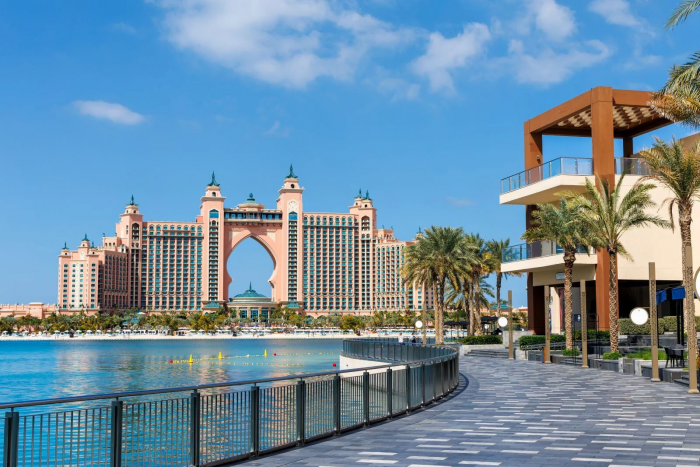
Dubai’s hotel inventory reached 158,700 keys across 770 properties by 2025, with almost 70% of them in the high-end category, says Cavendish Maxwell, leading real estate consultancy and real estate consultancy.
Dubai opened 3,400 rooms last year, representing an annual growth of 2.2%. Ten new hotels came onto the market, an increase of 1.3% compared to 2024, the company said. Another 4,600 rooms will be ready by 2026.
Cavendish Maxwell’s Dubai Hospitality Sector 2025 Market Performance report shows that high-end hotels – those in the Upscale, Upper Upscale and Luxury categories – accounted for almost 7 in 10 properties at the end of 2025, with around 30% of those in the mid-range, more affordable segments. Nearly 90% of the hotels completed this year are in the higher segment.
Hotel occupancy in Dubai reached an average of 81% last year – an annual average growth of 3.8%. Luxury hotels had the highest occupancy rate (4.9%), with the Luxury category recording an increase of 4.5%. The highest occupancy rate was in the Upper Midscale segment at 84.4%.
Average daily rates (ADR) rose to an average AED746, up 8.7% from 2024, with the Upper Midscale segment claiming the largest increase at 10.4%.

Vidhi Shah MRICS, Director and Head of Commercial Valuation at Cavendish Maxwell, said: “Dubai’s tourism and hospitality sector continued to perform strongly in 2025. The city’s diverse offering – an extensive events calendar, a growing portfolio of hotels and resorts, adventure experiences, globally renowned shopping festivals and world-class restaurants – has driven a shift in travel behaviour, with tourists moving away from traditional attractions and focusing on impactful, experiential journeys.”
Dubai welcomed 19.6 million tourists last year, with Western Europe maintaining its position as the largest source market (21%). Next was the GCC (15.3%), followed by the CIS and Eastern Europe (14.8%), South Asia (14.7%), MENA (11.1%), North and South East Asia (9.5%), the Americas (7.1%), Africa (4.6%) and Australasia (2%).
The hospitality sector also performed strongly in other parts of the UAE, with robust occupancy rates and ADR growth. Abu Dhabi led the market, with an occupancy rate of 82.8% in city hotels and 78.6% in resorts. The ADR increased by 21.3% for both urban and holiday resorts.
In Ras Al Khaimah, occupancy increased by 4.6% to 75%, while ADR increased by 6.6% to AED618. Meanwhile, Fujairah maintained a stable occupancy rate of almost 75%, with ADR increasing by 12.8% to AED433.
While geopolitical tensions bring near-term uncertainty, Dubai’s fundamentals remain robust. Combined with its proven crisis recovery capabilities, Dubai is expected to maintain its position as one of the world’s most resilient, competitive and diversified tourism destinations.