Neeraj Pandey on ‘Taskaree’, franchises and Hindi cinema in 2026
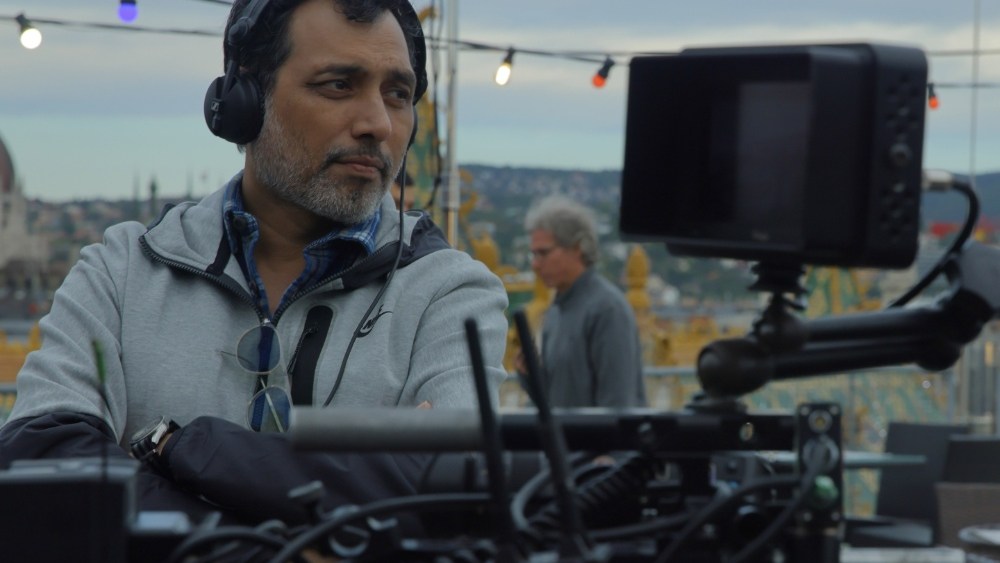
Neeraj Pandey didn’t set out to top Netflix’s global non-English charts. The Indian filmmaker behind ‘Taskaree: The Smuggler’s Web’ – whose credits include ‘A Wednesday’, ‘Special 26’, ‘Baby’ and the blockbuster biopic ‘MS Dhoni: The Untold Story’ – says he didn’t even know such a category existed.
“When you make a show, you don’t think about all these things,” says Pandey Variety during a conversation in London, where he was scouting locations for an upcoming film. “I didn’t even know that concept, that there is a non-English category.”
The genesis of “Taskaree,” a seven-episode crime thriller that follows an Indian customs team at Mumbai’s Chhatrapati Shivaji Maharaj International Airport as it battles an international smuggling syndicate, dates back to a casual conversation between Pandey and his former assistant director Tinu Suresh Desai — now a director himself — sometime around 2021 or 2022. That conversation led to an introduction to customs officer Sumit Sarkar, whose candid insights into how smuggling networks and customs operations actually function, became the backbone of the series. “I got to know things that I could never have imagined,” says Pandey, adding that the specificity of the show is exactly what he believes made it connect with the audience.
The script, co-written with Vipul K. Rawal, took the better part of a year to a year and a half to complete. Netflix came on board early and the streamer was enthusiastic from the first pitch. The series – which also stars Sharad Kelkar, Amruta Khanvilkar, Zoya Afroz, Nandish Sandhu and Anurag Sinha, and was co-directed by Raghav M. Jairath – reached No. 1 on Netflix’s global non-English TV chart.
Casting Emraan Hashmi in the lead role was a deliberate act of counter-programming. “No one has seen him in these kinds of roles,” says Pandey. “He was ready to do something that had nothing of what his normal image is.”
Like its predecessor ‘Khakee’, ‘Taskaree’ was always conceived as a multi-season franchise. Pandey is a strong believer in the long-form model that streaming makes possible. “You can go to a long format and then a longer format over the seasons,” he says, noting that the freedom to tell five or six hours of story at once is something that cinema simply can’t offer.
‘Khakee’ Pandey’s critically acclaimed Netflix anthology franchise has its roots in an equally unlikely encounter – this time with Indian police officer Amit Lodha, who approached Pandey as a fan before eventually telling the story that would become ‘Khakee: The Bihar Chapter’. Pandey encouraged Lodha to write the story as a book, even promising to buy the rights before a single word was put to paper. Loda’s resulting book, “Bihar Diaries”, formed the basis of the first season.
The second part, ‘Khakee: The Bengal Chapter’, was purely fiction rather than a real-life adaptation, and served as a homecoming of sorts for Pandey, who was born and raised in Howrah, West Bengal. A third season is now in the works, returning to the franchise’s roots with a story once again based on a real-life police officer, although Pandey declined to share further details. “It’s still WIP,” he says.
Pandey’s other popular streaming property, ‘Special Ops’, started around 2018-2019 in a conversation with a broadcaster who wanted content for the then streamer Hotstar, now known as JioHotstar. The show’s ambition was clear from the start: it was filmed around the world and broke new ground for Indian streaming content on several fronts. When COVID-19 curtailed production of a full second season, Pandey released “Special Ops 1.5: The Himmat Story,” a four-episode prequel, to meet the demand of the show’s fanbase. “Special Ops 2” followed and landed on JioHotstar in July 2025. “We strive to tell bigger stories, better stories every season,” says Pandey.
While Friday Storytellers – the digital arm of Pandey’s film production banner Friday Filmworks, which he co-founded with Shital Bhatia in 2008 – dominated the streaming conversation, Pandey is now returning to theatrical releases in a significant way. The company has identified a slate of five Hindi films over the next three years, several of which have been in development for the past one-and-a-half to two years. Two productions will start this year: Pandey himself will direct the first, while a director for the second is yet to be announced. At least one project on the list is destined for a major worldwide release, with plans to dub it into English.
He is also optimistic about the prospects of the wider Hindi film industry. Pandey predicts that 2026 will outperform 2025 — and that theater attendance may finally return to pre-pandemic levels. “We had really hit the bottom. There was no way down,” he said, describing the sector’s recent trajectory as an inevitable part of its cyclical nature, adding that he has held this view since last year. “Personally, I think 2026 will be the year.”
He pushed back on the idea that only large-scale productions can succeed at the multiplex. “It won’t just be the event films,” Pandey said. “They will also be films that may be small, but have a big idea – what we call the small, big film.” He cited the ethos of the Malayalam-language film industry as a model for where Hindi cinema could ultimately land, while acknowledging that building that kind of trust among audiences is a long game. “It’s years and years of harvesting,” he says. “The fault lies with the creators and producers who tend to think they know what the audience wants. The audience is diverse – why would they want to see something predictable?”
Since the interview took place, Pandey has found himself at the center of a significant controversy. The teaser for his upcoming Manoj Bajpayee starrer, announced under the title “Ghooskhor Pandat” as part of Netflix’s 2026 slate for India, sparked immediate backlash, with petitioners claiming that combining the word “Pandat” – a caste-associated term – with “ghooskhor”, meaning bribe taker, amounted to a defamatory stereotype against the Brahmin community. The controversy escalated to the Supreme Court, and Pandey subsequently confirmed that the title had been withdrawn and all promotional material had been removed, while a new title had yet to be announced.
Pandey did not comment when asked Variety about an upcoming biopic of legendary composer Rahul Dev Burman.