How to Use an AI Receptionist for Small Business Growth

An AI receptionist helps you answer calls, route customers, and capture leads automatically without hiring a full-time front desk employee. Instead of missing opportunities while you’re busy, an AI phone receptionist works 24/7 to greet callers, schedule appointments, and direct inquiries to the right person.
For solopreneurs and small teams, that means fewer interruptions, lower staffing costs, and a more professional customer experience. In this guide, I’ll explain how to use an AI receptionist for small business growth, what features to look for, and how the top providers compare.
What is an AI receptionist, and how does it work?
An AI receptionist is a virtual phone assistant that uses artificial intelligence to answer calls, interact with customers, and route inquiries automatically. Most AI receptionists work by combining voice recognition, natural language processing (NLP), and pre-built call workflows.
Here’s how an AI receptionist typically works step by step:
- Answers the call automatically: When a customer calls, the AI phone receptionist greets them with a professional, natural-sounding voice customized to your business.
- Interprets the caller’s intent: Using NLP, the system translates the caller’s input, such as “I’d like to book an appointment” or “I need support.”
- Follows pre-set call workflows: Based on your configured rules, it routes the call, schedules an appointment, answers common FAQs, or captures lead information.
- Syncs with your business tools: Many platforms integrate with CRMs, calendars, and phone systems to log call details, update customer records, and streamline workflows.
This step-by-step automation allows small business owners to manage calls efficiently while keeping customer data organized and accessible.
AI receptionist vs live receptionist: Which is right for your small business?
Before you think about what to look for in an AI receptionist, you should also think about how it compares to other answering services and when an AI receptionist is the right option for you. When it comes to answering calls, the choice between an AI receptionist, a live answering service, and an in-house receptionist comes down to cost, complexity, and customer expectations.
While all three options ensure your calls get answered, they differ significantly in pricing, scalability, and the level of personalization they provide. For many small businesses, an AI phone receptionist offers the best balance of affordability and 24/7 availability. However, businesses that rely heavily on building relationships or handling sensitive, high-touch conversations may benefit from live answering services.
To learn more about when to choose between an AI receptionist, live answering services, and an in-house receptionist, review the tabs below:
What to look for in an AI receptionist
Once you have made the decision to adopt an AI receptionist, there are a few key features that you should look out for in order to find the right one for your business needs. Click the sections below to explore the key features and when to use them.
One of the primary concerns when adopting an AI receptionist is whether the voice will sound too robotic for potential customers. This is why it is important to look for solutions with highly engineered voice technology that makes it easy to customize your AR receptionist with different personalities, tones, and conversational styles. This ensures that the communication provides a positive first impression for your business.
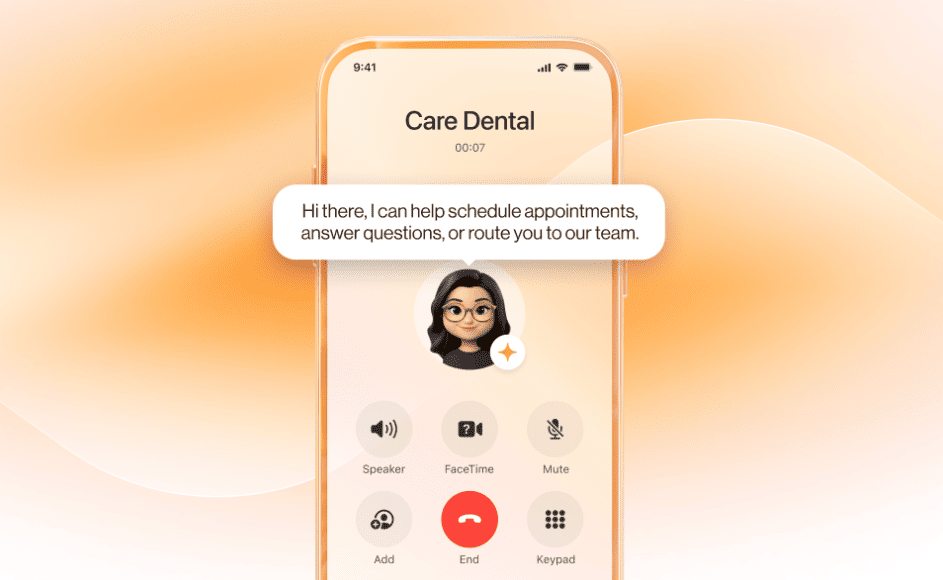
Choose different conversational styles for RingCentral’s AI receptionist. (Source: RingCentral)
Whether or not you have a front desk, AI receptionists stand out for their 24/7 availability to answer calls and respond to inquiries. So, make sure to choose a provider that can support your business even after working hours.
Answering calls is just the first step in using an AI receptionist. One of their best features is the ability to group calls and transfer them based on the information they collect from your callers. Therefore, small business owners should look for AI receptionists that offer intelligent call routing, or an intuitive call-flow designer that makes it easy to connect callers with the right person or extension after initiating a conversation.
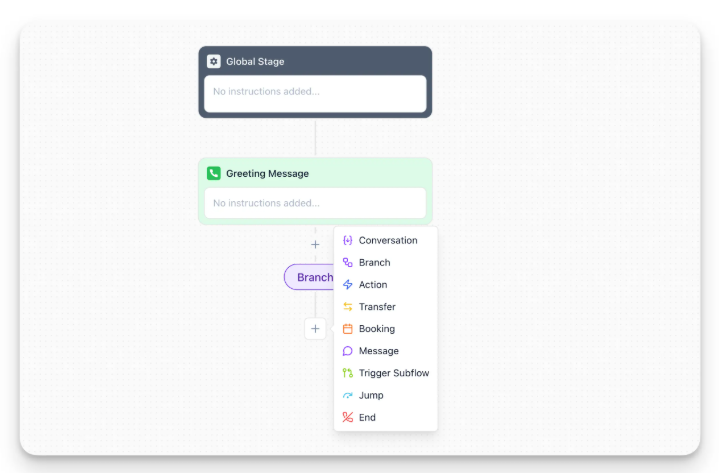
Design a call flow in Synthflow’s intuitive Flow Designer. (Source: Synthflow)
For businesses with a global or diverse client base, some providers offer AI receptionists that speak multiple languages. Although most only provide bilingual agents that speak English and Spanish, if you have more specific language needs, check out Synthflow.
Appointment scheduling and lead qualification are two of the primary reasons that small business owners use an AI receptionist. Therefore, it’s best to choose a provider that offers robust third-party integrations, such as connections to popular CRMs or calendar apps, to ensure your customer data stays up to date and your follow-ups are organized.
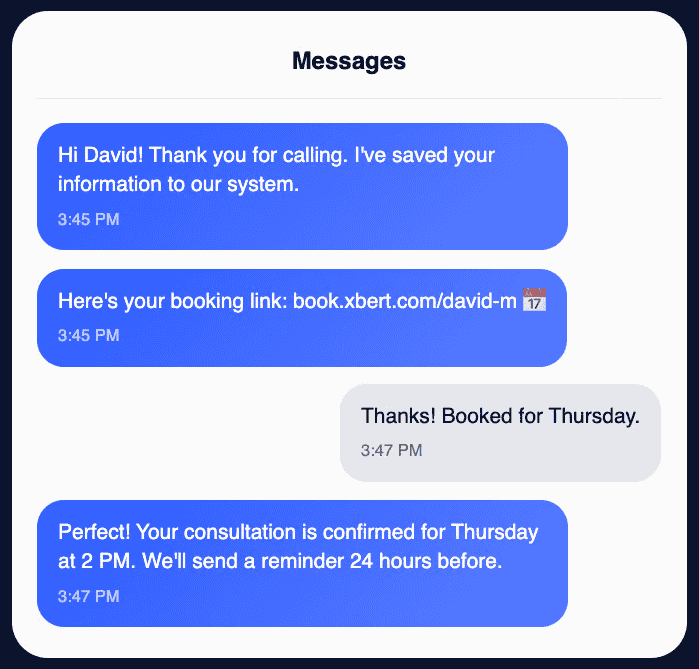
Nextiva’s XBert AI receptionist connects with your calendar to schedule appointments. (Source: Nextiva)
Many small businesses seek AI receptionist solutions tailored to their teams. However, many enterprise-level options offer custom white-labeling and branding features. This allows the AI receptionist images to align with your website’s aesthetics. Such customizations can be particularly advantageous if you intend to use the AI receptionist for live web chat or as an interactive widget on your site.
Many small businesses benefit from AI receptionist solutions with call recording and transcription features. These tools automatically document conversations, capture caller details, and create searchable transcripts. Call recordings aid in training and quality assurance, while transcriptions help track customer concerns and maintain accurate records. For sales and service teams, a written record of interactions ensures consistent follow-up and improves customer support without manual notes.
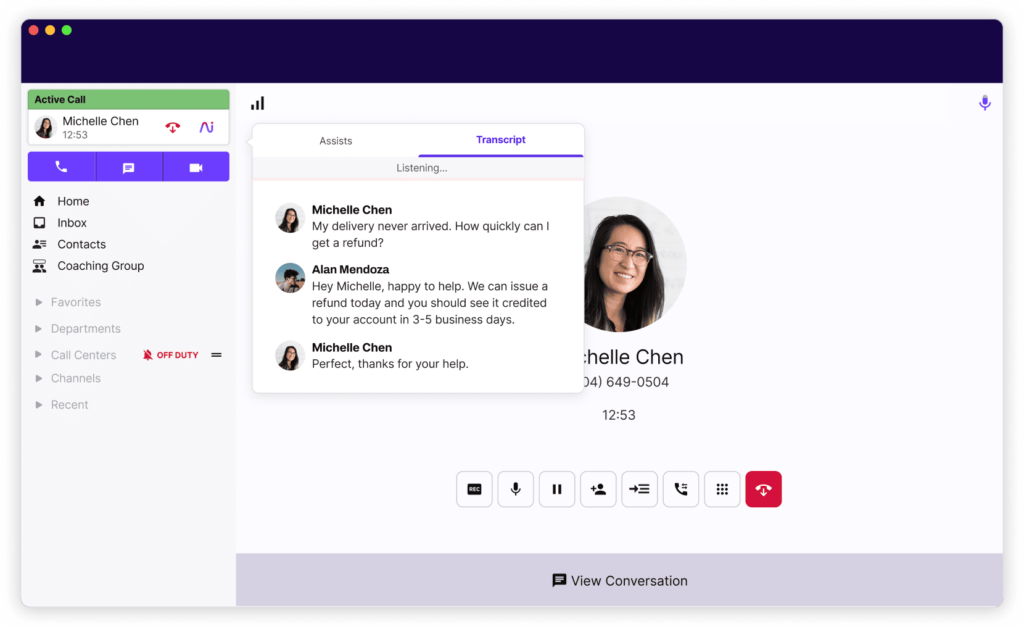
Set up Dialpad’s call recordings and transcription to capture leads. (Source: Dialpad)
For teams that want detailed insights into their customer analytics or sales objectives, consider an AI receptionist that provides real-time dashboards and analytics tools. These features help track customer interactions, satisfaction levels, and sentiment analysis.
Comparing the top AI receptionists
Benefits of using an AI receptionist to scale your business
There are many benefits to using an AI receptionist, especially for small businesses with limited resources. By leveraging the capabilities of an AI receptionist, businesses can streamline operations, enhance customer experiences, and focus on growth without the constant worry of administrative burdens.
- Never miss a lead: An AI receptionist operates around the clock, ensuring that potential leads are captured at any hour of the day. This continuous availability means no more missed opportunities, as inquiries are responded to promptly, helping to convert interest into actual business.
- Improve first-call resolution: With advanced algorithms and machine-learning capabilities, an AI receptionist can quickly assess callers’ needs and either provide immediate solutions or direct them to the appropriate team member. This efficiency helps improve the likelihood of resolving issues on the first call, boosting customer satisfaction and loyalty.
- Reduce staffing overhead: By automating routine tasks such as answering calls, scheduling appointments, and handling basic customer inquiries, businesses can significantly reduce staffing costs. This allows for a more focused use of human resources on higher-level tasks that require personal attention, enhancing overall operational efficiency.
- Support remote or distributed teams: An AI receptionist is particularly beneficial for businesses with hybrid, remote, or geographically dispersed teams. It ensures consistent communication and customer service across locations, keeping all team members aligned and accessible wherever they work.
- Maintain professionalism as you grow: As your business expands, maintaining a professional image becomes crucial. An AI receptionist delivers a polished, reliable front, ensuring every interaction reflects your brand’s values. This professionalism helps build trust with clients and reinforce your company’s reputation in a competitive market.
- Capture after-hours revenue: The ability to engage with customers outside of traditional business hours is a game-changer. An AI receptionist can manage inquiries, take bookings, and handle payment transactions during these periods, enabling businesses to generate revenue even when staff are unavailable.
Best practices to get the most out of an AI receptionist
An AI receptionist is most effective when it is intentionally set up, not simply activated. Implementing these best practices ensures that the AI phone receptionist operates with maximum efficiency, captures necessary information, and delivers a positive customer experience.
1. Map your call flows first
Before setting up your AI receptionist, outline how callers should move through your business. Identify common caller intents (appointments, sales inquiries, support, billing) and determine where each should be routed. Clear call flows prevent confusion and reduce unnecessary transfers.
2. Write clear scripts and FAQs
Your AI receptionist is only as effective as the information it’s given. Create concise scripts for greetings and build a strong FAQ library that addresses your most common customer questions. Keep responses simple, direct, and aligned with your brand voice.
3. Set escalation rules
Not every situation should be handled by automation. Define when calls should be transferred to a live team member, such as for complex service issues, high-value sales inquiries, or frustrated callers. Smart escalation rules protect customer experience while maintaining efficiency.
4. Test before going live
Run internal test calls to check routing accuracy, VoIP call quality, and voice response clarity. Ask team members to simulate real customer scenarios to uncover gaps in scripts or workflows before customers experience them.
5. Monitor analytics and refine
Most AI receptionist platforms provide call analytics and reporting. Review metrics like call volume, missed transfers, caller drop-offs, and frequently asked questions. Use these call logs to refine scripts, improve routing, and adjust staffing needs.
6. Combine AI with human support when needed
For many small businesses, the best setup is a hybrid model. Let your AI receptionist handle routine tasks and appointment scheduling, while team members step in for relationship-driven conversations or complex issues. This approach balances automation with personalized service.
Frequently asked questions (FAQs)
Yes, many AI receptionist platforms can manage calls for multiple locations, route callers to the correct branch, and provide location-specific information based on the caller’s selection or area code.
An AI receptionist is often highly customizable, allowing small business owners to create branded greetings, call-routing rules, FAQs, escalation paths, and voice-tone settings to match their business needs and customer-experience goals.
An AI receptionist operates 24/7, answering calls, capturing leads, and booking appointments outside regular business hours, helping small businesses avoid missed opportunities.
Bottom line
Adopting an AI receptionist is a scalable, cost-effective way to ensure every call gets answered. It improves responsiveness, reduces missed revenue, and gives your business a polished presence, even with a small team.
The best choice for your needs will depend on your call volume, workflow requirements, and budget. Select a provider that integrates seamlessly with your existing tools and aligns with your growth objectives, and your AI phone receptionist can quickly become a reliable extension of your team.
Source link