Italy is in the spotlight in Berlin, with Sardinia taking center stage | News
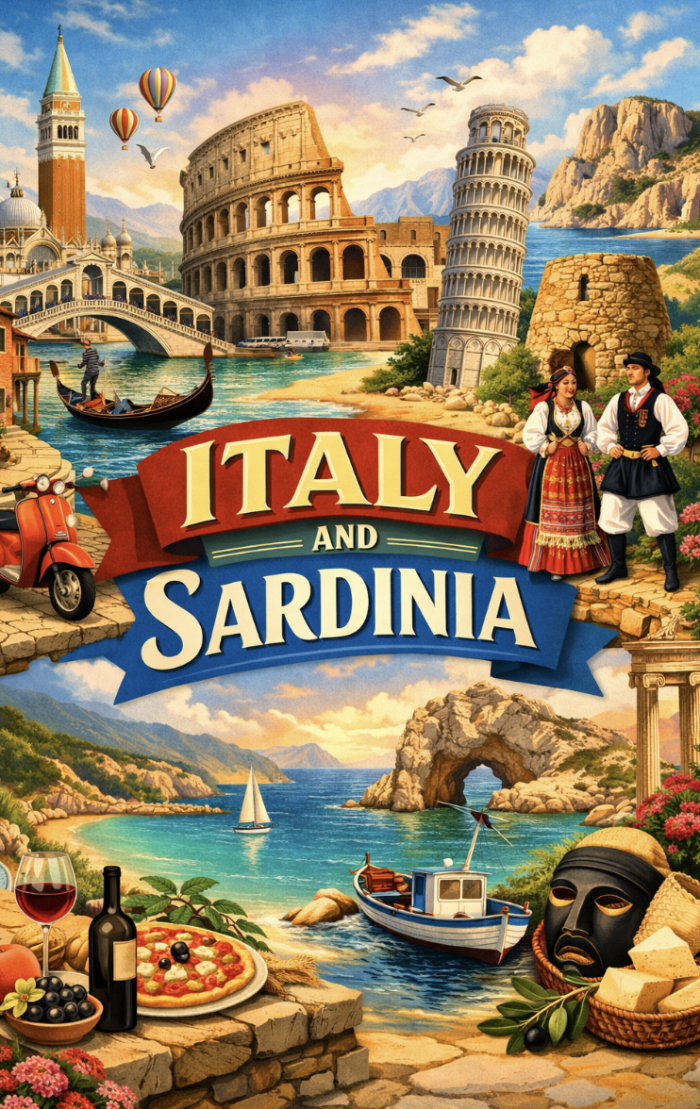
Italy knows how to make an entrance. Yesterday at ITB Berlin, the world’s largest travel fair, the country unveiled a striking 1,200-square-metre national pavilion: an open, light-filled celebration of la dolce vita, designed to entice travelers long before they even set foot on Italian soil. This year, however, it is Sardinia that steals the show.
From the moment visitors enter the pavilion, the atmosphere changes. Soft Mediterranean colors reflect sea and stone, while expansive images draw the eye to rugged coastlines, ancient villages and luminous beaches. Italy’s message is clear: this is not just a destination, but a tapestry of experiences – and Sardinia is boldly woven through its centre.
Often described as an island apart, Sardinia provides a compelling contrast to the classic images of Italy. Here wild beauty meets deep-rooted tradition. The pavilion’s Sardinia-centric spaces highlight an island where emerald waters lap against dramatic cliffs, where shepherds still produce pecorino using age-old methods, and where festivals unfold to rhythms older than Rome itself.
Travel professionals and visitors alike are drawn to Sardinia’s dual personality. On the one hand, it offers unspoilt luxury: secluded bays accessible by boat, sophisticated resorts and a sense of space that is increasingly rare in Europe. On the other hand, it promises authenticity: stone nuraghi rising from the landscape, inland villages where time seems to slow down, and a cuisine shaped by land and sea rather than trends.
The Italian pavilion doesn’t scream; it invites. Interactive areas encourage discoveries beyond the obvious, positioning Sardinia not only as a summer destination, but also as a year-round destination. Hiking trails through mountainous interiors, food trails in autumn celebrating wine and olive oil, and cultural events in spring reveal an island with many seasons and stories.
What makes Sardinia’s presence particularly resonant is its natural reflection of Italy’s broader tourism vision. Sustainability, local identity and slower travel are recurring themes in the pavilion, and Sardinia embodies them with ease. Vast marine protected areas, low-density inland areas and a strong sense of community all demonstrate a form of travel that values connection over consumption.
Yet Italy will not allow Sardinia to stand alone.
The pavilion subtly frames the island as part of a larger mosaic. From Alpine peaks to Renaissance towns, from volcanic landscapes to vineyard-covered hills, the National Exhibition reminds visitors that Italy’s strength lies in its diversity. Sardinia, with its distinctive language, customs and landscapes, becomes a symbol of that wealth rather than an outlier.
As conversations unfold in the pavilion – between tour operators, destination managers and curious travelers – Sardinia emerges as a place that surprises even seasoned Italy experts. It is familiar in its warmth and hospitality, yet refreshingly different in atmosphere and pace.
The Italian strategy at ITB Berlin is explicitly focused on Germany. Germany remains Italy’s largest European source market, a point repeatedly emphasized by ENIT leadership and regional representatives.
At ITB Berlin, Italian involvement in the German market focuses on:
Maintaining repeat visits while demand is renewed
Expansion of travel beyond peak summer periods
Encouraging the exploration of lesser-known destinations
The placement of Sardinia in the center of the pavilion is not accidental. The island serves as a strategic example of Italy’s developing tourism offer:
Travel all year round instead of seasonal mass tourism
Strong alignment with nature-based, cultural and experiential travel
Capacity to accommodate higher value and longer stay visitors
By putting Sardinia at the forefront, Italy is reinforcing a national message: the future of Italian tourism lies not only in iconic cities, but also in regional depth, landscape diversity and cultural specificity. [visahq.com]This is directly in line with the Italian National Tourism Strategy 2023-2027, in which lesser-known destinations, sustainability and quality are prioritized over volume.
Sardinia’s central role in the pavilion reflects this market logic, as Germany is also Sardinia’s largest inbound source market.
Another notable pillar of Italy’s ITB strategy is digital preparedness. ENIT used the Berlin platform to preview upcoming digital visa and border management initiatives, aimed at simplifying entry procedures for international travelers.
Major themes include:
Faster input processes
Improved management of airport flows
Integration of digital tools into the visitor journey
While these initiatives extend beyond the promotion of tourism, their presence at ITB underlines Italy’s intention to position itself as modern, efficient and competitive in an increasingly frictional travel market.
The Italian tourism strategy at ITB Berlin is closely linked to connectivity. National carrier ITA Airways reinforced this message with its ‘Italian Piazza’ concept on the Lufthansa Group stand, emphasizing its Italian identity alongside its extensive flight networks.
This integration of airlines into the national tourism story reflects a systems approach:
Promotion of tourism aligned with air access
Strong hub-and-spoke positioning via Rome and Milan
Emphasis on seamless travel from Germany to regional destinations
The Italian ITB presence also reflects broader industry themes highlighted at the show, including sustainability, responsible travel and balanced growth.
Rather than leading with overt sustainability messages, Italy implicitly anchors these principles by:
Promotion of low season travel
Focus on regions with lower density and a strong local identity
Supporting the cultural, wellness and nature tourism segments
This approach is in line with Italy’s national policy framework, which defines sustainability as economic resilience and social balance, and not as a constraint
At the end of the visit to their pavilion, one thing is certain: the 1,200 square meter showcase of Italy is more than an exhibition stand. It’s a promise. And now that Sardinia takes center stage, that promise whispers of open horizons, age-old stories and the enduring appeal of an island that cannot be rushed.