Taiwan’s VOD sector will provide a $300 million economic boost, an MPA study shows
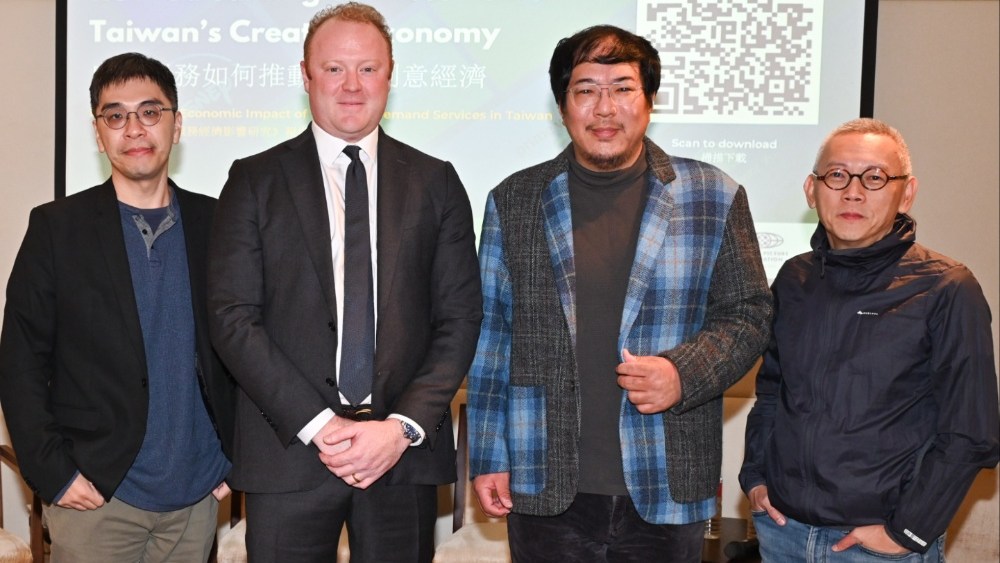
The streaming industry has provided a significant economic boost to Taiwan’s creative sector in 2023, contributing NT$9.7 billion (about $300 million) to the economy while supporting more than 100,000 jobs across the broader entertainment landscape, according to a new report released Wednesday.
International consultancy Frontier Economics unveiled the findings at a Motion Picture Association forum titled “How Streaming Services Drive Taiwan’s Creative Economy” in Taipei. The research shows that video-on-demand platforms have become an integral part of Taiwan’s audiovisual ecosystem, with market penetration reaching more than 7 million subscribers.
The survey shows that 87% of Internet users in Taiwan access VOD services at least weekly, with locally produced content accounting for almost half (48%) of viewing activity. This robust local consumption has prompted major global streaming platforms to significantly increase their investments in Taiwanese programming.
“Taiwan’s audiovisual sector has promising prospects,” said Clive Kenny, economist at Frontier Economics, in a video statement at the forum. “The country offers a mature economic environment, an energetic VOD industry and is attracting significant investments.”
The report shows that the broader film and television sector directly employed 31,132 people in 2021, with ripple effects supporting approximately 103,000 jobs across Taiwan’s economy.
However, forum participants warned that the global streaming landscape is entering a so-called “post-growth period,” characterized by industry consolidation, rising subscription prices and the expansion of ad-supported models.
James Cheatley, MPA VP of VOD, digital and intellectual property, emphasized the need for a joined-up approach over restrictive regulations. “Today’s report confirms that VOD services are a powerful driver of Taiwan’s creative economy – driving investment in local stories and talent, and spreading Taiwanese content to the world,” Cheatley said. “To maintain this momentum, government and industry must work closely together on ‘market incentives’ and competent ‘investment guidance’, rather than imposing restrictive regulations that, as the Frontier report warns, could stifle growth and reduce exports.”
Professor Feng Bohan, professor of economics at National Taiwan University, highlighted how emerging commercial models are accelerating the development of local content. “Data shows that when a market launches lower-cost, ad-supported subscriptions, it leads to a significant increase in viewership for local content, spurred by no- or lower-fee entry barriers and attracting new users who prefer local-language programming,” Feng said.
Atomic 76 director Yang Zhiguang underlined the role of streaming platforms in raising production standards. “Streaming services are catalysts for upskilling, bringing international standards, new technologies and creative collaborations that are elevating the entire industry,” Yang said. “Taiwan’s makers are proving that they can meet global demand if given the opportunity and support.”
The Frontier Economics research warns that a heavy-handed regulatory approach could undermine the sector’s export potential. The research projects show that enforcing local content quotas and other restrictive policies on VOD platforms could reduce content export revenues by 4.3%.
“Policy making that increases barriers and restrictions should be approached with care as it could dampen investment motivation for the sector,” Kenny added.
Forum participants concluded that strengthening copyright protection, supporting talent development and infrastructure, and providing production incentives could create a virtuous cycle that would attract further investment – laying a foundation for Taiwan’s globally influential ‘T-Wave’.
The report was commissioned by the MPA and conducted by Frontier Economics, using economic modeling, stakeholder interviews and a survey of 1,000 internet users in Taiwan.
Member studios of the MPA include Walt Disney Studios Motion Pictures, Netflix Studios, Paramount Pictures, Prime Video & Amazon MGM Studios, Sony Pictures Entertainment, Universal City Studios and Warner Bros. Discovery. Charles Rivkin serves as chairman and CEO.