WTM London’s tech audience agrees AI is good for travel (with caveats) | News
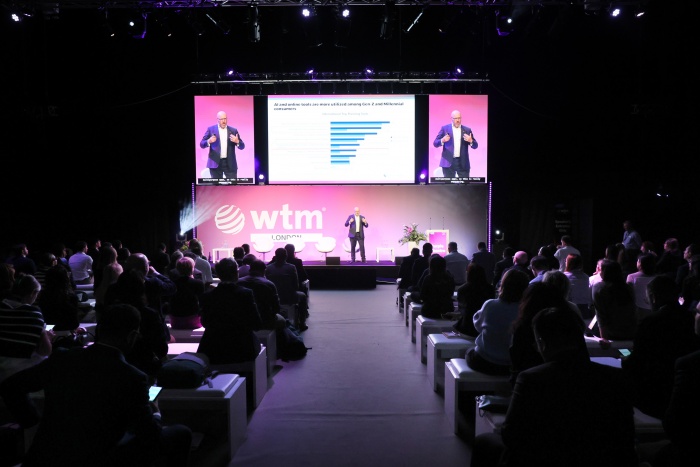
Artificial intelligence is, on balance, positive for travel, according to a show of hands after a lively debate that concluded the Technology Summit at this year’s WTM in London.
The role of AI in travel was discussed by two teams of three. Those who agreed with the statement – AI is the enemy of travel – were led by Stephen Joyce of Protect Group, while those who disagreed were led by Christian Watts of Magpie Travel.
The concerns about AI were that it is not accurate and therefore not reliable. As Joyce noted, trips curated by AI “remove the magical human chaos of being somewhere new.”
In contrast, AI advocates pointed out that travelers are already using AI, despite its well-documented flaws. AI frees people working in the industry from red tape and can help suggest alternative destinations and improve the destination experience for travelers.
The show of hands was overwhelmingly in favor of AI. Watts joked that it was “a tough day for people,” but added that the public’s reaction likely reflects “not where it is today, but where it will be in the future.”
AI was a recurring theme during the sessions. Trip.com’s James Spalding said the OTA has a global AI-based customer support strategy tailored for different markets. Trip.com gives its AI autonomy the ability to answer basic questions, but the AI is also trained to not only identify the complexity of the question, but also to intervene and respond in the right tone. The AI knows (or has learned) when to transfer the question to a human to solve the problem.
Elsewhere, other takes on AI’s role in travel were revealed; Qais Amori from Almosafer spoke about the fraud detection capabilities of AI (when the fraudsters themselves use AI); EasyJet’s Melissa Skluzacek said AI is used across all its commercial and operational functions and is seen as an extra pair of hands; NaviSavi’s Sally Bunnell explained how it uses AI to manage, tagging and profiling its user-generated content, with built-in booking options, to make it useful to brands looking to license it.
The summit started with a bigger picture overview by Dave Goodger of Tourism Economics. He shared data from the WTM Global Trends Report 2025 showing that three in 10 travelers believe AI will increase their average spend. His introduction also highlighted that the growth profile of the travel sector is positive, giving AI the opportunity to positively impact even more travelers and businesses.
One company benefiting from the growth in travel is global eSIM provider Holafly, the official technology partner of WTM London. CEO Pablo Gómez Fernandez-Quintanilla noted that a convergence of trends – more international travel, the need to be connected, hybrid work, seamlessness – was driving the company forward.
Back to AI: OAG’s Filip Filipov identified a potential major headache that resonated with a travel tech audience. The last of his presentation of 30 slides in 300 seconds was on look-to-book ratios. OTAs currently gets one booking per thousand views, he suggested. Looking ahead, large language learning models could deliver a look-to-book ratio of 60,000 to 1. When agent AI becomes mainstream, he warned it could be a million to one.
While AI was always going to dominate proceedings, personalization was another recurring theme. Many panelists were keen to point out the difference between personalization and contextualisation – the idea that it is as important for travel companies to know why someone is traveling as who they are.
The Technology Summit was organized by WTM London technology conference advisor Timothy O’Neil Dunne, from consultancy T2Impact. He said: “Travel has a lot on its plate – war, disease, Trump – as generative AI shakes up the way we search, plan and experience travel, with agentic AI in the background.
“The Summit directly addressed many of these issues. The key takeaway from all panelists and sessions is that while disruptive change is inevitable, the travel technology industry is committed to making travel better for real people.”