Why eye health belongs in the beauty conversation
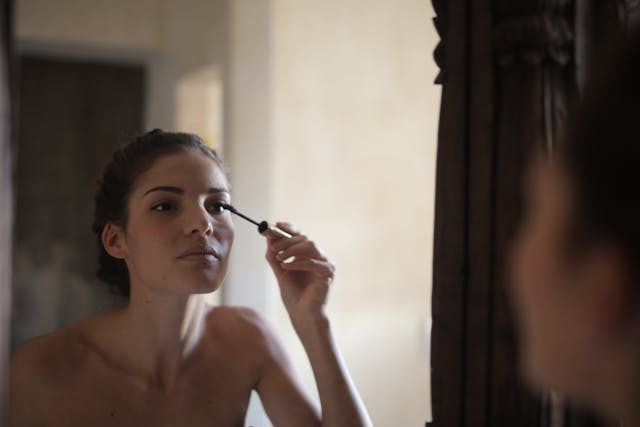
Every day, millions of women increase the length and volume of their eyelashes, unknowingly wiping away the health of their eyes.
Mascara is one of the most used cosmetics in the world, yet almost no one talks about its interactions with ocular biology (the eyelid microbiome, meibomian oil glands, the tear film, and the skin-thin barrier that keeps your eyes comfortable and infection-free). This post is not meant to be anti-beauty; it’s about pro-consciousness. Once you see how small daily habits add up, the solution is simple and your eyes will thank you.
The missing lens: your eyelid microbiome
Your eyelids and eyelashes are home to a community of microbes that help defend against pathogens and inflammation. Harsh preservatives, perfumed removers and aggressive rubbing can destabilize that ecosystem, just as antibacterial hand soap ravages the skin. When the lash line becomes irritated or over-cleansed, two things usually follow: more inflammation and more opportunistic insects (including demodex mites) colonizing the follicles. That’s a straight path to red, gritty, “tired” eyes and the boom in dry eyes we’ve seen over the centuries.
The oil system you’ve never heard of
Those tiny pores along the lash line (meibomian glands) secrete the lipid layer of your tears. The oil ensures that the aqueous layer does not evaporate. Thick, waterproof mascaras, old product, and chronic residue can clog these glands. Add to that the staring at the screen during the day (less blinking) and the ‘sleeping in mascara’ at night, and you have evaporating dry eyes, burning eyes and light sensitivity, while you think the solution is ‘stronger’ eye drops.
What’s actually in the tube?
Not all formulas are equal. Common red flags include:
- Long-lasting wear/’forever waterproof’ claims often mean stronger film formers that require aggressive removal (and more rubbing).
- Preservatives and solvents (certain parabens, phenoxyethanol, formaldehyde-releasing substances) can be irritating to the thin eyelid skin.
- Carbon black and some coal tar-derived dyes can be sensitizers that cause an allergic reaction.
- PFAS/“Teflon” (often listed as PTFE or “fluorine” ingredients) is found in some mascaras to create slip and water resistance. They can persist in the body and the environment.
Individually the exposures are small. Daily, for years, around a mucosal surface? That’s where caution makes sense.
Hygiene (not hype) moves the needle
Most of the eye problems we see when using mascara don’t have to do with one “bad” ingredient; they are about basic hygiene, disposal and replacement.
Here are ways to modify your daily mascara use to provide your eyes with some protection:
- Remove the probe from use every 3 months – Warm, moist, oxygen-restricted packaging is a haven for microbes. If it smells or clumps, throw it away sooner.
- Never share mascara – Conjunctival insects don’t care that she’s your best friend.
- Don’t pump the wand – You inject air (and pollution) into the hose.
- Remove gently, every night – Avoid scrubbing. Use a remover with minimal ingredients and then rinse with lukewarm water. Pat dry. Do not rub.
- Make the lash line clean, but gentle – A few sprays of a hypochlorous acid eyelid cleanser on closed eyelids, then a gentle swipe along lashes, helps reduce bioburden without destroying your microbiome.
- Breaks help – On days without mascara, the glands can breathe and the tear film can be reset.
“But my eyes are always dry…”
Dry eyes are rarely ‘not enough drops’. Look at the causes and write down the remedies:
- Meibomian function – If the oil doesn’t reach your tear film, everything evaporates. Gentle warm compresses (clean, not too hot) followed by light massages of the eyelids can help express the oil.
- Flash quality – Screens reduce our blinking rate and completeness. Try “20-20-20” (look at something 20 feet away for 20 seconds every 20 minutes) and deliberately blink completely.
- Whole body factors – Dehydration, mouth breathing, poor sleep, low omega-3 intake and high indoor heat/air conditioning all thin your tear film. Beauty starts upstream.
- More secure usage playbook (simple swaps) – Choose tubing mascaras or easily soluble formulas that you rinse off with warm water. They allow less friction and fewer removers.
- Prefer short ingredient lists – If possible, skip PFAS (PTFE, perfluoro-, polyfluoro-), “fragrance” and formaldehyde-releasing preservatives.
- Use new, non-fibrous sticks or clean reusable applicators – Fibers can stain and irritate.
- If you wear contact lenses – apply mascara only to the ends, not to the roots, and remove the lenses before cleaning.
- If you have chronic blepharitis, styes or MGD (meibomian gland dysfunction). – consider reserving mascara for special occasions while you rehabilitate the eyelids.
Beauty that supports biology
Healthy eyelashes come from within: sufficient proteins, minerals (especially zinc), vitamin A, foods rich in collagen/gelatin and omega 3 fatty acids support follicle and Meibomian function. Morning light (no lenses or glass between you and the sky) helps the circadian rhythm, which improves tear production and recovery at night. Manage stress and prioritize sleep. The best antioxidant system is the one your body produces while you rest.
The bottom line
Mascara isn’t the bad guy, blind spots are. When we ignore the eyelid microbiome and meibomian glands, we trade short-term glamor for long-term irritation. With smarter formulas, gentler disposal and basic lid hygiene, people can keep the look they love and restore the comfort they’ve been missing.
Save and copy this quick eye health checklist for wearing mascara
- Replace every 3 months
- Don’t share; don’t pump the wand
- Gentle overnight removal (no scrubbing)
- Hypochlorine eyelid spray and then wipe gently
- Warm compress + full blinking daily
- Prefer tubing/easy-off formulas; avoid PFAS
- Take mascara breaks during flare-ups
- Hydrate, nourish, sleep
Author biography
 Benjamin Smith is the founder and CEO of Ultimate Health Model, a disruptive approach that addresses underlying reasons for health problems. He is a certified health coach with a passion for sharing information to help people get better. His new book, Why are you sick? How to reclaim your health with the ultimate health modelT.M(Pro Audio Voices, Inc., August 20, 2025), empowers readers not just to survive, but to thrive. More information at ultimatehealthmodel.com. Link to his free audiobook here.