White men held less than half the board seats on the top 50 Fortune list for the third straight year — but their numbers are rising

Historically, corporate boardrooms have been predominantly white and predominantly male. Still, the trend began to shift in the 1970s, partly due to the gains of the civil rights era and the pro-diversity efforts of activists and business groups.
I have been monitoring the level of diversity in the business and political world for decades. A useful diversity measure is the percentage of board members who are not white men.
And for the third year in a row, white men do not hold a majority of seats on the boards of America’s 50 largest companies, according to my analysis of the most recent Fortune 500 list. However, the share of white men has risen again after a two-year decline.
But knowing the division between white and non-white man is itself a blunt instrument. It doesn’t tell us the nature of current diversity, how it relates to the broader political climate, and what we can learn about diversity by looking at who the corporate executives were in 2025.
Patterns in the data
While white men held two-thirds of the seats on Fortune’s top 50 boards about a decade ago, in 2023 they held less than 50% for the first time. In 2024, that number dropped to 48.4%, but this year it rose again to 49.7%.
Because white men make up about 31% of the U.S. population, they are still vastly overrepresented over the past three years.
However, as the percentage of seats held by white men increased between 2024 and 2025, the percentage held by white women fell from 25% to 24.5%. Other researchers found the same pattern for the entire Fortune 500.
The percentage of seats held by black people also fell, from 15% to 14.2%, and the same percentage held by Hispanic people, from 6.1% to 5.9%. Meanwhile, the percentage of seats held by Asians rose slightly, from 5.6% to 5.7%.
The education factor
The vast majority of men and women of Asian backgrounds who will hold 33 seats on Fortune’s top 50 boards in 2025 were born outside the United States, completed bachelor’s degrees in their home countries, and then came to the U.S. to attend graduate school.
Most Spanish-language directors were also born outside the country, and many of them received bachelor’s or master’s degrees (or both) in the US.
Education matters for future monitoring of diversity, in part because of the Trump administration’s efforts to make it much more difficult for noncitizens to come to the U.S. for higher education.
Denying entry to Asian and Latin American people who want to study in the U.S. could narrow the pipeline to the corporate suite over time, and it could also reduce the number of Asian and Latin American corporate executives.
Politics apart from some notable changes in management
It is revealing to look at some of the people who have left the board and the appointments of others – changes that have led to a decline in diversity this year.
For example, Meta has added five people to the board: four white men and an Egyptian-American woman. One of the white men was Dana White, the CEO of the Ultimate Fighting Championship and a longtime and currently active Trump supporter.
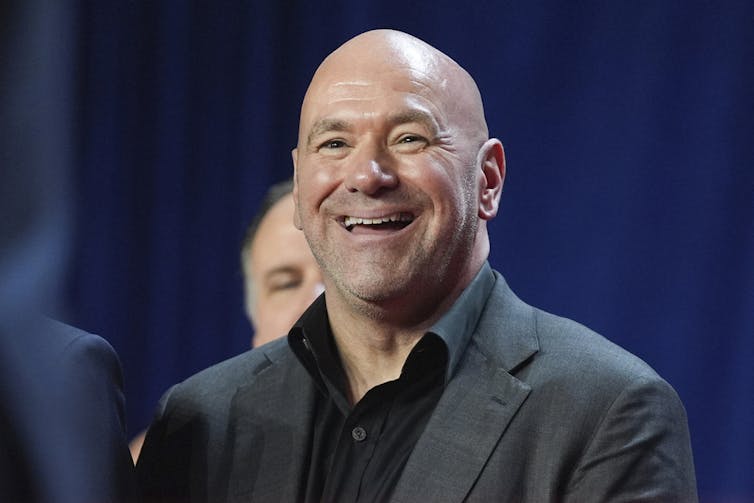
AP Photo/Evan Vucci
The woman who added Meta to the board is Dina Powell McCormick. She served as deputy national security adviser during Trump’s first term and is married to Dave McCormick, a Republican financier who is currently a U.S. senator from Pennsylvania.
With the addition of White, Powell McCormick and three other white men, the Meta board went from 50% white men in 2024 to 60% in 2025, and added two Trump supporters with close ties to the president. In late December 2025, Powell McCormick resigned to become Meta’s president and vice chairman.
Some other notable changes in diversity from 2024 to 2025 occurred on the boards of Fannie Mae and Freddie Mac.
Because the Federal Housing Finance Agency regulates these two companies, the Trump administration’s hostility to diversity, equity, and inclusion (DEI) in 2025 appeared to have a direct effect on the level of diversity on these two boards. In January 2025, Trump nominated William Pulte, a Trump donor, to become director of the FHFA.
Pulte quickly got rid of several female directors, black directors and an Asian director. As a result, the percentage of white male directors on these two boards increased from 40% in 2024 to 65% in 2025. However, the new board members notably included a black man, another man whose mother is Iranian and whose father is Pakistani, and a man of Spanish descent whose parents were Turkish immigrants.
Trump’s second cabinet – which consists of five white women, a black man and a Hispanic woman – had far less diversity than the cabinets of Presidents Barack Obama and Joe Biden, but twice as much diversity as Trump’s first cabinet. Trump has shown that he is open to some diversity, as long as the various appointments – in line with his general recruitment policy – are sufficiently willing to support him. Likewise, Pulte’s changes reduced diversity while simultaneously including some people from different backgrounds who were loyal to Trump.
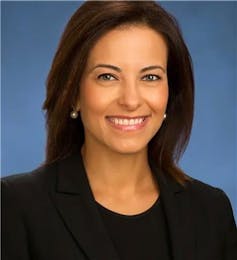
Business thread
The irony of elite diversity
All of this ties into a topic I explored in three editions of a book I co-authored with Bill Domhoff, “Diversity in the Power Elite.” In it we looked at what we called ‘the irony of diversity’.
A central irony of diversity is that when a small number of people from previously excluded groups gain access to the power elite, the processes by which they are elected and their presence justify the continuation of the status quo when it comes to power and the distribution of wealth.
The ongoing selection of single directors to ensure diversity on the boards of the fifty largest Fortune companies is part of this process, as is Trump’s surprisingly diverse cabinet.
The fear among those pushing for greater diversity among business leaders is that the 2025 data could be the start of a longer downward trend.