Tropical Cyclone Horacio intensifies into the world’s first Category 5 – where is it headed?
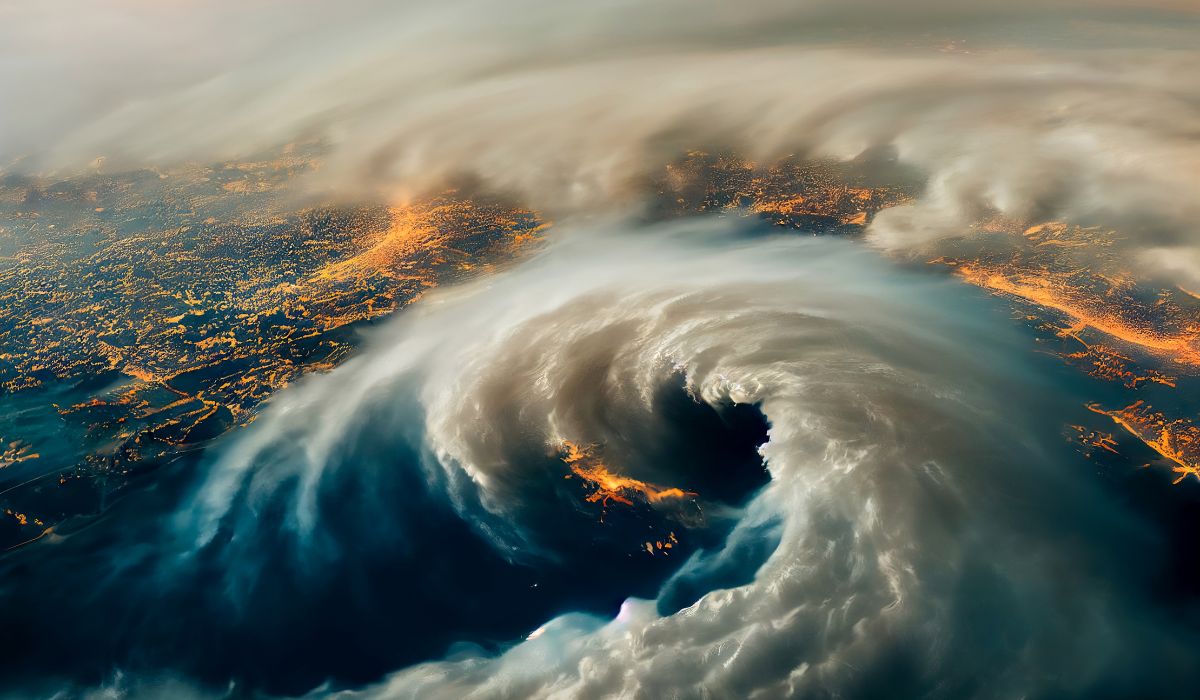
Tropical Cyclone Horacio has evolved into one Category 5 superstorm, which will become the world’s first cyclone to reach this threshold in 2026This was reported by the American Joint Typhoon Warning Center (JTWC).
The powerful system is currently sweeping across the southern Indian Ocean, east of Madagascar, with sustained winds of 259 km/h.
The development was first reported by The News Internationalwhich cited updated forecasts and satellite images confirming the rapid intensification of the cyclone. Category 5 storms represent the highest rating on the Saffir-Simpson Hurricane Wind Scale, defined by sustained winds exceeding 155 mph, which can cause catastrophic damage.
In its latest opinion, the Joint Typhoon Warning Center (JTWC) stated that Horacio is moving south-southwest over open water, maintaining extreme intensity. Satellite images show a compact, highly symmetrical structure with a well-defined eye – a classic feature of a powerful, well-organized tropical cyclone.
Horacio intensifies to 260 km/h over the southern Indian Ocean
According to Tuesday’s forecast from JTWC, Horacio’s sustained winds reached a speed of 160 miles per hourplacing it firmly in Category 5 territory. The storm continues to hover over open ocean waters, reducing immediate threats to densely populated land areas. However, forecasters continue to monitor the trajectory closely.
The cyclone’s structure is described as remarkably organized. Recent satellite images indicate a tight eyewall and robust convection around the center. Meteorologists point to favorable atmospheric and oceanic conditions that fueled the storm’s rapid strengthening.
Among the major contributing factors:
- Sea surface temperatures between 27–28°C (80–82°F)that supplies sufficient energy.
- Moderate wind shear, keeping the storm vertically aligned.
- Strong outflow at the highest level, allowing efficient ventilation of the system.
The World Meteorological Organization (WMO) has long emphasized that warm ocean waters serve as the primary source of energy for tropical cyclones, allowing them to intensify when atmospheric conditions support it.
Mauritius issues a swell warning as Horacio strengthens
Although Horacio is far from the major landmasses, regional authorities are taking precautions. The Mauritius Meteorological Department caused a heavy swell warning for Rodrigues Island at 4:30 am on Tuesday, valid until early Wednesday.

According to local advice Waves generated by Horacio can produce waves that extend up to 7 meters beyond the reefswhich poses risks to low-lying coastal areas and lagoons. Sea conditions are expected to remain dangerous, prompting authorities to advise ships to avoid affected waters.
“The cyclone is far from our coast, but the swells generated by such intense systems can still cause dangerous sea conditions,” regional forecasters noted in their advisory.
Rodrigues Island is located about 560 kilometers (350 miles) east of Mauritius’ main island, putting it within reach of powerful ocean waves even if the storm’s core remains far away. Maritime operators and fishing communities have been urged to exercise extreme caution.
Limited threat to mainland regions
Despite his strength, Horacio is currently posing no immediate threat to India or other nearby continental regionsaccording to the available forecasts. The system’s projected track keeps it over the open waters of the southern Indian Ocean.
Yet meteorological authorities warn that forecasts may shift. Continuous monitoring is ongoing by the JTWC and regional weather services to assess any changes in trajectory or intensity.
Historical data maintained by NOAA’s International Best Track Archive for Climate Stewardship (IBTrACS) show that the South Indian Ocean basin periodically experiences intense tropical cyclones, although early season Category 5 storms remain relatively uncommon.
Climate change and the intensification debate
Horacio’s rapid intensification has reignited discussions about the role of climate change in extreme weather events. Scientists largely agree on this warmer ocean temperatures increase the potential for stronger tropical cyclonesalthough not every storm can be directly attributed to climate change.
Research published in recent years suggests that rising global sea surface temperatures may be contributing to an increased number of high-intensity storms. However, experts caution against attributing any cyclone solely to global warming.
As the WMO has previously stated, “Tropical cyclones are among the most destructive natural hazards,” and improved monitoring systems have improved the accuracy of forecasts worldwide.
Continuous monitoring
Meteorological agencies continue to monitor Tropical Cyclone Horacio as it moves south-southwest over open water. While it says as the first Category 5 cyclone recorded worldwide in 2026the long-term impact will depend on the trajectory and eventual weakening in cooler waters.
Authorities in the region remain vigilant, especially regarding dangerous sea conditions. Further updates are expected as new satellite data and forecast models become available.