These US states are currently under a winter storm warning
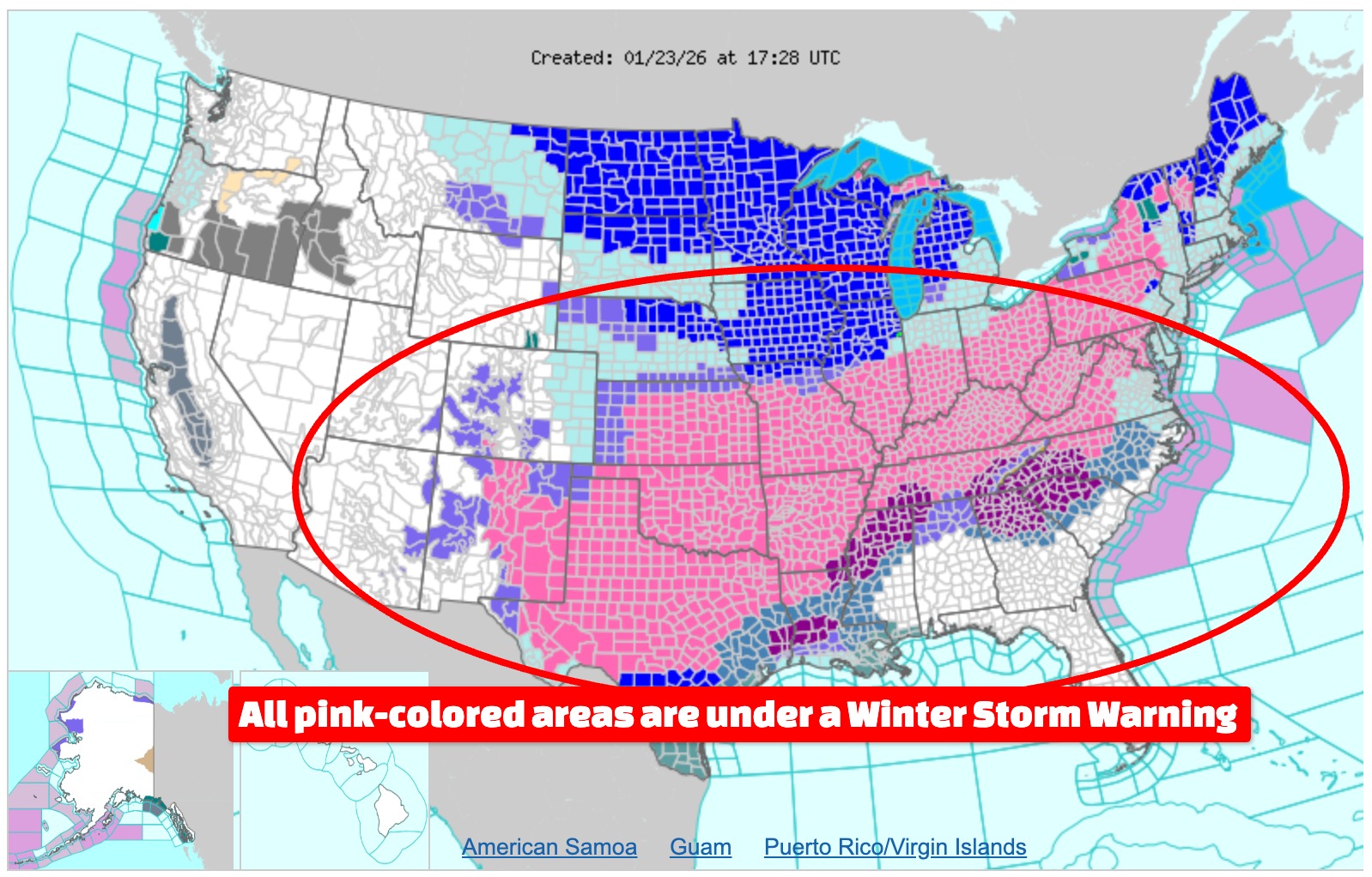
A widespread and powerful winter storm is intensifying across much of the United States, bringing a wave of storms Winter storm warnings forecasters warn of heavy snow, significant ice accumulations, dangerous cold and potentially crippling travel conditions through the weekend and early next week.
According to the National Weather Service, the storm system has strengthened as it moves eastward, pulling frigid Arctic air south and drawing moisture from the Gulf of Mexico. This volatile combination produces heavy snow, sleet, freezing rain and strong winds in multiple regions simultaneously.
Meteorologists say the size, duration and overlap of hazards make the storm particularly dangerous.
“This is a major, multi-day winter storm with the potential to significantly disrupt travel, strain infrastructure and cause power outages across much of the country,” the agency said in a series of urgent weather bulletins. “Travel can become very difficult to impossible in many areas.”
What to expect
Highlights of the forecast include:
- Heavy snowfall from 6 to 18 inches in many regions, with locally higher totals in parts of the Midwest, Ohio Valley, Appalachia and Northeast
- Widespread icingwith accumulations of freezing rain of a quarter inch or more in parts of the South and Mid-Atlantic, increasing the risk of power outages and tree damage
- Drifting and blowing snowreducing visibility and making roads treacherous
- Dangerously cold temperatures and wind chillsincreasing the risk of frostbite and hypothermia
Transportation officials warn that impacts could continue even after precipitation ends as snow-covered and ice-covered roads remain dangerous.
States currently under winter storm warnings
Based on the latest advisories issued Friday, Winter Storm Warnings are in effect for all or parts of the following states. Specific impacts vary by region and altitude:
Northern Plains and Upper Midwest
Montana, North Dakota, South Dakota, Minnesota, Wisconsin, Michigan
Central Plains and Midwest
Kansas, Nebraska, Iowa, Missouri, Illinois, Indiana, Ohio
Ohio Valley and Appalachians
Kentucky, West Virginia, Pennsylvania
Northeast
New York, Vermont, New Hampshire, Maine
Mid-Atlantic Ocean
Maryland, Virginia, District of Columbia
Interior South and Tennessee Valley
Arkansas, Tenn
Southern Plains and Southwest
Oklahoma, Texas, New Mexico
Southeast and Carolina
North Carolina
Warnings have been issued or upgraded from previous warnings as confidence in the forecasts increased, and additional areas may still be added as the storm evolves.
Meteorological setup behind the storm
Forecasters explain that the system is driven by a powerful upper-level trough that is pushing south of western Canada. Interacting with the warmer, moisture-laden air over the central and eastern United States, a rapid strengthening known as cyclogenesis has occurred.
This dynamic arrangement produces sharp gradients in precipitation type. Areas north of the storm track will have mainly snow, while areas closer to and south of the track will see a dangerous mix of snow, sleet and freezing rain. In some southern locations, cold rain is expected to turn to ice or snow as temperatures continue to drop.
Travel disruptions and infrastructure concerns

Transportation officials warn the timing of the storm could coincide peak weekend travelincreasing the risk of widespread delays. Snow-covered highways, icy bridges and rapidly changing road conditions can make driving dangerous, especially at night and during the early morning hours.
Airlines are also closely monitoring the situation as snow and ice could cause disruptions at major hub airports flight delays and cancellations. Even regions with moderate snowfall could experience disruptions if temperatures remain below freezing long enough for ice to remain on runways and taxiways.
Utilities are preparing for the possibility of power outageespecially in areas where freezing rain and wet, heavy snow can accumulate on power lines and trees. Officials advise residents to pre-charge electronic devices and have backup heating options whenever possible.
Public preparedness guidance

Emergency management agencies emphasize that early preparation can significantly reduce the risk. Households are encouraged to review emergency kits, limit non-essential travel and check on vulnerable neighborsincluding the elderly and those with medical needs.
Drivers who must be on the road are advised to bring winter safety supplies including blankets, water, flashlights and fully charged cell phones. Authorities also recommend allowing extra travel time and avoiding sudden braking on slippery roads.
As forecasters continue to refine the outlook, officials emphasize that circumstances can change quicklyand local impacts can vary considerably even within short distances.
“The most important step right now is staying informed,” the NWS spokesperson added. “This is a storm that people should take seriously, even if they have experienced winter weather before.”
Further updates, including possible Winter Storm Warnings and Ice Storm Warnings, are expected as the system approaches.