The Ultimate Guide to Brand Reputation Management

You never get a second chance to make a first impression, and this is especially true for your business’s reputation. That’s why brand reputation management is essential. By monitoring how the public perceives your brand, you can address customer concerns in real time and manage crises across various platforms and services.
Therefore, this guide explores the importance of brand and reputation management for small businesses by highlighting the top available services and outlining key factors to consider when integrating these solutions into your technology stack.
Key takeaways
- Effective brand reputation management is essential for small businesses, helping them build customer trust and significantly improve online visibility.
- You need a proactive strategy to actively monitor mentions and engage with all forms of feedback to shape a positive brand narrative.
- The right reputation management software is critical for centralizing monitoring and enabling quick responses to customer feedback across channels.
- Success depends on your ability to compare leading platforms and select the one that offers the best features and fit for your business’s specific needs.
Why brand and reputation management matters for small businesses
For small businesses, managing brand reputation is not just about protecting an image; it directly impacts the effectiveness of marketing, sales, and customer acquisition efforts.
Unlike larger companies with established brand equity and dedicated PR teams, small businesses are often judged quickly and decisively based on what potential customers find online.
In the age of AI-driven overviews and large language model (LLM) search recommendations, many buyers discover brands through information they find online. Search results, social media mentions, online discussions, and third-party content all shape public perception before a customer even clicks an ad or fills out a contact form.
If these touchpoints are inconsistent, outdated, or negative, even well-executed marketing campaigns can struggle to convert.
Therefore, brand and reputation management are crucial for small businesses to maintain control over their public persona. By monitoring how your brand is discussed across searches, social platforms, and digital media, you gain early visibility into potential issues and opportunities.
This includes insights into emerging customer sentiment, recurring objections, and unexpected brand mentions triggered by marketing campaigns.
How brand reputation management builds trust and drives growth
Brand reputation management is essential for building trust, especially for small businesses that compete with larger brands in crowded or service-based markets.
These businesses rely heavily on their credibility. When brand perception aligns with your messaging across organic search results, social conversations, and earned media, it reinforces customer confidence and reduces friction in the buying process.
Perhaps most importantly, brand reputation management enables small businesses to operate more efficiently. With limited budgets and lean teams, small businesses cannot afford reputational blind spots that may lead to lost leads or require reactive crisis management.
Proactive monitoring and sentiment analysis help businesses focus their marketing and communication efforts where they will have the most significant impact.
Overall, brand and reputation management serve as a force multiplier for small businesses by enhancing marketing performance, supporting customer trust, and facilitating growth without overextending resources.
How to incorporate brand reputation management into your business strategy
Brand reputation management works best when it’s treated as a strategic layer that supports marketing, sales, and customer experience efforts, not as a standalone tool used only when issues arise.
Because brand perception directly influences how potential customers evaluate your business, reputation management should be tied to the channels that shape buying decisions.
Brand reputation management tools typically complement:
- Marketing tools by informing campaign messaging, content strategy, and audience targeting.
- CRM systems by surfacing recurring objections and trust signals that affect sales.
- Social media tools by monitoring conversations and engagement beyond owned channels.
- Customer experience (CX) platforms by identifying sentiment trends tied to support interactions.
When integrated into day-to-day operations, brand reputation management shifts from reactive issue handling to proactive decision-making.
Instead of responding after problems surface, small businesses can use sentiment and visibility insights to support marketing strategy, guide communication efforts, and protect brand credibility as they grow.
Expert tip: Most small businesses don’t need to monitor every platform. Focus on the channels that influence purchase decisions the most, such as search results, social conversations, and high-visibility third-party mentions, and expand coverage as your brand grows.
Comparing the top brand reputation management services
Key features of brand reputation management services
Brand reputation management services often include a variety of tools, depending on the type of business you have and the channels where you operate. While some solutions lean more toward online review management and social listening, others offer more marketing and campaign monitoring solutions.
Consequently, the following list outlines the types of brand management you may be interested in and the features typically associated with them.
Brand monitoring and visibility
Brand monitoring helps small businesses understand where and how their brand appears online and how often it’s mentioned. These tools also serve as early warning systems, alerting you to spikes in attention, emerging conversations, or potential reputation risks before they escalate.
Common features include:
- Real-time alerts and brand mention tracking
- Keyword and hashtag tracking
- Media and news monitoring
- Social listening across platforms
Best for: Businesses that want early visibility into brand conversations; teams concerned with PR risks or sudden spikes in brand mentions
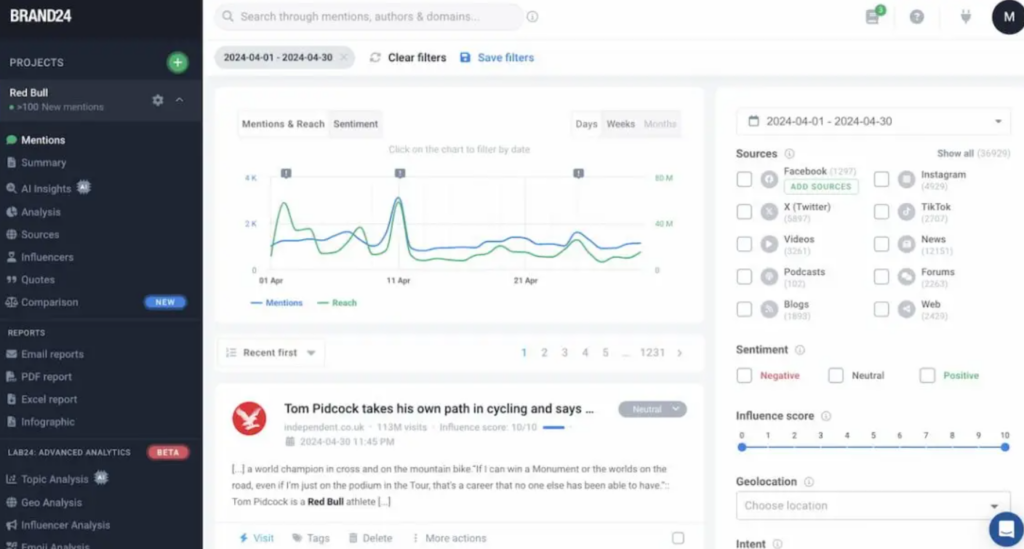
Monitor brand mentions across platforms with Brand24. (Source: Brand24)
Sentiment, reviews, and customer perception
These tools focus on how customers and the public feel about your brand, not just where you’re mentioned.
For small businesses, sentiment insights can reveal gaps between marketing messages and actual customer experiences, and provide an overview of the words most associated with your brand in online reviews.
Common features include:
- Sentiment scoring and trend analysis
- Multichannel review management
- Customer feedback categorization and themes
Best for: Service-based businesses; companies that rely on trust, referrals, or recurring customers
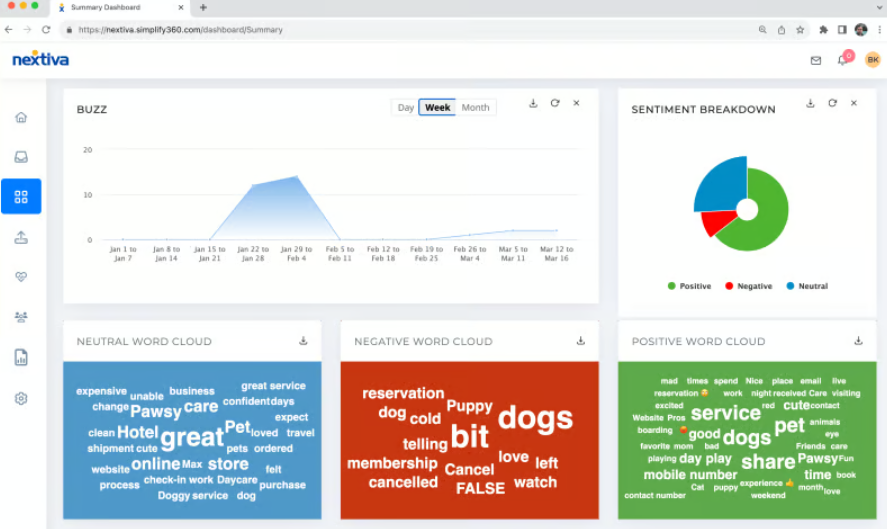
Use Nextiva to generate sentiment analysis from online reviews. (Source: Nextiva)
Automation and AI-driven insights
Automation and AI help small teams turn large volumes of brand data into clear, actionable insights without constant manual review. Rather than tracking every mention, these tools highlight patterns, anomalies, and issues that require attention.
Common features include:
- AI-driven trend detection and anomaly alerts
- Automated insight summaries and reports
- Predictive reputation risk indicators
Best for: Lean teams without dedicated marketing or PR staff; businesses managing multiple channels

Hootsuite’s OwlyGPT can provide AI-generated assessments of your brand. (Source: Hootsuite)
Search, marketing, and competitive insights
These features help small businesses evaluate how brand reputation influences visibility and positioning. They also connect brand perception to discoverability and competitive standing within a specific market.
Common features include:
- Search engine visibility and SEO signals
- Share-of-voice and competitor comparisons
- Campaign and content performance attribution
Best for: Businesses investing in content marketing or paid campaigns; Teams that want to compare brand performance against competitors
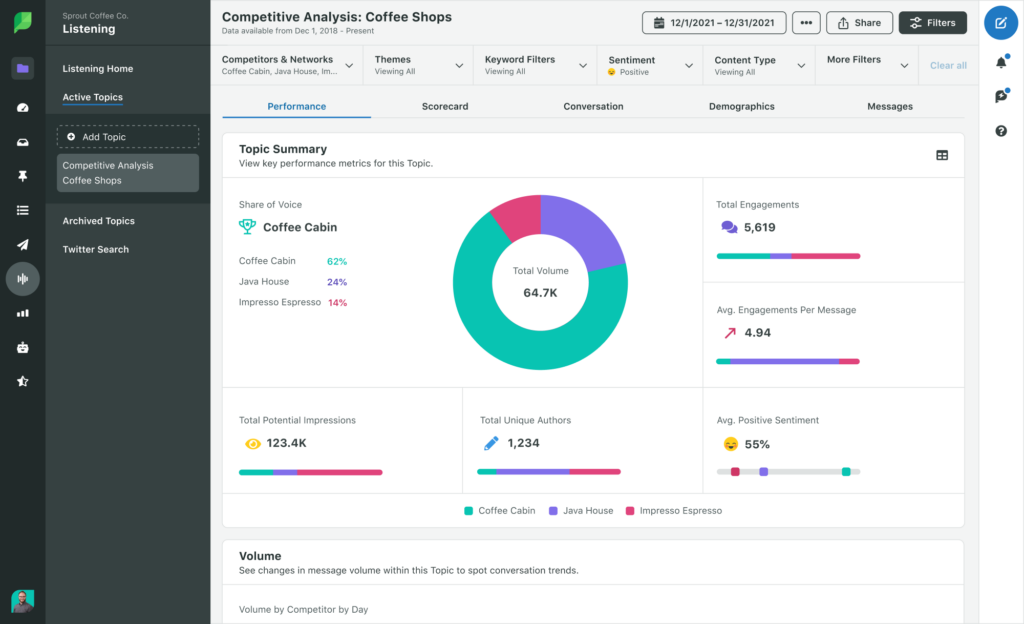
Gather competitor rankings with Sprout Social’s search analytics. (Source: Sprout Social)
Benefits of brand reputation management
Beyond key features, brand reputation management is essential for helping businesses build trust, respond more quickly to issues, and make smarter marketing decisions, often with fewer resources than traditional PR or brand management.
A strong brand reputation reinforces confidence at every stage of the customer journey. When prospects encounter consistent, positive brand signals across search results, social platforms, and third-party content, they’re more likely to trust your business and move forward with a purchase or inquiry.
Brand reputation management tools provide early visibility into negative sentiment, unusual spikes in brand mentions, or emerging issues. For small businesses, this proactive monitoring can prevent minor complaints or misunderstandings from escalating into reputational damage.
Sentiment analysis and brand monitoring help businesses understand how customers actually feel, not just what they say in reviews. These insights can uncover recurring pain points, unmet expectations, or opportunities to refine messaging and offerings.
Brand reputation management supports SEO by increasing positive brand mentions, improving content relevance, and reducing the prominence of outdated or negative search results. Over time, this can lead to a stronger brand authority and improved organic visibility.
By connecting brand perception data to marketing efforts, small businesses can better align their messaging with audience expectations. Reputation insights help inform campaign strategy, content creation, and channel prioritization, making marketing efforts more efficient and effective.
Choosing the best brand reputation management platform
When selecting a brand reputation management platform, it’s crucial to align your business needs with your desired outcomes. Here’s a detailed guide full of tips to help you choose the best platform for your organization.
1. Business size and growth phase
Consider the scale of your operation and current business stage. For example, a two-person team will require different features and capabilities compared to an established enterprise.
Evaluate how the platform can grow with your business, whether you’re looking for basic monitoring for a small team or advanced analytics for a larger organization.
2. Channels to monitor
Identify the channels most relevant to your brand’s audience. This could include social media platforms, online review sites, blogs, and forums. A comprehensive platform will let you track multiple channels so you don’t miss important conversations about your brand.
3. Real-time alerts vs long-term analytics
Determine whether you need immediate notifications for critical issues or if your focus is on analyzing trends over time. Real-time alerts can help you react promptly to emerging situations, while long-term analytics can provide insights into customer sentiments and brand perception.
4. Ease of use and reporting clarity
The platform should have an intuitive interface that makes it easy for your team to navigate. Additionally, consider how the platform presents its data. Clear, actionable reporting will make it easier to communicate findings to stakeholders and implement necessary changes based on the insights gained.
5. Integrations with CRM, VoIP, or marketing tools
Look for a platform that integrates seamlessly with your existing technologies, such as top customer relationship management (CRM) systems, voice over Internet protocol (VoIP) services, and other marketing tools. Integration can enhance your workflow and ensure data consistency across platforms.
6. Budget and pricing transparency
Understand your budget constraints and seek a platform that provides clear pricing structures with no hidden fees. Different providers may offer different pricing models, so assess which features are included at each tier and ensure you are getting value for your investment.
Frequently asked questions (FAQs)
Brand reputation management is an ongoing process, but initial improvements, such as better review sentiment or search visibility, can appear within weeks, depending on the strategies used and the brand’s starting point.
Common brand reputation management tools include review monitoring platforms, social listening software, SEO tools, and customer feedback systems that track mentions and sentiment across the web.
Brand reputation management can improve SEO by increasing positive brand mentions, earning backlinks, boosting review quality, and reducing the visibility of negative or outdated content in search results.
Bottom line
For small businesses, brand reputation management helps build visibility, trust, and long-term growth, even in the face of a crisis. The right platform can help you monitor how your brand is perceived, respond faster to issues, and make more informed marketing decisions.
Whether you need real-time alerts, social listening, or deeper analytics, choosing the right solution depends on your business goals and resources.
Source link