The global travel market continues to grow steadily | News
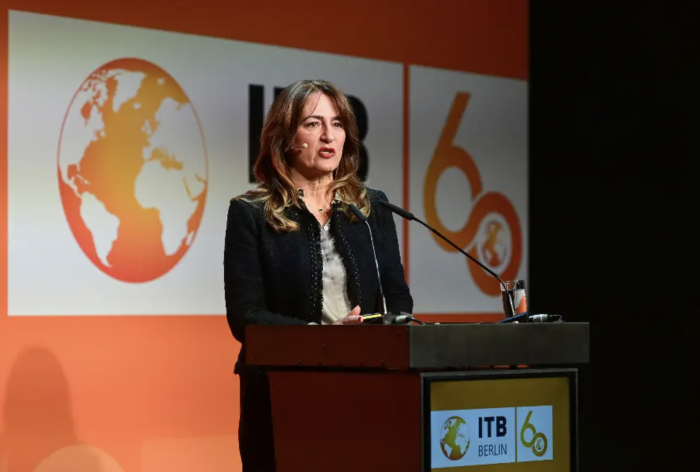
Phocuswright CEO Mitra Sorrells speaks at the ITB Berlin 2026 opening press conference on market growth and AI.
The ITB Travel & Tourism Report 2026/2027 shows that the mood in the sector is optimistic, but strategic preparation often lags behind the challenges of an increasingly complex world.
According to data from market research institute Phocuswright, the European and American travel markets are largely saturated. At the opening of ITB Berlin 2026 on Monday, Mitra Sorrells, CEO of the American institute, said that she nevertheless expects global annual growth of around 5.3 percent until at least 2027. The driving forces were India and Latin America.
Sorrells said the global market grew by six percent last year to $1.93 trillion (about €1.63 trillion). The average annual growth rate from 2025 to 2028 would stabilize at four percent in Europe and the US, eight percent in the Middle East and around ten percent in the Latin American and Indian markets. She predicts a global market volume of 2.14 trillion dollars (1.81 trillion euros) by 2027.
Rapid integration of AI
According to Phocuswright studies, AI’s influence on stakeholder work and consumer travel planning is increasing extremely rapidly. In the tourism sector, 73 percent already use AI in internal processes. About 50 percent have already incorporated it into their communications with consumers, Sorrells said. 13 percent of companies surveyed say they are not yet using AI, but are considering it. Only one percent answered with a clear ‘no’, while three percent indicated uncertainty.
Customers are also increasingly making use of the broad possibilities of AI. Nevertheless, Europe’s major economies are hesitant. For travel planning, Britain, France and last but not least Germany report AI usage rates of 22, 19 and 15 percent respectively. In the US the situation is different: about a year ago, Phocuswright surveys showed a usage rate of 33 percent, which rose to 39 percent in September and 49 percent at the beginning of this year.
Millennials are leading the way in the use of AI
Among American travelers, the influence of AI varies widely by age group. Millennials (born between 1982 and about 1995) are leading the way: 67 percent use AI. They are followed by Generation Z, the second youngest group (born between 1995 and 2010), with 59 percent. Among Generation
For the tourism sector, this means that communication with customers will increasingly shift to artificial intelligence. The sector will only be able to maintain current levels of loyalty if brands can profile themselves as trustworthy through recommendations.