The Caribbean looks ahead to 2026: resilience, regrowth and a region reimagined | Focus

Few regions epitomize resilience like the Caribbean. As 2026 approaches, the islands are building on a pivotal year of recovery and reinvention, using the lessons of 2025 as a springboard for long-term transformation. Breaking Travel News takes a deep dive into what defined the past year and what it signals for the future.
Across all destinations, the story resonated with unmistakable clarity: the Caribbean is reinventing what tourism can be.
Tourism authorities, aviation leaders, hotel executives and community operators consistently described 2025 as a turning point, a year of regrowth, fueled by sustainability commitments, digital transformation, meaningful travel and deeper regional collaboration. As the industry moves into 2026, these priorities are becoming embedded rather than experimental.
Travelers respond. Search data shows that Caribbean destinations top global lists for “the world’s best beaches,” “the world’s top luxury resorts,” and “the world’s top honeymoon destinations,” an indicator of pent-up demand and growing global visibility as the region continues to develop.
The rise of regenerative tourism
On the islands, sustainability has shifted from rhetoric to reality. As global events unfolded in 2025, ministers’ voices were aligned: the future of tourism depends on safeguarding the ecosystems that make the Caribbean extraordinary.
Saint Lucia has sustainability directly enshrined in legislation. Hon. Dr. Ernest Hilaire emphasized that sustainability is central to the island’s tourism strategy:
“We have made sustainability a requirement in our new tourism development legislation. Incentives for hotels are linked to their environmental practices. As a small island, one hurricane can wipe out decades of development, so protecting our environment determines how we live.”
Elsewhere, Jamaica reported a rapid expansion of climate-resilient infrastructure, the Bahamas highlighted marine regeneration projects and Antigua strengthened its ban on single-use plastics.
Dr. Hilaire summarized the shift succinctly: “Sustainability is not just a buzzword for us; it defines how we should live our lives.”
Few Caribbean figures have shaped the global tourism conversation as profoundly as Edmund Bartlett, CD MP, Minister of Tourism for Jamaica. Long before resilience became a post-pandemic buzzword, Bartlett championed it as a structural necessity.
That vision led to the creation of the Global Tourism Resilience and Crisis Management Center (GTRCMC), based at the University of the West Indies, which supports destinations in preparing for, managing and recovering from crises ranging from hurricanes and pandemics to cyber attacks and geopolitics.
For Bartlett, resilience is not an abstract concept, but a survival strategy:
“We must do everything possible to anticipate disruptions, manage them when they happen, and recover not just in real time, but in nanotime. The stability of the region depends on it.”
Community tourism will take center stage
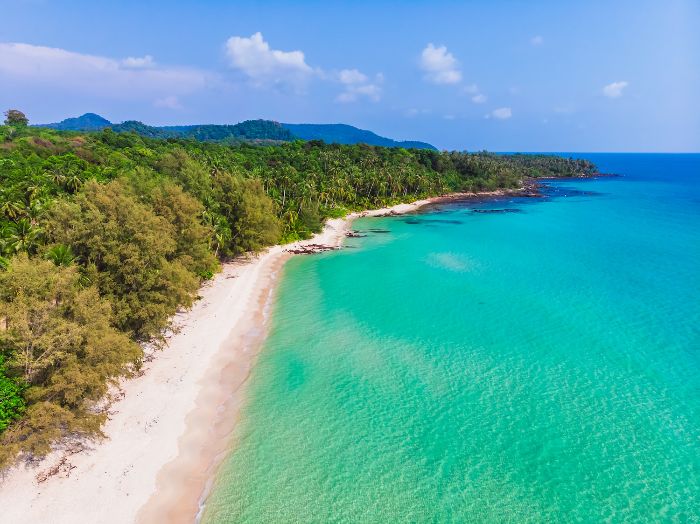
View of the beach from VirtualWorld
The prediction that 2025 would be the year of meaningful travel has proven especially true in the Caribbean. What has changed is the way destinations consciously shape these experiences.
Recognized as the world’s top honeymoon destination at the 2025 World Travel Awards, Saint Lucia now champions villages, fishing communities and local crafts as central pillars of its tourism identity. Tourism Ambassador and Olympian Julien Alfred explained:
“We want visitors to come into contact with our fishing villages, our youth, our culture. To experience who we are, and not just what we have.”
This sentiment was echoed among operators. In Turks and Caicos, Ambergris Cay described its offering as “a sanctuary where nature leads.”
BTN noted a shift from ‘see and do’ tourism to participatory, place-based immersion, in line with travelers’ growing desire for authenticity, heritage and connection.
Aviation: the new regional lifeline

Trevor Sadler, CEO of interCaribbean Airways
2025 has also become a defining year for Caribbean aviation. Inter-island connectivity, long considered the region’s Achilles heel, is undergoing a transformation.
At the World Travel Awards Grand Final, InterCaribbean Airways CEO Trevor Sadler gave a candid assessment:
“We are still a long way from where we want to be, but we are certainly on our way. There will be new aircraft, larger aircraft, new destinations and a greatly expanded Caribbean network.”
InterCaribbean momentum reflects a broader trend. Island hopping is back, supported by digital improvements, streamlined booking platforms and modernized fleets. The airline was recognized with three World Travel Awards in 2025, including World’s Leading Regional Airline.
For planners, improved connectivity makes possible combinations once considered logistically difficult, from Barbados and Saint Vincent to Saint Lucia and Martinique.
WTM trend analysis shows that long-distance visitors are increasingly combining islands into multi-destination routes. Search platforms have reported spikes in terms like “island hopping in the Caribbean” and “best islands to combine.”
AI and digital transformation: from add-on to infrastructure
If 2024 introduced the Caribbean to AI, 2025 saw it embedded into the fabric of the industry.
Destinations use AI to personalize marketing, map visitor sentiment in real-time, improve yield management, reduce carbon-heavy bottlenecks, support accessibility for neurodivergent travelers, and predict demand around cultural and sporting events.
Carlos Cendra, Chief Marketing and Communications Officer at Mabrian Technologies, explained:
“Traditional AI helps us gain insight. Generative AI now helps destinations draw conclusions from that information in real time.”
David Galaleri from Adalte emphasized the democratizing potential:
“AI must empower local makers, not just big companies. It must reduce costs, shorten time to market and connect small operators to global platforms.”
Leaders across the region emphasized that AI must enhance rather than dilute authenticity. For the Caribbean, authenticity remains the most important currency.
Luxury, wellness and the ‘meaningful indulgence’ trend
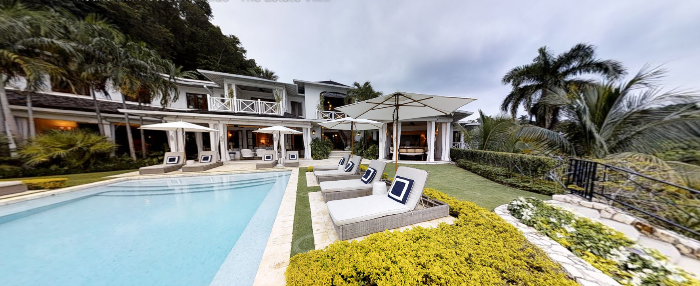
Round Hill Hotel and Villas, Jamaica. Image via Virtualworld.com
BTN noted strong growth in wellness tourism and meaningful pampering. Destinations are expanding their offering of hot springs, forest baths, marine therapies and plant-based culinary programmes, with Saint Lucia, Barbados and Grenada reporting a rise in wellness bookings.
Round Hill Hotel and Villas in Jamaica exemplifies this evolution through heritage, craftsmanship, open-air living and nature-led design.
Natalia Greene, VP of Sales and Marketing at Serenity in Coconut Bay, said:
“Our team is the heart and soul of the property. Serenity is about customized, unforgettable experiences.”
At The Landings Resort and Spa, General Manager Anderson Howard echoed this ethos:
“We launched a rebrand this year, investing in infrastructure, facilities and human capital. That gives us a competitive advantage.”
Youth, culture and sport as engines of identity

Julien Alfred speaks to BTN at World Travel Market
A defining trend in 2025 will be the rise of new-generation storytellers, from chefs and musicians to conservationists and athletes.
Sport is becoming increasingly central to tourism branding, from the legacy of athletics in Jamaica to Saint Lucia’s appointment of Julien Alfred as its tourism ambassador.
Culinary tourism is also booming, with highlights including St. Martin’s Festival de la Gastronomie, Trinidad’s rum and cocoa routes, Antigua’s farm-to-table movement and Barbados’ fishing routes.
As Tabella Deterville of Island Routes, World’s Leading Caribbean Attraction Company 2025, put it:
“We want visitors to be able to touch, taste and feel the Caribbean.”
A new spirit of cooperation

Sandals Dunn’s River, Jamaica
From aviation to nature conservation, 2025 revealed a stronger spirit of regional cooperation than ever.
Many leaders echoed the same belief: “We grow together, or we don’t grow at all.”
Sandals Resorts International continues to demonstrate how a long-term strategy drives sustainable success. Eastern Caribbean director Winston Anderson explained:
“Innovation inspires us, but bringing out the best in our people is what keeps us ahead.”
Bernardo Cueto from the Mexican Caribbean summed up the broader atmosphere:
“Tourism is a family. We grow together, share what’s new, keep our connections strong and show the world the warmth that defines us.”
2025: the year the Caribbean reinvented itself
Three decisive shifts emerged from BTN’s conversations.
AI becomes an invisible infrastructure behind marketing, sustainability and visitor experience, while human creativity remains the soul of Caribbean tourism.
Sustainability is now embedded in policy, with many islands linking incentives to environmental practice.
Community and culture have become core products rather than additions.
As Alicia Jemmott, Barbados Country Manager at Chukka Caribbean Adventures, said:
“We are about giving back to our communities and creating attractions that work for locals and visitors alike.”
A region of hope, humanity and horizon

Despite global turbulence and regional challenges, including Hurricane Melissa, the mood heading into 2026 is one of measured optimism, based on strategy, community and pride.
From ministers to aviation CEOs, from village guides to luxury hoteliers, the message is clear: the Caribbean is rebuilding as the future of travel is reshaped.
BTN will follow her journey every step of the way.