Startup Battlefield company SpotitEarly trained dogs and AI to sniff out common cancers and will show off its tech at Disrupt
Developing comprehensive early-stage cancer screening is the key to saving the most lives.
Although multi-cancer early detection (MCED) tests are still being researched and have not been approved by the FDA, several are commercially available for consumers willing to pay out of pocket. Individuals can ask their doctor for the Gallery blood test from Grail, or they can opt for a full-body MRI from companies like Prenuvo or Ezra, which often costs $2,000 or more.
Soon, consumers will have a different – and quite unique – way to screen for multiple types of cancer.
SpotitEarly, a biotech company included in Startup Battlefield at TechCrunch Disrupt 2025, is developing an at-home cancer test that analyzes human breath using dogs’ exceptional sense of smell combined with AI.
SpotitEarly CEO Shlomi Madar told TechCrunch that the science is becoming clearer: Dogs can be trained to detect diseases, especially cancer, in humans. “There are also ad hoc reports from people who say their companion dogs sensed something was wrong with them long before they were diagnosed,” he said.
Building on his 15 years of experience as a healthcare and biotechnology leader, Madar, along with three friends – one of whom is a former K9 unit commander – have developed a reliable method and technology for cancer screening by analyzing breath samples.
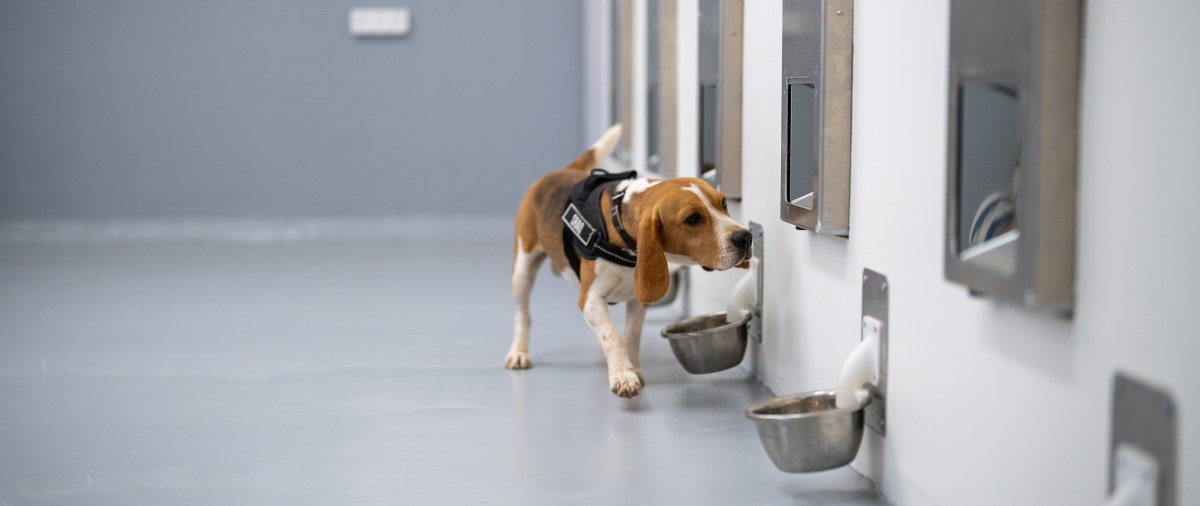
Users can simply screen for cancer by collecting a breath sample at home and sending it to SpotitEarly’s laboratory. The company employs 18 trained beagles to distinguish cancer-specific odors. The dogs learn to sit when they smell cancer particles, and SpotitEarly’s AI platform validates the dogs’ behavior.
WAN event
San Francisco
|
October 27-29, 2025
“We have cameras on top of the lab. We have a microphone that records the breathing patterns of the dogs. We also monitor their heart rate. So basically the machine learning knows the baseline of the entire dog pack,” Madar said. “That makes it more accurate than just a handler looking at a dog.”
The company’s research, published in Scientific reports from natureshowed that its trained dogs can detect cancer early in breath samples with an accuracy of 94%. That double-blind clinical trial, which involved 1,400 people, focused on screening for the four most common cancers: breast, colorectal, prostate and lung cancer.
SpotitEarly, which was founded in Israel in 2020, announced its launch in the US market in May with $20.3 million in funding from Hanaco VC, Menomedin VC, Jeff Swartz (former CEO of Timberland) and Avishai Abrahami (CEO of Wix.com).
The company plans to use the capital to significantly expand its clinical trials, starting with individual tests for breast cancer, before moving on to the other three targeted cancers.
Madar said SpotitEarly’s home screening kits should be available to consumers through a physician network next year. A single cancer test will cost about $250, and screening for each additional cancer will cost a fraction of the first test, he said. To prioritize accessibility, the company aims to price its multi-cancer panel below the cost of competitors, such as Grail’s Galleri test, which typically costs about $950.
As for the dogs, Madar said they are part of the team. All company employees must be “dog people,” Madar said. “We don’t just use them as biosensors. They have a lot of room to play. They are great sneakers, great workers, but also great companions.”
If you want to learn from SpotitEarly firsthand and see dozens of additional pitches, attend valuable workshops, and make the connections that drive business results, Go here for more information about this year’s Disruptwhich takes place from October 27 to 29 in San Francisco.