‘Shogun’ Producer Talks Creating Epic TV
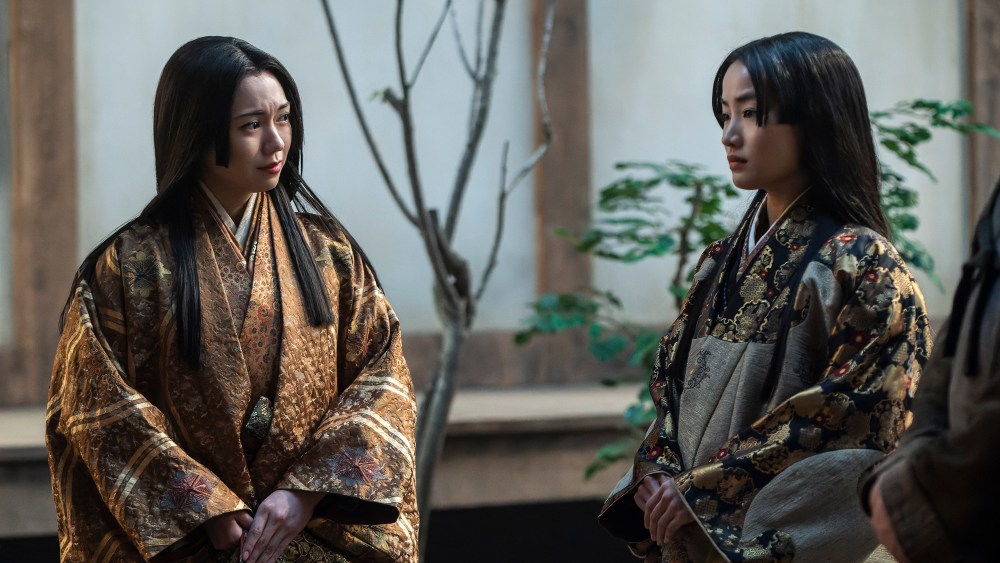
As the “Shogun” team gathered in a Washington, D.C., hotel room last February, champagne in hand, counting down to the show’s worldwide release, producer Miyagawa Eriko struggled with the TV settings and watched the clock tick toward launch. “That moment when something you put years of your life into finally goes out into the world, I thought, maybe this is what it feels like to send a child to college, that mix of pride, terror and love,” she recalled during her keynote speech at the MPA seminar at the Tokyo International Film Festival.
The emotional moment came as the culmination of a full-circle journey for Miyagawa, who had returned to DC to screen episodes at MPA headquarters just before the series launched. For the Yokohama native, who graduated from Georgetown University in 2002, the country’s capital represented where her “international adventure began.” Twenty-two years later, she once again presented “a Japanese jidaigeki, a period drama born from true cross-cultural collaboration.”
The event took on even more significance when a deputy chief of mission at the Japanese embassy recounted how the original 1980 “Shogun” miniseries had become an unexpected diplomatic tool while living in the US as a teenager. “Americans were fascinated by stories in a distant land with unknown customs and codes,” Miyagawa says. “Many of his classmates had crushes on Shimada Yoko.”
The anecdote resonated with Miyagawa’s own childhood experience of cross-cultural connections. When her family moved to Dubai for her father’s work, she befriended a Dutch girl next door, despite not speaking a common language. “One day my dad put on the VHS of ‘Alice in Wonderland’. I remember sitting side by side with that girl giggling at the Mad Hatter’s unbirthday party. We didn’t need words, we just needed a story,” she said. “That small moment of connection stayed with me and became, I think, the seed of everything.”
Miyagawa’s career trajectory reads like a masterclass in bridging Hollywood and Japanese cinema. Her first job out of college was translating on the set of “Kill Bill: Vol. 1,” where she was blown away by the scale and international collaboration. “The crew came from all over the world: the US, Japan, China, Hong Kong, Australia, Canada. It was beautiful chaos and I felt completely at home,” she said.
Working on Martin Scorsese’s ‘Silence’, a passion project decades in the making, proved formative. When Miyagawa traveled to Nagasaki with the legendary director, he was struck not by his fame, but by his humility. “Despite being an author, he approached the material like a student. He surrounded himself with historians, priests and cultural advisors, not to verify the facts, but to seek understanding. He listened, he asked and kept asking. And that openness, that curiosity, stayed with me.”
When Miyagawa joined FX’s “Shogun” after “Silence” was released, the timing proved prescient. The series, based on James Clavell’s 1975 novel that was previously adapted into the 1980 miniseries, found passionate champions in FX leadership John Landgraf and Gina Balian, who enlisted co-creators Justin Marks and Rachel Kondo to reinvent the story for a contemporary audience.
“In an acceptance speech, Justin joked that he still couldn’t quite believe that FX had greenlit a very expensive, subtitled Japanese period drama whose central climax revolves around a poetry competition,” Miyagawa said.
While many applauded FX for taking such a gamble, Miyagawa prefers a different framework. “I like to think of John and Gina as people who read the direction of the wind, waiting for the right moment and hitting. The timing was remarkable. COVID accelerated the rise of global streaming. Audiences became increasingly adventurous, willing to read subtitles, hungry for good stories no matter where they came from.”
That shift brought with it a deeper responsibility to authenticity, which Miyagawa described as “a process that requires patience, curiosity and respect. Every hairstyle, every sleeve pattern, every historical gesture was discussed in English, discussed in Japanese and often returned to English again. Every line of dialogue was translated, polished, re-translated and polished again by writers, translators, historians, playwrights, producers and actors.”
The production became its own cultural conversation. “If you had visited our set, you would have seen crew from five continents, sharing bento and donuts and carefully carrying food covers so as not to damage the province’s farmlands. We weren’t just making a story about cultural exchange. We were living it.”
Reflecting on her career, Miyagawa revealed: “I’ve realized something – I’ve never worked on a show that didn’t require translation. My entire career has been one long experiment in translation, not just of language, but of worldview. From ‘Kill Bill’ to ‘Silence’ and ‘Shogun,’ I’ve lived at the crossroads where Hollywood ambition meets Japanese precision and where misunderstandings, if treated kindly, can turn into magic.”
When asked about creating epic stories, Miyagawa rejected the expected answers about budgets and scale. “The truth is, I don’t think an epic is about how big we can make something. I think it’s about how many hearts it can hold. Every truly epic story I’ve been a part of started the same way, with people from different worlds meeting in the same creative space, figuring out what the common language is, finding the story they’re trying to tell: curiosity, empathy and courage.”
Although “Shogun” could not be shot in Japan for logistical reasons, Miyagawa has not ruled out returning the show to the country where it is set in future seasons.
She concluded with a rallying cry: “Let’s keep creating the kind of stories that no culture could create on its own.”