Review ‘Drops of God’ season 2: mature and more complex
The fantastic, world-famous wine drama “Drops of God” debuted in the spring of 2023, almost simultaneously with the final season of “Succession.” On the one hand, the two series rhyme with appropriate synchronicity; ‘Drops of God’ was also driven by the question of which main character will take over the empire from a father figure who has deeply damaged them. But on the other hand, the deafening noise produced by the critically acclaimed HBO drama — amid a slew of simultaneous releases rushing into the gap between pandemic production shutdowns and looming strikes — initially drowned out a largely subtitled show distributed in the United States by Apple TV, a relatively niche service where many series seem to be fading into obscurity. Even I, a working television critic, couldn’t catch up on “Drops of God” until months after the first series ended — much to my shame, as the eight-episode season became one of my favorites of that or any year.
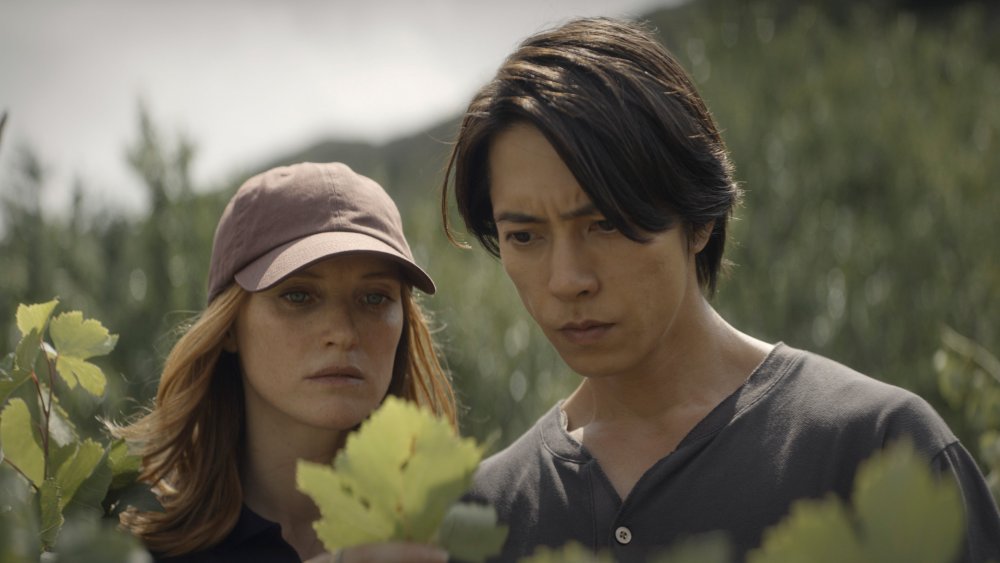
Based on Tadashi Agi’s manga series of the same name and helmed by creator Quoc Dang Tran, ‘Drops of God’ Season 1 was a near-perfect marriage of the comic’s heightened cartoon logic with the emotional nuance of flesh-and-blood reality. Main characters Camille Léger (Fleur Geffrier) and Issei Tomine (Tomohisa Yamashita) were thrust into an objectively absurd situation, posthumously pitted against each other by Camille’s estranged father Alexandre (Stanley Weber) in a competition to determine who would inherit the famed wine expert’s multimillion-dollar collection. (Challenges include such simple tasks as being asked to identify a particular wine from a painting inspired by the vintage.) Yet Geffrier and Yamashita’s performances imbue Camille and Issei, who come to realize that they are half-siblings through Alexandre’s affair with Issei’s mother, with an intense and wounded humanity. As fantastical as their circumstances may have seemed, right down to Camille’s synesthesia allowing her to identify tasting notes by placing them in a ‘Sherlock’-esque mind palace and giving new meaning to the term ‘supertaster’, she and Issei were perfectly legible as people.
Season 2 arrives almost three years after Camille, who technically won the competition, sent Issei half of Alexandre’s basement as an olive branch with a note that said “brother and sister.” It was a nice note and a satisfying conclusion, which left the audience with a smile. A second part, in which director Oded Ruskin and producer Klaus Zimmermann return, but a new writing team takes over from Tran, risks retroactively destroying the pleasure of a finite, well-executed ending. Season 1 had an ideal structure in the trio of obstacles designed by Alexandre, which ties into Camille and Issei’s beginning acceptance of each other as allies rather than enemies. But if season 2 can’t match that perfect marriage of style and substance, it’s also a chance to spend more time in the mysterious, obsessive world of wine lovers — and follow Camille and Issei into the complicated reality that often comes after a happy ending. Like the drink the characters have built their lives around, “Drops of God” becomes more versatile and mature with age.
Bad news first: Season 2 of ‘Drops of God’ features another high-profile wine competition, another brother and sister at odds thanks to their late father’s bad parenting and another Alexandre assignment from beyond the grave. Such examples of repetition can’t help but feel like fainter echoes of the original, especially when Season 2 doesn’t deliver the same sense of discovery as its predecessor. Yet expanding the story also has its advantages. When it’s not about recreating the past, ‘Drops of God’ follows Camille and Issei into a future left wide open by their new fortune. The siblings and their struggles prove more than worth revisiting, even if the delivery device isn’t as impeccably designed.
Season 2 also takes an obvious opportunity. “Drops of God” is primarily Camille’s show; we meet Issei through her eyes, as an impassive and intimidating enemy, who is then just as warm to him as she is. This time it’s Issei’s turn to be in the spotlight. Despite Camille’s gift, losing the competition and discovering his true paternity have had a negative impact on the young man, who cannot simply turn off his competitive instinct overnight. To cope, he has turned to freediving and flirts with emptiness by diving into caves off the coast of Okinawa and Marseille. (Season 2 ups the ante in breathtaking locations, switching between Japan and Europe, with an interlude in the Caucasus in between.) Although Issei has kept in touch with Camille, he also resents her for gaining the final approval of his withholding mentor. And he is jealous of what he considers her “visions,” as he pursues his own communion with the divine by staying underwater until he almost drowns.
Camille, in turn, is consumed with proving that she is nothing like her brilliant, cruel, controlling father. She has settled down with her partner Thomas (Tom Woznickza) to co-run his family winery in the south of France, updating the producer’s techniques to keep pace with the realities of climate change. (The remainder of her inheritance, Alexandre’s authoritative Léger Guide, has been delegated to friends who oversee its day-to-day operations.) But when a bottle of wine Alexandre has reserved for his “true heir” turns up, along with instructions to do what he couldn’t and track down the red wine’s mysterious provenance, Camille’s resulting fixation—shared with Issei—reveals that she’s more like their father than she’d like to admit. This nepobaby protests a little too much.
Before long, Issei and Camille are on their way to Georgia (the birthplace of wine!), where Tamar Abashidze (Ia Shugliashvili) runs a small vineyard that mainly supplies a local monastery. Tamar’s small business is jeopardized by an inheritance dispute with her brother Davit (Tornike Gogrichiani), a businessman who wants to erase the family inheritance to settle some children’s scores. But Tamar and Davit’s dysfunction never becomes more than a mirror to Issei and Camille’s, and the middle portion of season 2 is the slowest, as the show freezes in place to focus on their feud.
Issei and Camille don’t really need new foils, though; they already have the perfect one together. “Drops of God” ditches much of the surreal imagery from last season, including almost all of the return trips to Camille’s mind palace, to embrace a more grounded mood. With Alexandre gone, Issei musters the courage to confront his mother Honoka (Makiko Watanabe), a wealthy heiress whose virulent antipathy to wine he now understands. Meanwhile, Camille’s headstrong determination proves to be a double-edged sword, driving a wedge between her and Thomas as she embarks on her latest quest. By continuing to portray their lasting emotional damage, “Drops of God” shows that overcoming one’s problems is not as simple as completing an assignment. The show subverts its own happy ending, but with intention and in a way that is true to life.
Geffrier and Yamashita are both captivating screen presences who exude a determination that is almost infectious. You don’t have to be a wine lover, I’m not! – experience vicarious pleasure in expertise, heritage and pure, sensual pleasure. (France and Japan are two different, distant countries, but “Drops of God” celebrates their shared interest in bon vivants.) In bringing Camille and Issei to life, the two actors have helped build a world worth the return trip, even one that’s slightly less exciting and bleaker than the first trip.
The first episode of Season 2 of ‘Drops of God’ is now streaming on Apple TV, with the remaining episodes airing weekly on Wednesdays.