Researchers warn of respiratory risks as the Sargassum study enters its final phase
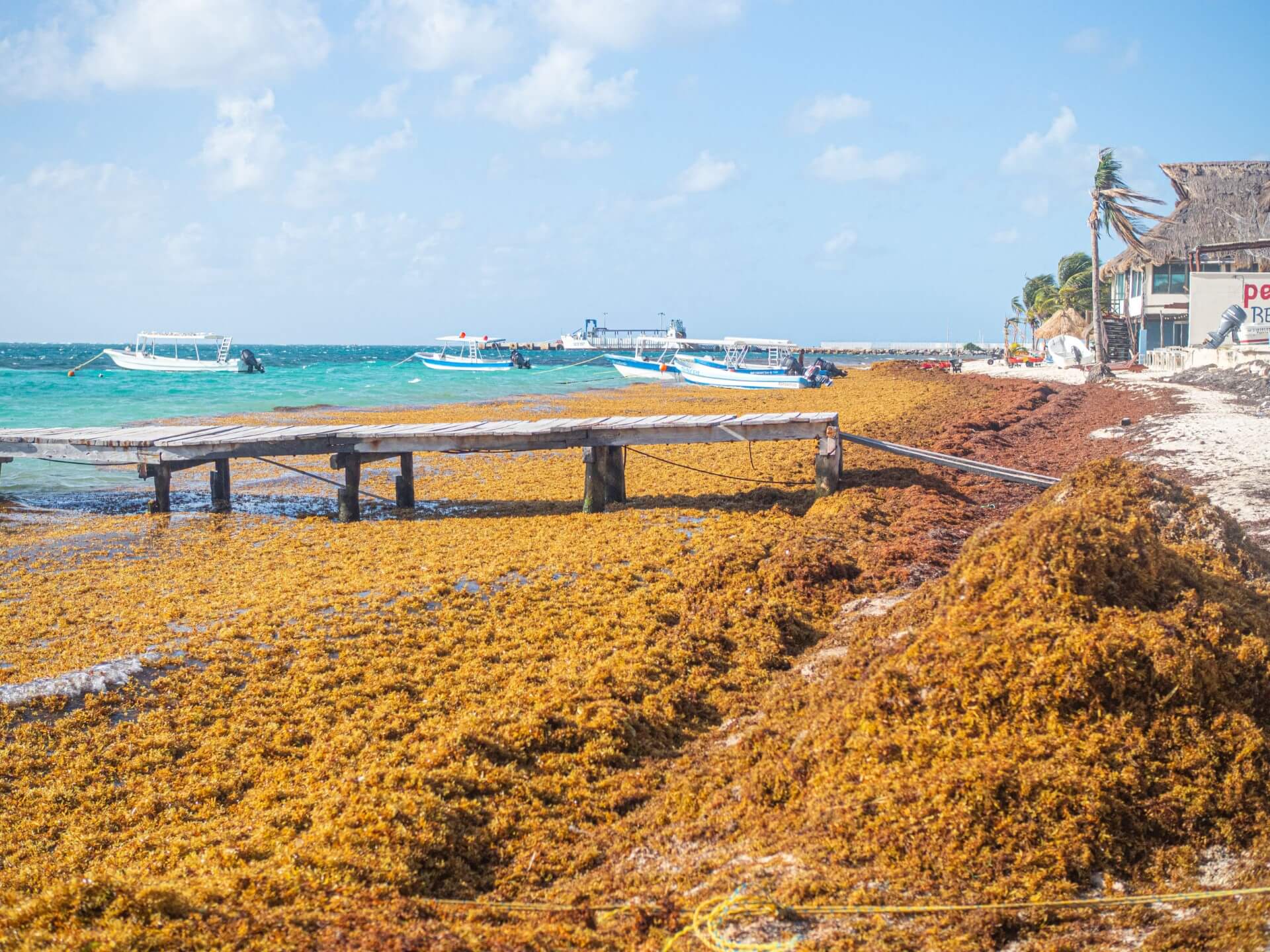
A long-awaited scientific study on the health effects of sargassum on coastal workers is nearing completion, with preliminary results expected to be released in early 2026.
The research, led by the Quintana Roo Council for Humanities, Science and Technology (Coqcyt) in collaboration with specialists from the Autonomous University of Quintana Roo (UQROO), resumed this year after a season of unusually low sargassum arrivals halted progress in 2024.
Main highlight
Scientists say early findings reinforce concerns about the respiratory risks of inhaling sargassum leachate – and not just from physical contact with the algae.
The project specifically targets people who manually collect sargassum, a group believed to have the highest long-term exposure. According to project director Cristopher Malpica MoralesThis year’s abundant influx of sargassum and the release of long-delayed funding allowed researchers to resume fieldwork in July 2025.
Breathing problems after new findings
Researchers are assessing the effects of inhaling gases and vapors released when decomposing sargassum – known as leachate – after observing respiratory symptoms in workers. Previous studies in the Caribbean have shown that the decomposition of sargassum can cause emissions hydrogen sulfide (H₂S) And ammoniaboth of which can irritate the eyes, throat and lungs. Recent environmental assessments by Mexican agencies have also found fluctuating levels of sulfur compounds along affected coastlines, increasing the urgency of the investigation.
The UQROO team will also analyze the concentrations of heavy metals that sargassum often absorbs as it floats across the Atlantic Ocean. These include arsenic, copper, manganese and molybdenum — elements that, in high doses, may pose risks to human health and local ecosystems. Similar studies in Barbados and Puerto Rico have previously identified elevated arsenic levels in dried sargassum samples, raising concerns about long-term exposure.
Budget reduced, but investigation continues
Although the first estimates put the research budget at 400,000 pesosonly approx 115,000 pesos were ultimately assigned for this year’s phase. The majority of expenditure went toward transportation and field sampling along the Riviera Maya coastline.
Malpica Morales emphasized that despite the reduced budget, the main scientific objectives remain on track:
“The study focuses on the effects of inhaling sargassum leachate because the researchers determined that effects began to occur through inhalation rather than direct contact. That is what we will find with this study.”
Final phase on the way
Technical management Dr. Lourdeshead of UQROO’s Faculty of Health Sciences, is overseeing the final phase of the study. According to Malpica Morales, the research team expects to complete the data analysis by the end of the year.
What comes next
It is expected that the forthcoming results will guide new public health recommendations for sargassus cleanup crews and serve as a starting point for environmental policy in the Mexican Caribbean. As sargassum seasons continue to fluctuate in volume and intensity – driven in part by warming ocean temperatures and nutrient-rich runoff – regional authorities are under increasing pressure to understand and limit the risks to both people and coastal ecosystems.
If you want, I can also create a shorter editorial version, a headline package or a social media summary.