Producer David Dinerstein visits ASU Mix Center for Black History Month to show ‘Summer of Soul’ directed by Questlove
MESA – Beads of sweat dripped down faces as impassioned performers belted out songs and serenaded crowds. More than 300,000 people in Mount Morris Park in Harlem cheered on the entertainers.
It was the summer of 1969. Unlike Woodstock, the music festival that captured headlines later that summer, the Harlem Cultural Festival was nearly forgotten over the years by New Yorkers, audience members, and generations of music lovers.
A documentary screened at Arizona State University during Black History Month seeks to introduce a new generation to the profound impact this concert had.
“It should be shown all the time, because history is being wiped out,” said Kay Oliver, who attended the screening Feb. 17.
Producer David Dinerstein, who grew up about a mile from the site of the festival in Mount Morris Park, now called Marcus Garvey Park, produced “Summer of Soul: (Or…when the revolution could not be televised),” which won the 2022 Oscar for best documentary.
“I was a little kid when the concert actually took place, but I was amazed that I had been to the park where it took place and still knew nothing about this concert and the music I grew up with,” he said in an interview with Cronkite News.
That is until he learned about the forgotten footage.
A friend introduced Dinerstein to Hal Tulchin, a producer who had filmed hours and hours of the six-week festival. Despite the incredible scenes and Tulchin’s own experience in the television industry, he told Dinerstein, he could never persuade a network to broadcast his film.
Tulchin was in his 80s by then, and the footage had sat in his basement for about 50 years.
“I asked him why, and he said, you know, ‘point blank, I think people are pushing back on Black History specifically for television.’ And he felt it was a racist move,” Dinerstein said. “I promised him that we would make not only a film that honored his legacy, but really brought light to an event that brought joy to so many.”
Dinerstein upheld his promise.
“Summer of Soul: (Or…when the revolution could not be televised)” was released in 2021. The second part of the title references Gil Scott-Heron’s “The Revolution Will Not Be Televised,” a song that discussed how the Black Power Movement was revolutionary, but would not be shown for the world to see.
Almost half a century later, the film about the Harlem Cultural festival had its own pushback from studios.
Dinerstein partnered with Ahmir Questlove Thompson of The Roots. Thompson had no prior film experience, but agreed to direct.
While his deep connections to the music industry was important to this film, Thompson’s lack of directing experience was an obstacle for studios.
“I think Questlove’s involvement, you know, was always risky,” said Dinerstein. “We had a lot of problems financing the movie, because people would say, ‘What does he know about making a film?’ But he knew more about the story than most others did.”
Thompson said that although the music at the festival was amazing, what the footage really portrayed was Black joy. He wanted to ensure the film accurately portrayed the sound, look and feeling of that.
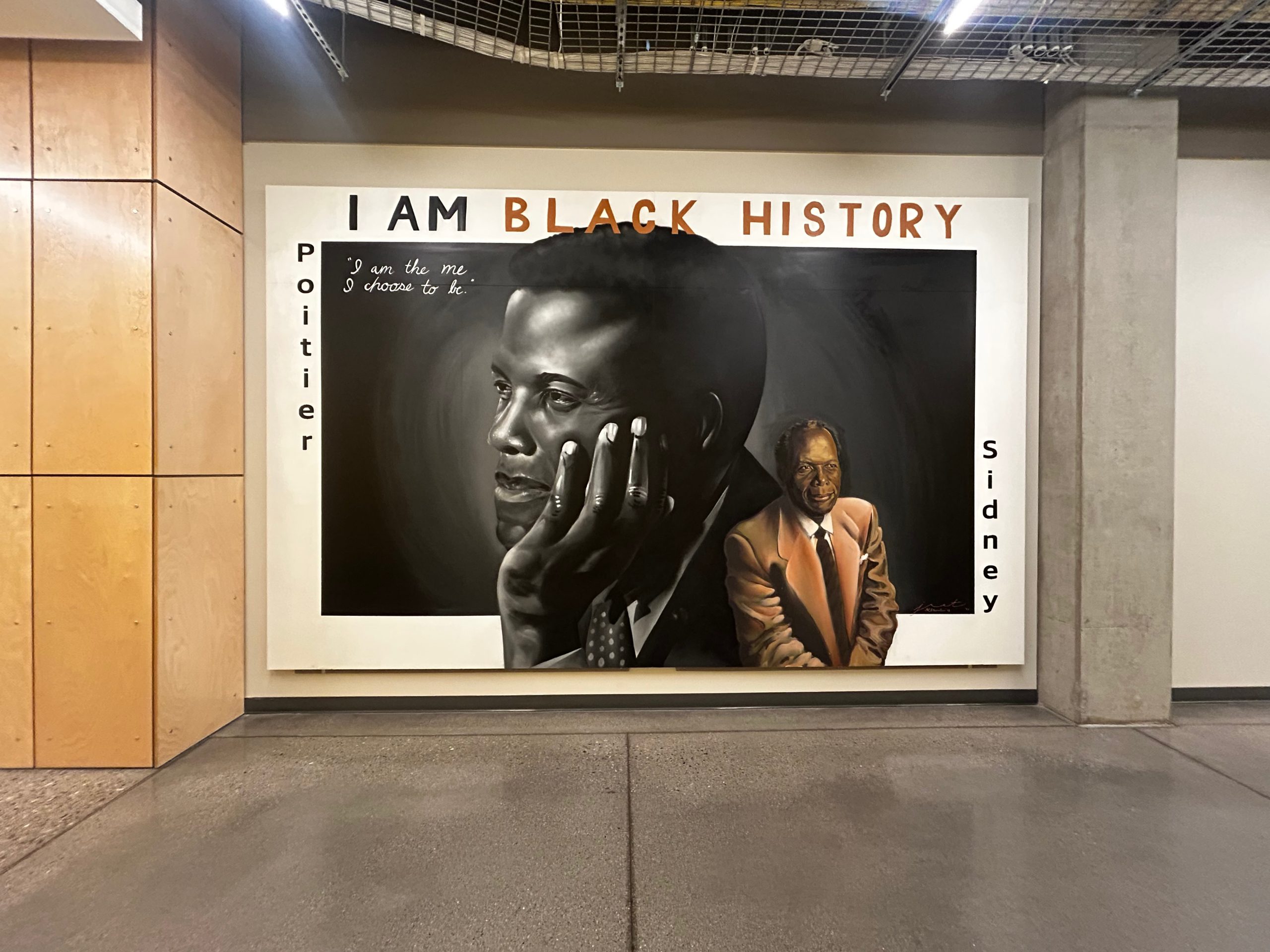
Chad Snyder is a first year student and film major at Arizona State University’s Sidney Poitier New American Film School.
Snyder was moved as Dinerstein spoke about the challenges he faced, and how he had a hard time getting his film sold.
“He was talking about how he tried getting this off the floor in like 2016, 2017 and … the big studios were reluctant to pick it up, just as they were in the late ‘60s. I think mostly because it was primarily Black acts,” said Snyder. “Woodstock just completely overshadowed the event for actual decades. It’s crazy that it took so long, as long as it did, to get this picture out.”
Cheryl Boone Isaacs, the ASU film school’s founding director, brought in Dinerstein and hosted the screening.
“This speaker series as a whole is her brainchild that she really wants to be able to bring these luminaries into the film school to talk to the film students,” said Barbara VanDenburgh, the film school’s communications manager. “She wants to make sure that the students are educated about the history of Black arts and entertainment.”
The film won over nine awards in 2022, including the Academy Award and BAFTA Awards for Best Documentary, and Grammy Award for Best Music Film.
“Black History Month is all about recognizing you know the history and this film, that’s the entire theme: celebrate the history, remember the history,” said Snyder.
Related

Source link