Prince Harry criticized the reference to Diana in war comments
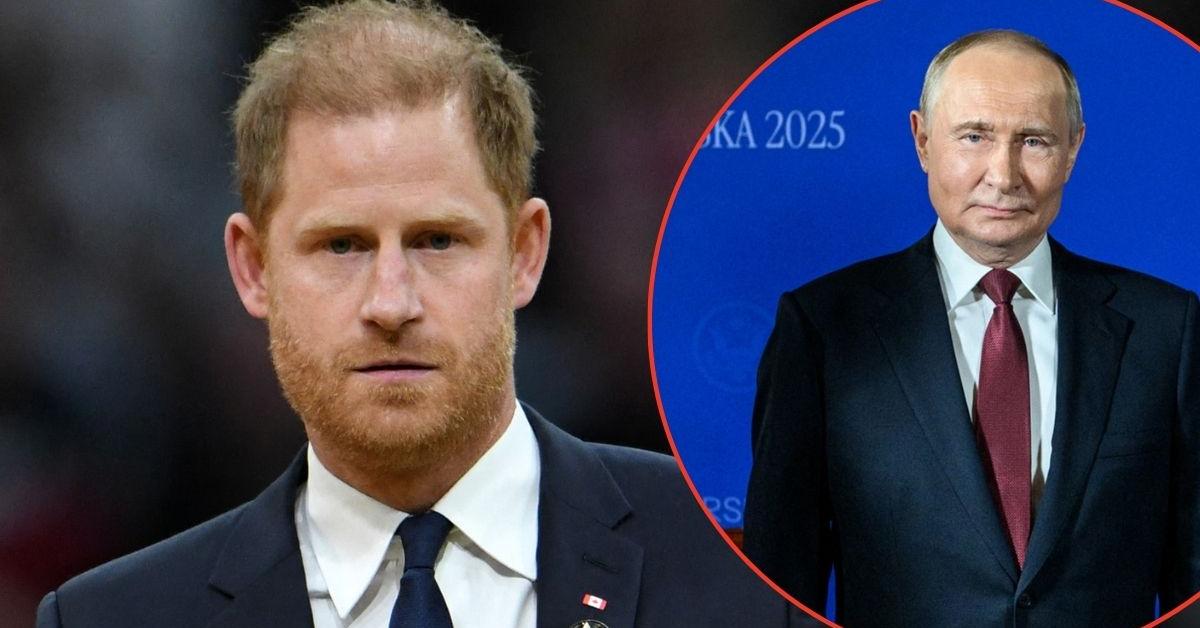
Prince Harry is being criticized for invoking the legacy of his mother, Princess Diana, after directly urging Vladimir Putin to end the war in Ukraine during a high-profile speech in Kiev. RadarOnline.com can reveal.
The 41-year-old Duke of Sussex and ex-soldier made the comments during a surprise appearance at the Kiev Security Forum, marking his third visit to Ukraine since Russia’s full-scale invasion began in February 2022.
Addressing an audience of world leaders and military officials, Harry condemned what he described as systematic war crimes and called on 79-year-old Donald Trump to show “American leadership” in resolving the conflict.
The war has killed or injured nearly two million people, while ongoing violence has stalled peace negotiations.
“President Putin, no country benefits from the continued loss of life we are witnessing,” Harry declared. “There is still a moment now to stop this war, to prevent further suffering for both Ukrainians and Russians, and to choose a different course.”
Harry added that he was speaking “not as a politician” but as someone shaped by his former military service and humanitarian work.
Sources say the speech has caused unrest in some quarters, with critics arguing that its tone and framing reflect Diana’s historic advocacy.
A royal insider said: ‘There is a perception that Harry is treading on territory closely linked to his mother, especially in the way he describes his role as a humanitarian voice rather than a political figure.
“While the message itself is widely supported, some believe the legacy risks overshadowing the specific context of the current conflict by making it about Harry’s role in the world. “He also fails to acknowledge that he is now a royal exile.”
In his speech, Harry drew explicit parallels with values such as democracy and sovereignty, in which he warned against global complacency.
He said: “What is happening here is not simply a war over territory. It is a war over values, over sovereignty, over whether the principles underpinning our shared democracy still have meaning.”
Harry also praised Ukraine’s resilience, while warning that international resolve must not weaken in the face of protracted conflict.
In remarks addressed to Washington, Harry said: “This is a moment for American leadership, a moment for America to demonstrate that it can meet its international treaty obligations – not out of charity, but out of its continued role in global security and strategic stability.”
He emphasized the significance of the 1994 Budapest Memorandum, in which the US, Britain and Russia pledged to respect Ukraine’s sovereignty after the country gave up nuclear weapons.
Harry also provided a sharp assessment of Russian behavior, alleging widespread and deliberate atrocities.
He said: “We must be absolutely clear about the nature of this war. This is not an accident, nor a misunderstanding, nor the inevitable fog of conflict. It is the product of sustained, deliberate policies, planned, implemented and defended at the highest levels.”
He described acts such as attacks on civilians, forced deportations and sexual violence as potentially genocide.
Arriving in Kiev by train after a deadly attack in Zaporizhia, Harry met wounded veterans, including Oleksandr Zozuliak, who lost his arm in combat.
Zozuliak later described the encounter, saying, “I squeezed Harry’s hand tightly with the prosthetic, but in reality the prosthetic didn’t squeeze that tight. He must have been a little scared.”
Harry’s tragic mother Diana, who died in a high-speed car crash in Paris in 1997 at the age of 36, transformed the British monarchy through compassion and public involvement.
She advocated AIDS awareness – fighting stigma by publicly touching patients – and campaigned against landmines.
Diana also supported homeless charities and children’s causes, leaving a lasting humanitarian legacy after her death.