Pixi’s new iOS app turns text messages into interactive AR experiences
Forget stickers, GIFs and emoji reactions. Pixi is betting that the next evolution of messaging is interactive augmented reality (AR).
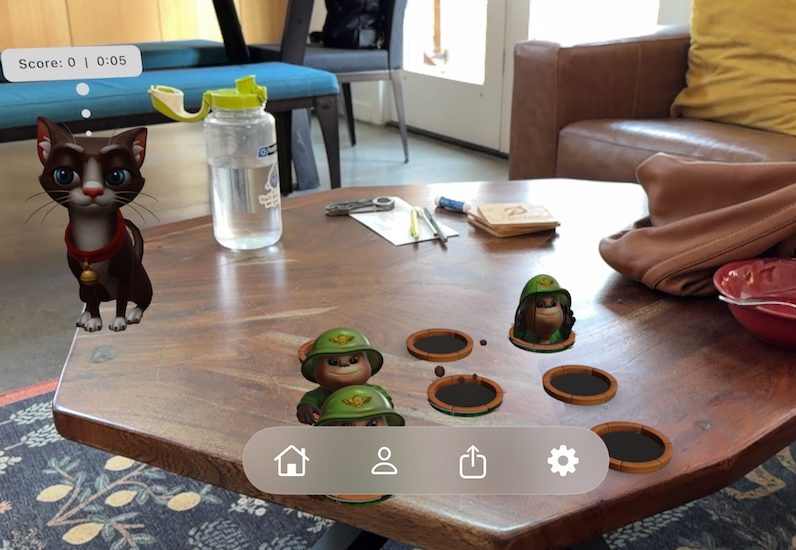
The startup launched its messaging-native app on the App Store on Wednesday, allowing users to send AI-powered AR characters via iMessage. Rather than appearing as static media, the characters come to life through the recipient’s iPhone camera, where they can interact with their surroundings, interact with people, and respond in real time.
While AR isn’t new and shiny anymore (companies like Snap have been making AR filters and lenses for years), Pixi believes the approach is different. By combining AR with on-device AI, the characters can understand what is happening around them and behave accordingly. For example, a virtual cat reacts when a real dog walks by. (According to the company, all visual and audio processing remains on-device to maintain user privacy.)
Pixi founder Mark Drummond (ex-DreamWorks Animation and ex-Apple) says the app is designed to bring a greater sense of presence and spontaneity to digital conversations. Instead of sending a text message to wish someone a happy birthday, users can send characters that create a shared experience, transforming a simple message into something closer to a digital gift or playful interaction.
“The consumer problem we’re solving is thinking about a friend when they’re not there,” he told TechCrunch. “Sometimes the psychology is called pebbling or creative gifting. You’re sharing tokens of affection, basically cards, e-cards and gifts. That’s your dad’s media, or in some cases, your grandpa’s media. We can do better. We can do something that’s digital, that uses everything we’ve learned about AR on the iPhone.”
Earlier this week, Drummond demoed the app for us, selecting the cat character, who performed a series of stand-up jokes on his desk. What was striking was that the cat seemed to respond to Drummond’s facial expressions. For example, the experience ended with him smiling, demonstrating the character’s ability to perceive emotional cues.
At launch, users will have access to a robot, a cat and an animated envelope character that can respond to their voice and ‘attack’ their friends in a playful way. If they move, the envelope will chase them. There are also games like Tic Tac Toe and Whack-a-mole.

Pixi plans to expand beyond just a few characters. The goal is to create a marketplace where studios, brands and independent creators can share their unique characters for users to choose from. The company envisions this being used for events such as movie premieres or product launches, allowing characters to generate excitement, such as when M&M’s releases a new flavor.
Drummond also mentioned the introduction of Alice in Wonderland as a character option, as she is an open intellectual property. He pointed out that “our Alice character should respond to objects she sees on your desktop in an ‘Alice-consistent’ way,” to show partners how their creations will interact with the technology.
In the future, Pixi hopes to allow users to create their own characters and personalities.
“Part of our plan is to open up those generative AI capabilities to us [users]so they can direct them to say something like, “I want a blue blob that threatens my friend and growls at him and keeps chasing him on the phone,” Drummond explained.
To send a character to your friend, download the app on iOS and use iMessage by tapping the plus sign button in the bottom left corner. No installation is required to receive a Pixi message.
Initially, the app will only be available for iPhone models 11 and newer, but there are plans to expand to Android devices and messaging platforms such as WhatsApp and Instagram in the future.
While the app is free for users, brands also have the option to charge for their characters if they wish.
“We’re going to encourage people to do it for free because then people become your own brand ambassadors. You put them in charge of using your characters to tell their own stories,” Drummond said.
When you make a purchase through links in our articles, we may earn a small commission. This does not affect our editorial independence.