PEARL HARBOR AVIATION MUSEUM LAUNCHES $51 MILLION NATIONAL “REMEMBER PEARL HARBOR” CAMPAIGN | News
Pearl Harbor Aviation Museum today – December 7, 84 years after the attack on Pearl Harbor – launched an ambitious national “Remember Pearl Harbor” campaign to raise $51 million to restore America’s World War II aviation battlefield, preserve our nation’s aviation heritage and honor the heroes of Pearl Harbor.
“Here on Ford Island, in the heart of Pearl Harbor, the museum is the custodian of the history of America’s World War II aviation battlefield,” said Museum Board Chairman General Raymond E. Johns (USAF Retired).
“At this iconic site, history is felt through the stories of the planes, artifacts and courageous people who defended freedom at a pivotal moment that shaped our nation,” said John Hiltz, museum CEO. “It continues to inspire our American values and character that define us, creating transformative moments that inspire future generations with stories of courage, sacrifice and hope that remind us what it means to stand together in the face of adversity.”
The Pearl Harbor Aviation Museum preserves that legacy in its galleries, hangars, historical archives, theater and library, and through the emotions evoked by everyone who stands at this ground zero. The day’s devastation will be shared through firsthand accounts from soldiers, civilians and Japanese attackers, along with artifacts, videos, photographs and stories that will bring America’s World War II aviation battlefield to life for museum guests.
“The hangars, the control tower, the runways – these are not replicas. They are the authentic witnesses to the assault that drew our nation into World War II,” said Gen. Richard Myers USAF (retired) and Mary Jo Myers, co-chairs of the national Remember Pearl Harbor campaign. “Standing there you will feel history come alive. We invite you to join us in this mission of remembrance, education and inspiration.”
The Pearl Harbor Aviation Museum’s national Remember Pearl Harbor campaign will bring the history of World War II to life.
The museum’s transformation is being designed by Ralph Appelbaum Associates, one of the world’s longest-standing, most successful and largest museum exhibition design firms.
Pearl Harbor, like Gettysburg and Normandy, bears witness to history and evokes a reverence and reflection that educates, inspires and continues the legacy of our greatest generation. Every aircraft we restore, every artifact we preserve and every exhibition we create is a tribute to their memory – and to the generations that followed in their contrails. Here millions of visitors can:
Walk across the runway being fired upon by Japanese fighters; see a piece of the USS Arizona; observe bullet holes in hangar windows.
Climb the Ford Island Control Tower and look out over the airstrip used in the battle, the harbor that burned as ships were destroyed, the grave that protects the souls of more than 1,100 sailors killed in that first attack.
Experience the stories of military and civilian heroes who fought back; this is America’s only World War II aviation battlefield and classroom – hallowed ground dedicated to the story of freedom.
Discover the strategic and human dimensions of the attack – and America’s resolve.
Learn how these experiences and more form the foundation for cultivating the values, character, knowledge and willingness of our next generation, those destined to lead our future
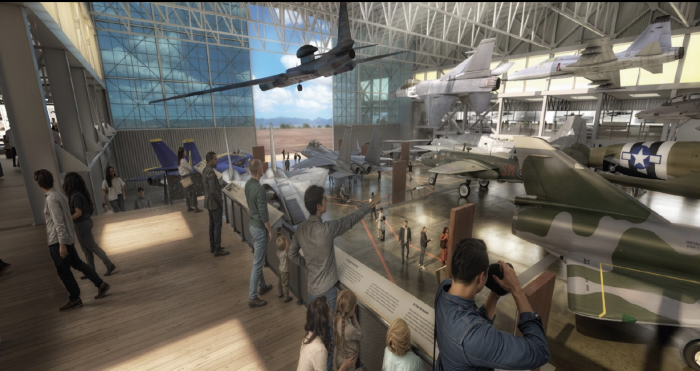
The national Remember Pearl Harbor campaign is the most ambitious and consequential transformation in the history of the Pearl Harbor Aviation Museum. It will initially raise the funds needed to renovate Hangar 79, starting here, at Hangar 79, where history speaks through every rivet and bullet hole.
Completed in 1941, Hangar 79 witnessed the attack on Pearl Harbor. The 80,000-square-foot maintenance and engine repair facility was used throughout the war. It now houses vintage and unique aircraft from World War II and beyond, sharing the battlefield story of the Pearl Harbor Aviation Museum. During World War II, the Navy used Hangar 79 as a repair, assembly and maintenance facility for naval aircraft. The Navy has not replaced the bullet-riddled windows, which were used to remind sailors they were working in a combat zone. Throughout the war, the Hangar housed fighter planes, bombers and patrol planes, both stationed at Pearl Harbor and bound for the front lines.
The renovated Hangar 79 will have:
America Responds, an exhibit showing how Americans responded after the attack on Pearl Harbor, including:
The Humanity of Bob Hope, highlighting Bob Hope and other entertainers who boosted morale and supported our troops.
Hollywood and World War II, highlighting the entertainment industry’s important role in building morale, selling war bonds, and supporting our troops.
WAC, WAVES and WASP, honoring the courage and impact of these pioneering women in aviation.
National Mobilization, which shows the impact of the war on the home front, from building the Arsenal of Democracy to rationing, scrap metal collections, civil defense and war bonds.
Dynamic displays of legendary aircraft and people who took part in the Pacific air war.
The Boeing B-17E Flying Fortress ‘Swamp Ghost’ tells the story of this long-lost B-17E and its emergency landing in New Guinea after the bombing of Rabaul.
The North American B-25 Mitchell tells the story of Lieutenant Colonel James H. “Jimmy” Doolittle’s April 18, 1942 attack on Japan.
Aces of the Pacific, highlighting legendary fighters such as Major Joe Foss, Major Thomas B. McGuire and Major Dick Bong.
These spaces will come alive with stories of innovation, courage and sacrifice, and inspire visitors with lessons about honor, service and resilience.
In addition to transforming Hangar 79, Phase 1 will also reimagine the museum’s historic Hangar 37, capturing the attack on December 7, 1941 and creating an experience that resonates and inspires future generations.
Phase 2 supports archival preservation, aircraft restoration and maintenance, and asset and program development, activating educational impact locally and nationally.
Phase 3 will fund the reconstruction of Hangar 79’s historic expansions, returning Hangar 79 to its 1940s configuration and providing much-needed space to support aircraft restoration and programmatic execution.
Phase 4 will support the museum’s endowment, which will help ensure the museum’s long-term viability and impact, preserve the symbols of courage that shaped our freedom, and protect these sacred grounds in perpetuity.
These sacred grounds, which live on in this historic collection of stories of sacrifice, determination and rising from the ashes, have played host to more than 3 million guests who have walked through these buildings, sat in vintage cockpits and felt the impact of this battlefield. Our goal remains restoration and preservation, but equally inspiring is our focus on launching educational programs that are now shaping the future of aerospace for young people whose dreams are within reach.
In doing so, the museum will build what history deserves: a historic campus for the future that welcomes families, honors veterans, and elevates our children to dream, learn, and lead.
“It is our responsibility to pass the baton to future pioneers – those who will shape our future as keepers of the flame,” Hiltz said. This impact of the Remember Pearl Harbor national campaign will be bold, lasting, and worthy of the heroes we honor, as we keep their stories and their legacy alive forever.”